A common response a celebrity gives when asked why they pursued a career in such a brutal industry like show business:
“I had no choice. I just couldn’t do anything else.”
When you make your own art, you choose. You could do many other things, more lucrative and “safe” things, but because you love and care so much about the idea in your head and want to share it with others, you do it anyway.
That’s way more powerful than doing something because you had no other choice.
“You can do anything. But not everything.” -David Allen
It’s the end of January and about that time when many people abandon their New Year’s resolutions. This excellent article by Arthur Brooks of The Atlantic details why.
One reason we abandon our goals is because we’ve simply made too many. In a fit of enthusiasm we jotted down all these things we wanted to accomplish without being realistic to our life and time and responsibilities. Once realization sets in, we throw in the towel on ALL our resolutions.
Before reaching that point, look closer at your list. Similar to the magic focusing question, ask yourself what is your “domino goal.” Meaning what single goal, if completed, would render all the other goals un-necessary or less important. Double down, focus on all your efforts on accomplishing that one.
P.S. – For more inspiration check out this OK Go video Here.
Lebron James was in the zone last night. He scored 46 points and shot 73 percent from the field including 7 for 11 from the 3 point line. An absurdly great and efficient performance.
Over the years, athletes and artists have described what it feels like to be in the zone. “A flow state”, “Everything just slows down”, “Out of body”, “Not thinking”, “Fully present”, “Every choice just feels right” are some of the descriptions given. We wish we can be in the zone all the time, yet it remains rare and elusive. Legend has it that Lawrence Olivier famously broke down in his dressing room after giving what he thought was the greatest performance of “Hamlet” in his life. The reason for his sobbing was because he had no idea how he did it or if he could ever do it again.
We don’t need to be in the zone to feel good about our work. Yes, it’s a beautiful and fun thing when it happens. But it’s our passion, our discipline, our commitment to excellence, and our constant effort that’s left behind when the zone has come and gone. That’s what we can hold onto.
A most generous thing you can do for any artist, whether it be a project you’re producing or just a friend who’s struggling to finish something…
Think creatively, call them up and get them to agree to an arbitrary deadline. Maybe it’s a small group reading of their script? Or an entry into a contest you found? Doesn’t matter what it is. Just that they now have a date on the calendar to shoot for.
“Hoping for the best, prepared for the worst, and unsurprised by anything in between.” -Maya Angelou, I Know Why The Caged Bird Sings
“Two weeks.” In the hilarious film The Money Pit, that’s the answer given to Walter Fielding (played by Tom Hanks) whenever he asks how long the renovation will take. Walter knows better, but his optimism and “wanting it to go well” gets the better of him. He allows himself to believe everything will go smooth. That doesn’t happen as evidenced by this scene and this scene and this climactic one.
Let’s face it, as artists, most of us are eternal optimists. We try to see the good in everything and everyone. We hope for positive outcomes and constantly imagine a better tomorrow. But that doesn’t mean we can’t also be pragmatic and practical. Especially when wearing our producer hat.
One way to do that is with budgeting. Once we estimate how long something will take, how much it will cost and how much revenue it will generate (e.g. ticket sales, donations, etc…), a good exercise is to create a separate budget. Call it a “worst case scenario” budget. Cut your revenues by 50-75 percent. Double the time it will take. Double the cost. Then ask yourself, “If this worst case scenario budget happens, will I still be okay? Can I still make this project happen.”
If yes, move forward with confidence that you can withstand any contingencies that might arise. Of course you want to do better than worst case scenario and you probably will. But now you have a floor to manage against.
If no, you might want to do some more fundraising or scale back some of your ambitions for the project. Or both.
Either way, you’ll be a better and more prepared producer by having undergone this exercise. You can focus more time on the art and less time dealing with unexpected emergencies.
Inaugurals are always exciting. They represent something new. The “first of” something. A blank slate. A clean start.
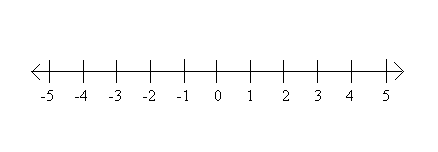
But really we should think of them as marking the halfway point. Like zero on a number line. A ton of hard work happens before the inaugural event that often goes un-noticed. The political and “get out the vote” campaign. The pre-production of a film or play prior to opening night. Coming up with an idea, writing a plan, fundraising and hiring employees before you’re open for business.
Inaugurals are fun and a cause for celebration.
But then it’s time to get back to work. Back to the grind. You’re only halfway home to the goal.
P.S. – Transferred from the French inauguration, the word ultimately hails from the Latin verb, inaugurāre, “to take omens from the flight of birds,” a practice known as augury. Augurs were priests who advised governmental officials by divining the future based on the flying, singing, and feeding of birds, whose behaviors were clues to the will of gods. Before a new leader was installed into power, augurs observed the skies – or, in some cases, into the entrails of a sacrificial victim – for a sign from a bird, whose appearance meant the gods approved the accession.
Learn the lines exactly as written. Every word, every pause, every punctuation mark.
That writer sweated the details. They poured over the script hundreds if not thousands of times to get the rhythm just right. It’s a gift of a part you now hold in your hands.
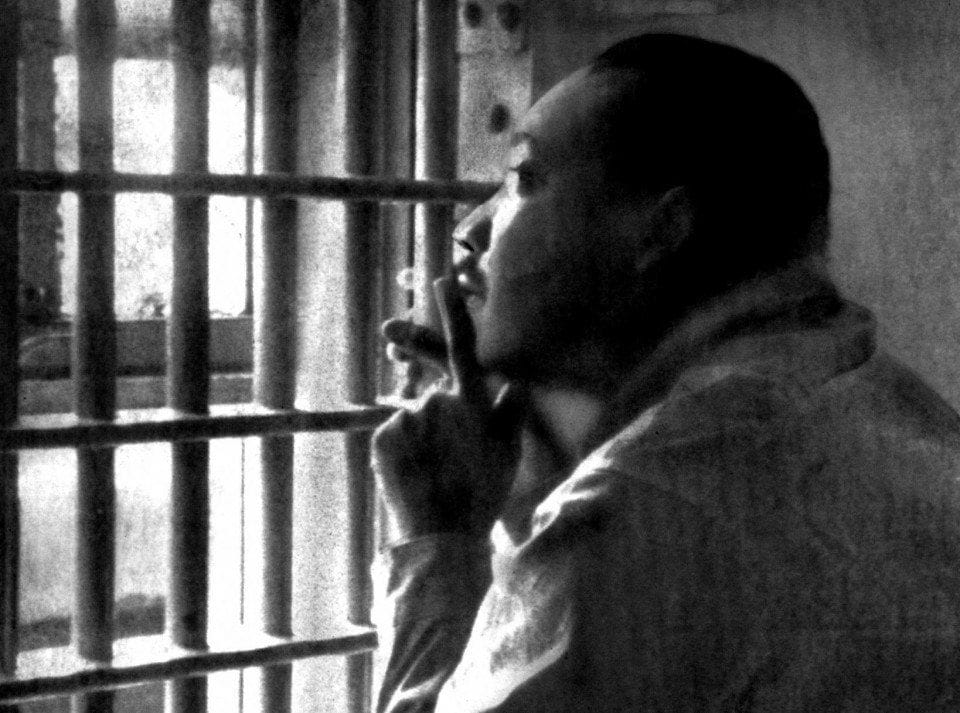
“Injustice anywhere is a threat to justice everywhere. We are caught in an inescapable network of mutuality, tied in a single garment of destiny. Whatever affects one directly, affects all indirectly. Never again can we afford to live with the narrow, provincial ‘outside agitator’ idea. Anyone who lives inside the United States can never be considered an outsider anywhere within its bounds.” -Dr. Martin Luther King, Letter From A Birmingham Jail
I came upon a terrific reading of “Letter From A Birmingham Jail” which you can access Here. (Thanks to Willie Jackson for organizing and Seth Godin for mentioning on a prior podcast.). You can also read the full text Here.
In addition to his dazzling eloquence, when reading the letter one notices just how committed, how determined, how organized, how thorough, how persistent, how steeped in belief and faith, how active, and how artistic Dr. King was. Just like anyone setting out to do something they passionately feel they must do for the benefit of others, Dr. King also had no idea if it would work. How could he? Especially while in jail. Surely, he was wracked with doubt.
But he proceeded anyway.
Happy 92nd Birthday Dr. King.
P.S. – Click Here to read an excellent collection of pieces about Dr. King’s life and legacy,
A common goal-setting exercise is to ask yourself the question, “What would you do if you knew you couldn’t fail?” It’s designed to help unlock all sorts of dreams, desires and thoughts inside you, some maybe you didn’t even know you had. It’s a wonderful creative exercise to unleash the subconscious.
But let’s flip the script a little bit. Ask yourself this…
“What would you do if you knew you were gonna fail?”
Huh? Say, what?
I mean what would you do if there was no possible chance of success? At least not by the standard definitions of success and failure. You will fail. No doubt about it. You won’t receive any accolades, awards or pats on the back. Your career won’t advance. The only reason to do the thing is the thing. All process. All love of doing.
“What would you do if you knew you were gonna fail?”
The answer to that question might just help you narrow down all the things you could or should or would like to do, and get to what you absolutely must do. Right now.



 The Vs. Studio Blog