Love and Live The Questions

Answers are boring. Questions are potent.

If you want a better outcome, then ask a better question.

I came across this excellent NYT article which discussed Amanda Seyfried’s new film and how much she loves Donna Tartt’s novel “The Goldfinch.” So much so, she has the last page framed in her house. Here’s that page:

… the space where I exist, and want to keep existing, and to be quite frank I hope I die in, is exactly this middle distance: where despair struck pure otherness and created something sublime.

Whatever teaches us to talk to ourselves is important: whatever teaches us to sing ourselves out of despair. But the painting has also taught me that we can speak to each other across time. And I feel I have something very serious and urgent to say to you, my nonexistent reader, and I feel I should say it as urgently as if I were standing in the room with you. That life — whatever else it is — is short. That fate is cruel but maybe not random. That Nature (meaning Death) always wins but that doesn’t mean we have to bow and grovel to it. That maybe even if we’re not always so glad to be here, it’s our task to immerse ourselves anyway: wade straight through it, right through the cesspool, while keeping eyes and hearts open. And in the midst of our dying, as we rise from the organic and sink back ignominiously into the organic, it is a glory and a privilege to love what Death doesn’t touch. For if disaster and oblivion have followed this painting down through time — so too has love. Insofar as it is immortal (and it is) I have a small, bright, immutable part in that immortality. It exists; and it keeps on existing. And I add my own love to the history of people who have loved beautiful things, and looked out for them, and pulled them from the fire, and sought them when they were lost, and tried to preserve them and save them while passing them along literally from hand-to-hand, singing out brilliantly from the wreck of time to the next generation of lovers, and the next.

Christmas Poem

Vincent van Gogh – Landscape with Snow – 1888

Caspar David Friedrich – Winter Landscape – 1811

Pieter Bruegel the Elder – The Census at Bethlehem – 1566

Christmas Poem by Mary Oliver

Says a country legend told every year:
Go to the barn on Christmas Eve and see
what the creatures do as that long night tips over.
Down on their knees they will go, the fire
of an old memory whistling through their minds!

I went. Wrapped to my eyes against the cold
I creaked back the barn door and peered in.
From town the church bells spilled their midnight music,
And the beasts listened — yet they lay in their stalls like stone.

Oh the heretics!
Not to remember Bethlehem,
or the star as bright as the sun,
or the child born on a bed of straw!
To know only of the dissolving Now!
Still they drowsed on —
Citizens of the pure, the physical world,
They loomed in the dark: powerful
of body, peaceful of mind,
innocent of history.

Brothers! I whispered. It is Christmas!
And you are no heretics, but a miracle,
immaculate still as when you were thundered forth
on the morning of creation!

As for Bethlehem, that blazing star
still sailed the dark, but only looked for me.
Caught in its light, listening again to its story,
I curled against some sleepy beast, who nuzzled
my hair as though I were a child, and warmed me
the best it could all night.

P.S. – Merry Christmas and Happy Holidays everyone! H/t to Poetic Outlaws for the beautiful Mary Oliver poem and check out this “Christmas Exhibition” of paintings from George Bothamley’s Art Every Day Substack.

On Waiting Well

The Sacred Night Triptych by Fritz von Uhde – 1888

It is estimated that the average person spends several years of their lives waiting (in line, on hold, in traffic, etc.). So it stands to reason that we should examine the quality of our waiting. Ask yourself the following:

(1) What exactly are you waiting for?

(2) Is what you are waiting for still worth it?

(3) What do you while you wait? Do you wait with expectation and excitement that it will happen? Or with distraction and anxiety that it will not?

And whatever you do, while you wait, don’t worry. Worrying gets you nowhere.

More often than not, the things we are waiting for do in fact come true. Just not on our timeframes and in ways we never could have imagined possible.

Don Dawson Wisdom

While Wooderson’s “Just Keep Livin'” is the most famous line and has gotten all the glory over the years, Dawson droppin’ some knowledge at the end of this scene is not to be ignored.

If you’re looking for an epitaph, look no further than Dawson’s wisdom.

Proper Assertions

Making assertions are a lot like making art.

You have to make a bold choice (even though you don’t have and will never have all the data you wish).

You have to risk being wrong (and looking foolish).

It might not work out.

So given this, why not make assertions that help and inspire people, rather than divide and make them fearful.

My assertion: I believe in the transformative power of art and community. I believe in the human spirit. I believe that deep down we do want the best for one another. Even though these are difficult times and have been for a while, we will eventually get through it. We will heal. We will learn. We will solve our toughest problems. We will come out much stronger and more together than ever.

Do. No. Thing.

Perhaps the breakthrough you seek will come from doing nothing.

And I mean nothing.

No.

Thing.

Whatsoever.

Just sit and think.

Can you do it?

How long can you embrace boredom?

It’s your new superpower.

P.S. – This Billy Oppenheimer newsletter on boredom.

Stealing Thunder

Per Wikipedia, “stealing thunder” is a rhetorical tactic that can be utilized In a contentious situation, such as a court case, a political debate or a public relations crisis. By introducing the point first and being open about it or rebutting it, the force of the opposition’s argument is diminished – their thunder is stolen.

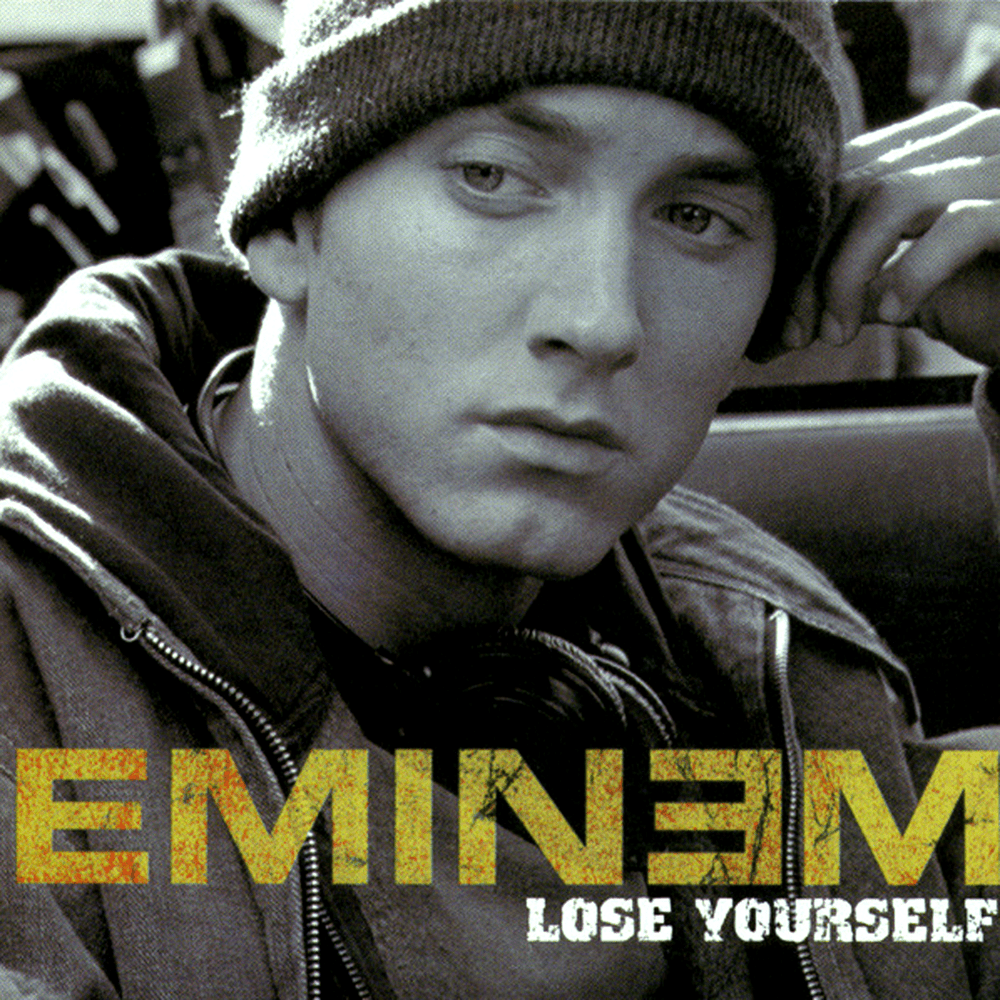
A great example of this is from the film 8 Mile. In the climactic scene “Rabbit” (played by Eminem) has a rap battle against “Papa Doc” (played by Anthony Mackie). Rabbit, aware that Papa Doc has a lot of negative information about him, puts it all out there first. That way, Papa Doc has nothing to say when it’s his turn. It’s a brilliant move. Here’s the scene.

Another way to think about stealing thunder is to be your own toughest critic. Have expectations for yourself that are much higher than anyone else’s. That way, both criticisms and compliments won’t affect you. Because you have your own standard of excellence.

And all you really care about is whether you’re living up to it.

P.S. – Read the article “How To Get An MBA From Eminem?” by James Altucher

How Do You Handle A Mistake?

When you make a mistake or forget to do something, you have a few different options at your disposal:

(a) hope no one notices.

(b) try to cover it up or make up an excuse.

(c) own it. call yourself out. apologize.

How you handle mistakes shapes you and will ultimately define your character.

Speaking of, I forgot to put my blog post out yesterday. Apologies everyone.

Creative Work

The below passage from Mary Oliver’s book of essays Upstream is phenomenal (H/t to to Poetic Outlaws)

In creative work—creative work of all kinds—those who are the world’s working artists are not trying to help the world go around, but forward. Which is something altogether different from the ordinary. 

Such work does not refute the ordinary. It is, simply, something else. Its labor requires a different outlook—a different set of priorities.

Certainly there is within each of us a self that is neither a child, nor a servant of the hours. It is a third self, occasional in some of us, tyrant in others. This self is out of love with the ordinary; it is out of love with time. It has a hunger for eternity.

Intellectual work sometimes, spiritual work certainly, artistic work always—these are forces that fall within its grasp, forces that must travel beyond the realm of the hour and the restraint of the habit. Nor can the actual work be well separated from the entire life. 

Like the knights of the Middle Ages, there is little the creatively inclined person can do but to prepare himself, body and spirit, for the labor to come—for his adventures are all unknown.

In truth, the work itself is the adventure. And no artist could go about this work, or would want to, with less than extraordinary energy and concentration. The extraordinary is what art is about. 

Neither is it possible to control, or regulate, the machinery of creativity. One must work with the creative powers—for not to work with is to work against; in art as in spiritual life there is no neutral place.

Its concern is the edge, and the making of a form out of the formlessness that is beyond the edge. Of this there can be no question—creative work requires a loyalty as complete as the loyalty of water to the force of gravity. 

A person trudging through the wilderness of creation who does not know this—who does not swallow this—is lost. 

He who does not crave that roofless place eternity should stay at home. 

Such a person is perfectly worthy, and useful, and even beautiful, but is not an artist. Such a person had better live with timely ambitions and finished work formed for the sparkle of the moment only.

There is a notion that creative people are absentminded, reckless, heedless of social customs and obligations. It is, hopefully, true. For they are in another world altogether. It is a world where the third self is governor. Neither is the purity of art the innocence of childhood, if there is such a thing. 

One’s life as a child, with all its emotional rages and ranges, is but grass for the winged horse—it must be chewed well in those savage teeth. 

There are irreconcilable differences between acknowledging and examining the fabulations of one’s past and dressing them up as though they were adult figures, fit for art, which they never will be. 

The working, concentrating artist is an adult who refuses interruption from himself, who remains absorbed and energized in and by the work—who is thus responsible to the work.

There is no other way work of artistic worth can be done. And the occasional success, to the striver, is worth everything. 

The most regretful people on earth are those who felt the call to creative work, who felt their own creative power restive and uprising, and gave to it neither power nor time.

If you feel the call, then you must heed the call.

Go make your art.