If you’re truly passionate about something, then you won’t be able to take “No” for an answer. You’ll either (a) get them to “Yes”, (b) realize it’s not for them, (c) do it on your own.
Two core principles that might help with mindset…
One. “No” is just the first word in any negotiation. It’s like the opening in chess. How you respond, what you do from there, matters far more than the initial move.
Two. “No” is a gift. It forces a decision. Forces you to check your idea and yourself. How passionate are you really about it? If you are, then you’ll either iterate or double down on your intensity and enthusiasm.
“You have to believe in yourself, that’s the secret. Even when I was in the orphanage, when I was roaming the streets trying to find enough to eat to keep alive, even then I thought of myself as the greatest actor in the world. I had to feel that exuberance that comes from utter confidence in yourself. Without it you go down to defeat.” -Charlie Chaplin
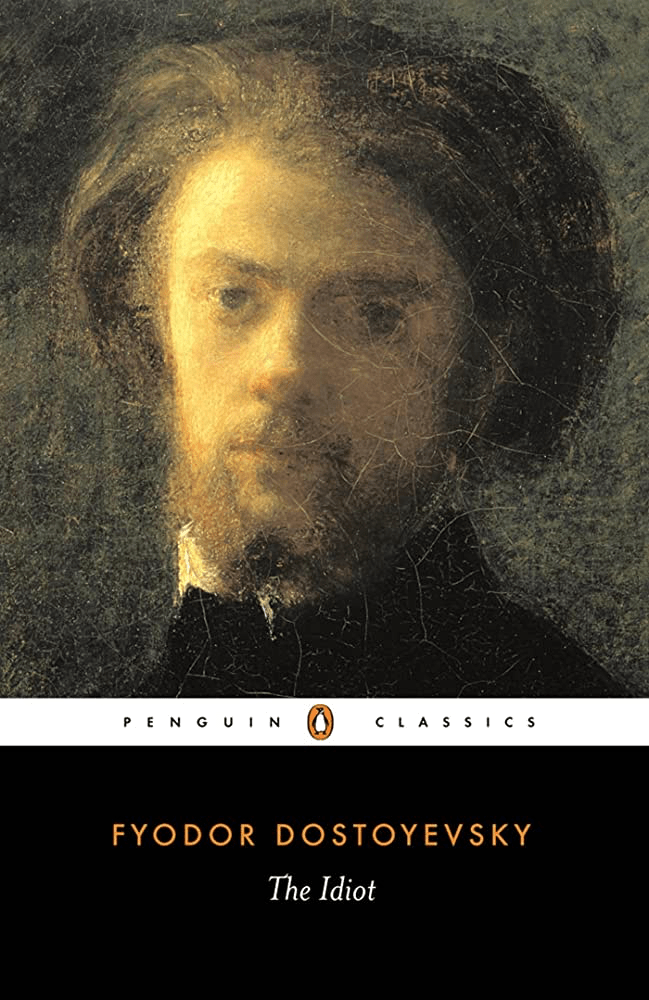
“I would turn every minute into an age, nothing would be wasted, every minute would be accounted for.” -Prince Pushkin in Fyodor Dostoevsky’s novel, The Idiot
In the above passage, the character, Prince Pushkin, faces death at the scaffold, and wonders what he’d do if he had another chance to live. It was actually inspired by a real-life incident in 1849 in which the Russian novelist Fyodor Dostoevsky was sentenced to death for allegedly engaging in anti-government activities inside a radical intellectual circle, named the Petrashevsky Circle. (Members also included Hegel, Kant, and Marx.)
Sentenced to death by firing squad, Dostoevsky and others were lined up and tied to the posts. Guns were raised. Everyone awaited the command to fire…
…But the command never came.
Turns out the Tsar had written an order of reprieve beforehand, and wanted it delivered at the last possible second so as to make a spectacle of the “conspirators.”
Getting a second chance on life, Dostoevsky vowed from then on, to make every minute count.
His death sentence was downgraded to four years in a Siberian work camp. He served those years, and when they were done, Dostoevsky wrote all five of what are now considered his major works and some of the greatest novels of all time: Notes From the Underground, Crime and Punishment, The Idiot, Demons, and Brothers Karamazov.
Today and everyday going forward, turn every minute into an age.
“I don’t want to sell anything, buy anything, or process anything as a career. I don’t want to sell anything bought or processed, or buy anything sold or processed, or process anything sold, bought, or processed, or repair anything sold, bought, or processed.” -Lloyd Dobler (played by John Cusack) in the film Say Anything
“Via Negativa: In theology and philosophy, the focus on what something is not, an indirect definition. In action, it is a recipe for what to avoid, what not to do — subtraction, not addition…Michelangelo was asked by the pope about the secret of his genius, particularly how he carved the statue of David, largely considered the masterpiece of all masterpieces. His answer was: ‘It’s simple. I just remove everything that is not David.’ -Nassim Nicholas Taleb, book Antifragile: Things That Gain from Disorder
Sometimes the best way to find out what you want is to know what you don’t want.
Start from the negative.
Make a list of everything you don’t want to do, say or be. All the people, places and things you want to avoid. All that makes you feel unhealthy or unhappy.
Before you know it, you’ll have carved away all the excess marble. And your own masterpiece of a life plan just may emerge.
The Tao is infinite, eternal. Why is it eternal? It was never born; thus it can never die. Why is it infinite? It has no desires for itself; thus it is present for all beings. –Tao Te Ching by Lao-Tzu (Stephen Mitchell translation)
“Darkness within Darkness. The gateway to all understanding.” –Tao Te Ching by Lao-Tzu (Stephen Mitchell translation)
“You have to carry the fire.” “I don’t know how to.” “Yes, you do.” “Is the fire real? The fire?” “Yes it is.” “Where is it? I don’t know where it is.” “Yes you do. It’s inside you. It always was there. I can see it.” -the Man speaking to his Son in Cormac McCarthy’s novel, The Road
Most of us are stumbling around in darkness.
That’s why it’s vital that when you’re passionate about something or a change you want to make, you gotta make it happen. Ignite the flame. Start your small fire.
We don’t need full brightness.
Just a bunch of small fires spread out everywhere and we can find our way home.
P.S. – Can you guess the movie in the pic above? Hint: it’s a sequel.