“The mind is everything. What you think, you become.” -Buddha
Not peace of mind.
Peace from mind.
“The mind is everything. What you think, you become.” -Buddha
Not peace of mind.
Peace from mind.
Advice for the aspiring actor…find a play or film you’re passionate about, act in it and produce it yourself. You’ll become a much better actor.
Advice for the aspiring playwright…write a play you’re passionate about and produce it yourself. You’ll become a much better playwright.
Advice for the aspiring screenwriter, write a film you’re passionate about and produce it yourself. You’ll become a much better screenwriter.
Advice for the aspiring director…find a play or film you’re passionate about, direct it and produce it yourself. You’ll become a much better director.
Advice for the aspiring designer…find a play or film you’re passionate about, design it and produce it yourself. You’ll become a much better designer.
Advice for the aspiring producer…find a piece of material you’re passionate about, recruit all of the above talented artists, create a generous space for them to thrive and produce it with excellence and generosity. Do this again. And again. And again. And…
If you’re uncomfortable or reluctant to tell people about the art you’ve made, the project you’ve committed to, then maybe it’s not that important to you after all.
Because if you can’t care enough or aren’t brave enough to share it with others, then why would you expect a single person to show up? To give it their time and attention? To care?
And why exactly are you making this art in the first place? Isn’t it because you felt something so deeply inside that you just had to manifest it? And then to generously share that feeling with other people?
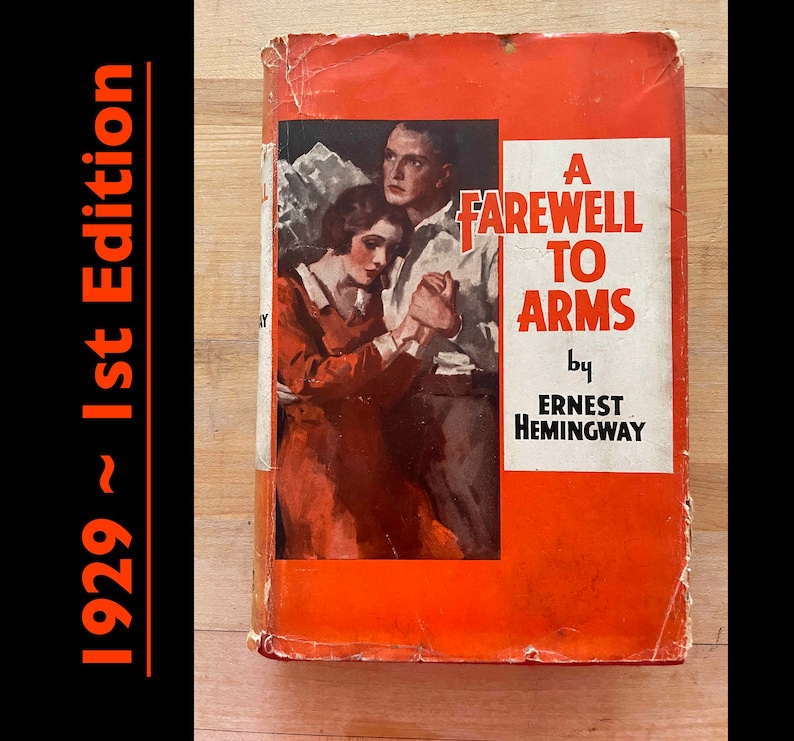
“After a while I went out and left the hospital and walked back to the hotel in the rain.” –A Farewell To Arms by Ernest Hemingway
That’s the number of endings Hemingway wrote to A Farewell To Arms. It’s in the conversation for one of the best and certainly most famous novel endings of all time.
He didn’t think, plan, research, imagine, question, wonder, doubt, ask for advice, etc…on how to end his book.
He sat down and WROTE 47 different endings.
Just do the work. Go MAKE your art.
Think you have nothing to say?
Sit down and write hour after hour, day after day, month after month…Then assess.
Think you have a whole lot to say?
Sit down and write hour after hour, day after day, month after month…Then assess.
“Don’t let the force of an impression when it first hit you knock you off your fee; just say to it: Hold on a moment; let me see who you are and what you represent. Let me put you to the test.” — Epictetus
The ancient Stoics tried to practice apatheia. Not to be confused with apathy, which has a negative connotation, apatheia can best be described as a state of calm equanimity. Free from irrational or extreme emotions.
So how to put apatheia into practice?
For any external event that happens to us…
First say to yourself, “Okay, it happened.” Take some deep breaths. Then before emotions or judgment come flooding in, probe deeper. “What exactly happened?” “What is this thing that happened?”
Forget about wondering why it happened. Or why did it have to happen now, at the worst possible time, etc…
Just.
It happened. Not good or bad. This thing happened.
Next, ask yourself the question, “How can going through this thing–even if I can’t possibly see how right now–help me in some way?” Write down any thoughts that come to mind.
Then ask yourself, “What are some possible action steps to achieve the outcome I want based on this new event?” Get creative. Force yourself to come up with at least ten action steps.
Finally, ask yourself, “How can going through this thing enable me to help someone else?”
All this is easier said than done of course, but it’s in the attempt at apatheia, the practice of it, over a long enough period of time, that we and others can benefit.
Just as journalists are taught to always ensure they lead with the 5 W’s, we must do the same for any desired project. If not, we’re doomed.
To review, the 5 W’s are: who, what, when, where and why. (There’s actually a 6th question, “how.” But I believe if you have a strong enough why, the how takes care of itself.)
I’ll use the example of producing a play for this post, but you can apply the advice to anything you’re trying to do. So here we go, the 5 W questions you need to answer for yourself before starting out…
WHO. Who are the artists you want to be involved with? Actors, directors, designers, stage crew, etc…And who is this play for? Who is the intended audience?
WHAT. What exactly is the play, the story? What’s it about? What’s it trying to say? What specifically about it appeals to you? So much so that you want to produce it? And if necessary, do you have the rights?
WHEN. When is opening night? Nothing’s real until you set a deadline. Prior to that, it’s all just an idea. And how can you possibly expect anyone to get excited, to commit to your idea, until you haven’t committed to it yourself? You do that by setting a date.
WHERE. What venue? Is it the right venue for the play and intended audience? Are your designers and artists excited about the venue? Just like in real estate, it’s location, location, location.
WHY. The most important question. Why do you want to do this? Why now? Why should people follow your passion? Why should the audience show up? When you’re slogging through the tough times and feel like quitting, going back to your “why” helps get you through.
And if you really feel you need to answer the HOW right now, start with creating a work plan.
“No person would give up even an inch of their estate, and the slightest dispute with a neighbor can mean hell to pay; yet we easily let others encroach on our lives—worse, we often pave the way for those who will take it over. No person hands out their money to passers-by, but to how many do each of us hand out our lives! We’re tight-fisted with property and money, yet think too little of wasting time, the one thing about which we should all be the toughest misers.” -Seneca
With all of life’s distractions, with everyone vying for our attention at all times, the ability to say “No” has become a superpower. Time and attention are our most valuable assets. We need to guard them with our lives.
But how do we decide on how to spend our time?
One useful tool is fear.
Huh?
Hear me out.
When faced with the choice to do or not to do…
If the chief reason you don’t want to do something is because you’re afraid, then say YES. As Joseph Campbell said, “the cave you fear to enter holds the treasure you seek.”
If the chief reason you want to do something is because you’re afraid this opportunity won’t come back again, that you’re afraid of missing out, then say NO.
One last nudge to help you to say No…Remember, it’s just “No” for right now. Not “No” forever. What’s destined to come back your way will come back. Trust in that.

“The readiness is all.” –Hamlet
“Give me six hours to chop down a tree and I will spend the first four sharpening the axe.” -Abraham Lincoln
Watch any great athlete, performer, chef, public speaker, etc…anyone who takes their job seriously, who cares about their craft…and notice their preparation. See the concentration, the focus in their eyes. Their prep routines are often just as riveting and dramatic as the actual event. (Check out Steph Curry’s pregame routine.) Even writers talk about getting themselves in an optimal flow state. Steven Pressfield in his magnificent book, “The War Of Art”, talks about reaching out to “the muse.” His prep almost has a mystical quality.
It doesn’t matter what exactly you do, how much or how little prep you need. All that matters is that you have something. That you’re ready for action. Having a routine nailed down (you might need to experiment with various kinds) just makes it all easier.
Respect the prep.
“The secret of happiness is not to do what you like to do, but to learn to like what you have to do.” -King George V
Fo whatever in life you have to do, you might as well give it everything you got. Invest all of yourself. The line between mediocre and great is thinner than you think. As is the time you think you’ll save and the other opportunities you think you’ll get instead.
And you might surprise yourself with how much fun you’ll have. How good you’ll feel. Just from doing something you didn’t want to do at first. But did anyway. And you did it to the best of your ability. For no other reason than it’s who you are. It’s what you do.

 The Vs. Studio Blog