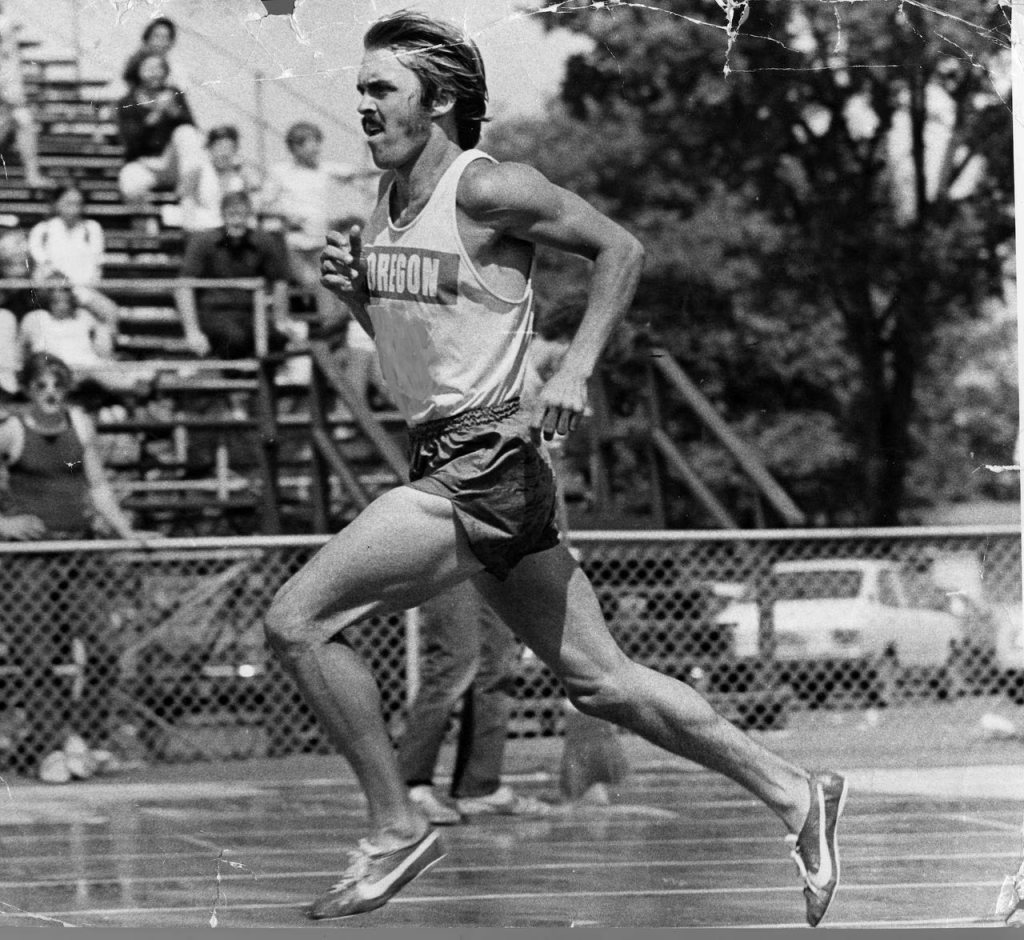
Let Go

“When I let go of what I am, I become what I might be.” -Lao-Tzu

“All great spirituality teaches about letting go of what you don’t need and who you are not. Then, when you can get little enough and naked enough and poor enough, you’ll find that the little place where you really are is ironically more than enough and is all that you need. At that place, you will have nothing to prove to anybody and nothing to protect.” -Richard Rohr

Let go of “what it should be” or “who you should be” or “where you should be” or any of those thoughts. Those are just stories you tell yourself. They don’t serve you or your art.

When you truly let go, you will discover who you really are. And what the work really wants to be.

Put another way…

You got to drop it to find it. (It was always there.)

You gotta lose yourself to find yourself. (You were always there too. Hiding in plain sight.)

Even When…

Be more proud of yourself when the day goes to shit and you still manage to get something done towards your dream as you are when everything lines up perfectly and you’re a productivity superstar.

What you do even when forces seem to conspire against, is what ultimately will define you.

The Loneliness Epidemic

the flesh covers the bone 
and they put a mind 
in there and 
sometimes a soul, 
and the women break 
vases against the walls 
and the men drink too 
much 
and nobody finds the 
one 
but keep 
looking 
crawling in and out 
of beds. 
flesh covers 
the bone and the 
flesh searches 
for more than 
flesh. 

there’s no chance 
at all: 
we are all trapped 
by a singular 
fate. 

nobody ever finds 
the one. 

the city dumps fill 
the junkyards fill 
the madhouses fill 
the hospitals fill 
the graveyards fill 

nothing else 
fills.

-poem, “Alone With Everybody” by Charles Bukowski

“In the West there is a loneliness, which I call the leprosy of the West. In many ways, it is worse than our poor in Calcutta…We can cure physical diseases with medicine, but the only cure for loneliness, despair, and hopelessness is love. There are many in the world who are dying for a piece of bread but there are many more dying for a little love.” -Mother Teresa

“Our epidemic of loneliness and isolation has been an underappreciated public health crisis that has harmed individual and societal health. Our relationships are a source of healing and well-being hiding in plain sight – one that can help us live healthier, more fulfilled, and more productive lives. Given the significant health consequences of loneliness and isolation, we must prioritize building social connection the same way we have prioritized other critical public health issues such as tobacco, obesity, and substance use disorders. Together, we can build a country that’s healthier, more resilient, less lonely, and more connected.” -U.S. Surgeon General Dr. Vivek Murthy Dept of Health & Human Services Press Release; May 3, 2023

We have an epidemic of loneliness.

Let’s cure it.

How?

Today and every day, let us do whatever we can to help people feel a little less alone.

Reach out to them.

Make that phone call.

Have that coffee.

Schedule that visit. (Or even, just stop by.)

Those seemingly small things go a LONG way.

And for those artists who have something to say and a deep desire to express it, please go make your art.

Because when you do and we experience your art, we’re the better for it. Your art brings us together. Connects us. Fills our hearts. Weaves us together. We realize we’re not alone. Other people think and feel that way too. Aha! Eureka!!

You Do You

All ya can do is do what you must
You do what you must do and ya do it well
-Bob Dylan, song “Buckets Of Rain”

“Comparison is the thief of joy.” -Teddy Roosevelt

“Start where you are. Use what you have. Do what you can.” -Arthur Ashe

All you can do is what you can do. Right here. Right now. Nothing more. Nothing less. Feel good about that. And don’t let anyone tell you otherwise.

Former NBA player and author Paul Shirley in his excellent book The Process Is The Product writes about being intimidated by other people’s stated workout routines or study habits. He tried to emulate these routines and when he fell short, he felt less than.

That is, until he found out that those purported routines and habits were bullshit. No one was doing what they said they were doing. They were just insecure and concocted a story to make themselves feel better.

He writes in the book…

And I’d like to say that the truth hit me at one of these moments, but it didn’t come to me so suddenly. I needed more evidence. Like, the next five years’ worth of evidence—five years that saw me go from college basketball walk-on to future NBA basketball player while also managing a degree in mechanical engineering.

Here’s what I figured out:

Those guys who’d come to talk to us at those basketball camps back in Kansas? They hadn’t been shooting a thousand shots a day. That strength coach who’d sent me that workout? He didn’t think anyone would actually do it. That dude who told us how much we were going to have to study at freshman orientation? He wasn’t spending 32 hours in the library every week. More important: no one was shooting a thousand shots or finishing torture workouts or studying for 32 hours every week. Or, honestly, doing anything they said they were doing.

So what was going on here? Why had all these people done this? Were they straight-up liars?

Kind of, but not really.

These people had told themselves the same story. In this story, they were the almighty, accomplished heroes. They were special, different, unique, and they wanted us to know it. They didn’t necessarily do this to scare us, although that might have been part of it. They did it because they were insecure about their place in the world. They needed to believe they’d done something other people couldn’t.

And you know what?

Fuck those guys.

Here’s what I’d like to tell that kid in Kansas—the one with the big dreams about far-flung places:

To accomplish what you’d like to accomplish, you don’t need to be special or talented. You don’t need to take expensive classes or hire fancy coaches. You don’t need to quit jobs or go on expensive sabbaticals. You don’t need to shoot a thousand shots or study 32 hours or lift everything in the weight room. Instead, keep those big dreams. Figure out a path to those dreams. Then fall in love with that path, committing to it so fully that you forget what your dreams even were.

And that, my young friend, is exactly when those dreams will come true.

You do you.

Just do the best you can today, and tomorrow and the day after that. Keep evaluating your progress. Keep learning from the feedback that life gives you. Keep iterating your process. Because it’s all process.

Believe in yourself.

Drip by drip.

Day after day.

You’ll make it happen.

“I’m So Bored!”

Voinitsky: “Akh, if only you could see your face right now. And the way you move. The laziness! You could care less…”

Yelena: “Fine, fine, I’m lazy and I’m boring…That’s why we’re friends, Ivan Petrovich. We’re both tedious, boring people.” – Act One of Uncle Vanya by Anton Chekhov (Adaptation by Annie Baker)

If you’re portraying a character who at one or multiple points in the play exclaims “I’m bored” or other characters describe you that way or even critical reviews of past productions do so, etc…BEWARE. That’s a huge trap. Don’t fall for it by playing bored. If you do, you will most assuredly be boring to watch.

Just like in real life, no one ever wants to be bored. They fight desperately to feel alive again.

That fight, even it largely burns internal, will be riveting to watch and fun for you to play each and every night.

Fair Expectations?

“Expectation is the root of all heartache.” -Shakespeare

“We listen with expectation, insight and point of view.” – Howard Fine

“Our actions are the result of immediate needs and expectations…In rehearsals we must discover and test the actions that are needed from moment to moment in conjunction with what we expect from them…My passion for acting returned, never to desert me again, once I had understood how to suspend knowledge of what was to come by unearthing the character’s expectations.” -Uta Hagen, book A Challenge For The Actor

Expectations are awesome for your acting. For when inevitably the other characters fail to live up to them, it creates conflict, which then leads to great drama. You can’t have too many of them. Expect away!

But be cautious with your expectations of others in real life. Have as little as possible.

And the next time you find yourself upset because someone failed to live up to one or more of your expectations, ask yourself two questions:

One…Are your expectations of that person fair? If the roles were reversed, could you live up to these?

Two…Have you clearly communicated your expectations to that person?

If the answer to either or both of these questions is no, it might be best to drop said expectations. Or at least go back to the drawing board and further refine and communicate them.

It will save you and the other person a whole lot of unnecessary grief, heartache and pain.

The Actor’s Big Three

“Concentration was as much a capacity as it was a state to Stanislavski, and, as Orthodox mystics and yogis agreed, it could be trained through exercises. Take a coin and put it on a table. This is your object of attention. Eventually, these objects will not need to be tangible. Anything you focus on, real or imagined, literal or conceptual, is an object. But back to the coin. Sit, relax, breathe. Explore the coin. What year was it minted? Is there dirt on it? Little imperfections? See where it has been worn smooth, where the green of zinc or oxidized metal becomes visible. Explore the coin so closely that you could describe it down to the tiniest detail from memory.” – book, The Method: How the Twentieth Century Learned to Act by Isaac Butler

As first detailed by Stanislavski and then later developed and expanded into more exercises by teachers such as Strasberg, Adler and Meisner, there are three big tools the actor can and should be working on at all times…

Relaxation.

Imagination.

Concentration.

So simple in concept, yet so difficult to do. Especially as adults.

But the more you develop and hone these tools, the more your acting will look effortless. Which should always be the goal.

Eulogy Virtues

“I’ve been thinking about the difference between the resume virtues and the eulogy virtues. The resume virtues are the ones you list on your resume, the skills that you bring to the job market and that contribute to external success. The eulogy virtues are deeper. They’re the virtues that get talked about at your funeral, the ones that exist at the core of your being — whether you are kind, brave, honest or faithful; what kind of relationships you formed.

Most of us would say that the eulogy virtues are more important than the resume virtues, but I confess that for long stretches of my life I’ve spent more time thinking about the latter than the former. Our education system is certainly oriented around the resume virtues more than the eulogy ones. Public conversation is, too — the self-help tips in magazines, the nonfiction bestsellers. Most of us have clearer strategies for how to achieve career success than we do for how to develop a profound character.” -David Brooks, book The Road To Character

In all you do, aim for eulogy virtues over resume virtues.

Doing so will be the best decision you ever made in your life.

P.S. – For a deeper dive, read this article.

Do You Really Need Their Advice?

“All the advice you ever gave your partner is for you to hear.” -Byron Katie

“Anything you want to ask a teacher, ask yourself, and wait for the answer in silence.” -Byron Katie

Before seeking advice from someone else, a useful exercise might be for you to flip the script…

Ask yourself the question, “If a friend or family member came to you seeking advice for the exact same situation, what advice would you give them?”

Take time to answer. Jot down as many ideas and thoughts as you can.

If you can’t can’t think of anything useful or it’s all a little murky, then you can probably use some outside counsel. Seek it out.

If you have clear, constructive advice to give someone else, then it might be wise to heed your own inner wisdom first.