“…I don’t know nothin’ about Pele. I’m watchin’ what this guy can do with a ball and his feet. Next thing I know, he jumps in the air and flips into a somersault and kicks the ball in – upside down and backwards… the goddamn goalie never knew what the fuck hit him. Pele gets excited and he rips off his jersey and starts running around the stadium waving it around his head. Everybody’s screaming in Spanish. I’m here, sitting alone in my room, and I start crying….That’s right, I start crying. Because another human being, a species that I happen to belong to, could kick a ball, and lift himself, and the rest of us sad-assed human beings, up to a better place to be, if only for a minute… let me tell ya, kid – it was pretty goddamned glorious. It ain’t the six minutes… it’s what happens in that six minutes.” -Elmo (played by J.C. Quinn) speaking to Loudon (played by Matthew Modine) in the film Vision Quest
Follow your dream. Make your art. Pursue excellence.
In doing so, you might just lift yourself and others to a “pretty goddamned glorious place.” A place you and no one else ever thought possible.
P.S. – This scene. And this scene. All the motivation you need. Go make it happen!
“Your work is going to fill a large part of your life, and the only way to be truly satisfied is to do what you believe is great work. And the only way to do great work is to love what you do.” – Steve Jobs
“I can’t call a person a hard worker just because I hear they read and write, even if working at it all night. Until I know what a person is working for, I can’t deem them industrious. . . . I can if the end they work for is their own ruling principle, having it be and remain in constant harmony with Nature.” -Epictetus, Discourses
“You can only become truly accomplished at something you love. Don’t make money your goal. Instead pursue the things you love doing and then do them so well that people can’t take their eyes off of you.” -Maya Angelou
“Yes, I’ve made a great deal of dough from my fiction, but I never set a single word down on paper with the thought of being paid for it…I have written because it fulfilled me. Maybe it paid off the mortgage on the house and got the kids through college, but those things were on the side–I did it for the buzz. I did it for the pure joy of the thing. And if you can do it for the joy, you can do it forever.” -Stephen King
Choose heart work over hard work. It wins every time.
If you find and commit to doing the heart work, the hard work takes care of itself.
P.S. – This post was inspired by a line of dialogue from Oliver Mayer’s dazzling new play GHOST WALTZ (image above). It’s playing through June 2nd at LATC. Go see it!
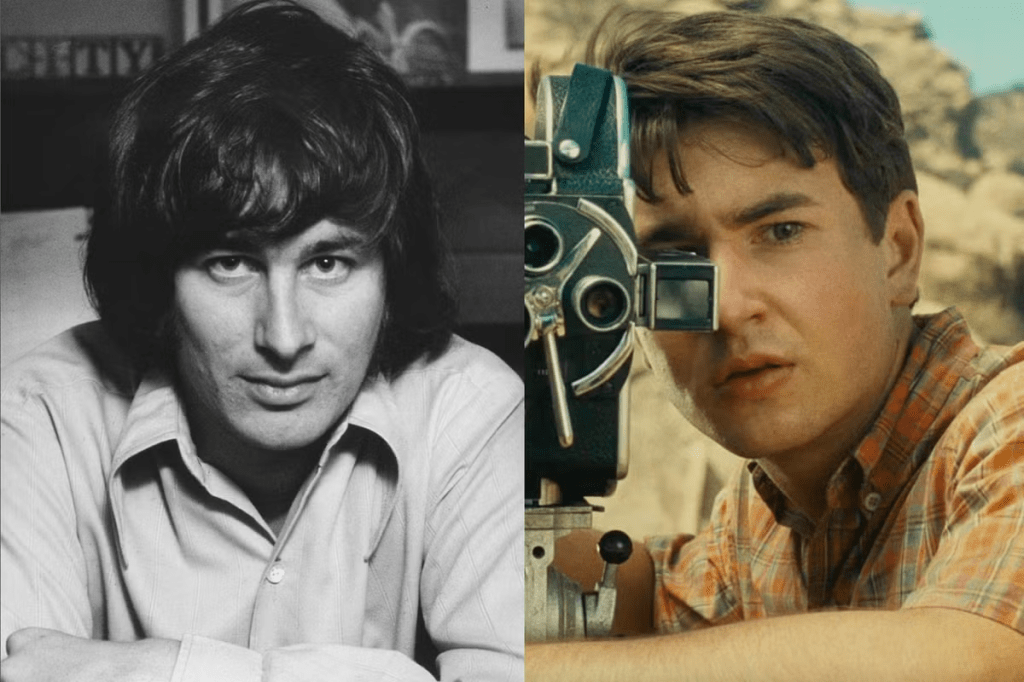
“I’ve been hiding from this story since I was 17 years old.” -Steven Spielberg from his Golden Globe speech talking about his film The Fabelmans
“To love at all is to be vulnerable. Love anything and your heart will be wrung and possibly broken. If you want to make sure of keeping it intact you must give it to no one, not even an animal. Wrap it carefully round with hobbies and little luxuries; avoid all entanglements. Lock it up safe in the casket or coffin of your selfishness. But in that casket, safe, dark, motionless, airless, it will change. It will not be broken; it will become unbreakable, impenetrable, irredeemable. To love is to be vulnerable.” -C.S. Lewis
To love is to risk.
To love is to be vulnerable.
When making your art, if you feel scared or nervous because this one’s personal, that’s a good sign. You’re going in the right direction. Keep going.
Make it personal.
That’s how you’ll make it memorable.
P.S. – This article on Steven Spielberg and the making of his film, The Fabelmans.
“If there is a better performance by a man in the history of film in America, I don’t know what it is…What was extraordinary about his performance, I feel, is the contrast of the tough-guy front and the extreme delicacy and gentle cast of his behavior. What other actor, when his brother draws a pistol to force him to do something shameful, would put his hand on the gun and push it away with the gentleness of a caress? Who else could read `Oh, Charley!’ in a tone of reproach that is so loving and so melancholy and suggests the terrific depth of pain?” -Elia Kazan in his autobiography, A Life
See movies on the big screen.
See movies on the big screen.
See movies on the big screen.
Every chance you get…See movies on the big screen.
I recently took my son Truman to see one of my all-time favorite movies on the big screen. (Thank you American Cinematheque for providing this opportunity. It’s a great organization and mission. Support them.). It was his first time seeing it and though I’ve watched it dozens of times and own the 4k/Blu-Ray, it was my first time seeing it in a movie theater. Here are some takeaways from that experience:
Leonard Bernstein’s score…Phenomenal! It’s propulsive and adds so much.
The subtleties of Brando’s acting…Behavior and small gestures that convey everything. Like picking up the glove or zipping/unzipping his jacket or putting his hands in his coat or rubbing his chin, etc….These moments are even more powerful and evocative on the big screen.
Eva Marie Saint is amazing….She goes toe to toe with Brando and more than holds her own throughout. The budding romance scenes they have together are as good as any ever made. And to think, this was her film debut…Wow.
A first rate ensemble…The supporting players headlined by Rod Steiger and Karl Malden and Lee J. Cobb are at the top of their game. Everyone is real and awesome. Credit to Kazan for casting and getting such rich and layered performances from the entire cast.
It’s funny!…There are a lot more funny lines than you would think. Myself and the audience laughed out loud several times.
It’s very moving…I was emotional throughout.
Truman’s reaction after it was over and the credits rolled (I wasn’t sure what he’d think of a seventy year old black and white film)…
“That was peak. Five stars on Letterbox’d.”
P.S. – Read Roger Ebert’s original review here. Or some of the great Criterion essays here.
“You can do anything, but not everything.” -David Allen
“Desire is a contract you make with yourself to be unhappy until you get what you want.” -Naval Ravikant
I can’t quit you baby So I’m gonna put you down for awhile I said I can’t quit you baby I guess I gotta put you down for awhile -song, “I Can’t Quit You Baby” by Led Zeppelin (originally written by Chicago blues artist Willie Dixon)
For anything you’re wanting or thinking of doing, first ask yourself the following question…
“Is this a nice-to-have or a must-have?”
If it’s a “nice-to-have”, then you don’t really care if it comes true. And in spite of your not caring or exerting tremendous effort, it still might happen. (Luck or divinity of timing, for example.). If it does, then that would nice and fun and cool. And you’d probably be happy.
If it’s a “must-have”, then by its very definition, rest assured you will be miserable until you get it. (Or until you quit and pick something else.) Therefore, cultivate as few of these “must-haves” as possible.
Sleep, comrades, sleep and rest On this Field of the Grounded Arms, Where foes no more molest, Nor sentry’s shot alarms!
Ye have slept on the ground before, And started to your feet At the cannon’s sudden roar, Or the drum’s redoubling beat.
But in this camp of Death No sound your slumber breaks; Here is no fevered breath, No wound that bleeds and aches.
All is repose and peace, Untrampled lies the sod; The shouts of battle cease, It is the Truce of God!
Rest, comrades, rest and sleep! The thoughts of men shall be As sentinels to keep Your rest from danger free.
Your silent tents of green We deck with fragrant flowers; Yours has the suffering been, The memory shall be ours. -poem, “Decoration Day” by Henry Wadsworth Longfellow
“Love is not affectionate feeling, but a steady wish for the loved person’s ultimate good as far as it can be obtained.” -C.S. Lewis
Today we honor all those men and women who died while serving in the United States Armed Forces. They made the ultimate sacrifice. It’s a reminder that our freedom isn’t free. We must never take it for granted, and constantly seek out ways to not only ensure this freedom is upheld, but also to make it flourish. To work to better our community, our country and our planet.
“DESTINY is a feeling you have that you know something about yourself nobody else does. The picture you have in your own mind of what you’re about WILL COME TRUE. It’s a kind of a thing you kind of have to keep to your own self, because it’s a fragile feeling, and you put it out there, then someone will kill it. It’s best to keep that all inside.” -Bob Dylan, The Bob Dylan Scrapbook: 1956-1966
That exciting vision you have, that thing you’re on fire about…it’s tempting and fun as hell to go tell a bunch of people your dreams.
Don’t.
Resist at every turn, the impulse to talk about it.
Instead, get busy. Get to work.
Capture what’s in your head. Write it all down until you have some clarity.
Set goals and then turn those goals into projects. Complete with micro steps and deadlines.
“I have a competition in me.”- Daniel Plainview in There Will Be Blood
The best athlete wants his opponent at his best. The best general enters the mind of his enemy. The best businessman serves the communal good. The best leader follows the will of the people. All of them embody the virtue of non-competition. Not that they don’t love to compete, but they do it in the spirit of play. In this they are like children and in harmony with the Tao. -“Tao Te Ching” by Lao-Tzu (translated by Stephen Mitchell)
“When people are placed in positions slightly above what they expect, they are apt to excel.” -Richard Branson
“Success comes from knowing that you did your best to become the best that you are capable of becoming.” -John Wooden
If you truly love something, you want to give it your very best.
Having a worthy competitor (or as The Tao Te Ching would call “an opponent’) enables this. Besides being exciting and energizing, the sense of competition tests you and forces you to go to places you didn’t think you were capable of.
While I’m not advocating a maniacal sense of competition like Daniel Plainview had, I do believe that there’s a lot of good that comes from healthy competition. Sports is an obvious one, but art too is abundant with examples where competition brings out the very best. Think of fun rivalries like the Beach Boys and The Beatles or Hemingway and Fitzgerald or Matisse and Picasso. (On a personal level, I strive to find roles that initially scare the crap out of me. And to work with other actors and artists I respect and admire. Who are intimidatingly great. Who will force me to bring my “A” game to every rehearsal and then to every single performance.)
In his masterpiece, The Inner Game Of Tennis, the author Timothy Gallwey devotes an entire chapter to competition. He talks extensively about his struggles as a young tennis pro, dealing with the pressures (most of which were self imposed) of winning. He walked away from the game entirely.
Later on however, he made a breakthrough when thinking about surfing and trying to catch the biggest wave. He realized that competition was a great thing. He had just thought about it all wrong. Competition wasn’t about indulging the ego or winning trophies or having status or any of that. But rather, it was about love and cooperation. He writes…
“Once one recognizes the value of having difficult obstacles to overcome, it is a simple matter to see the true benefit that can be gained from competitive sports. In tennis who is it that provides a person with the obstacles he needs in order to experience his highest limits? His opponent, of course! Then is your opponent a friend or an enemy? He is a friend to the extent that he does his best to make things difficult for you. Only by playing the role of your enemy does he become your true friend. Only by competing with you does he in fact cooperate! No one wants to stand around on the court waiting for the big wave. In this use of competition it is the duty of your opponent to create the greatest possible difficulties for you, just as it is yours to try to create obstacles for him. Only by doing this do you give each other the opportunity to find out to what heights each can rise.
So I arrived at the startling conclusion that true competition is identical with true cooperation. Each player tries his hardest to defeat the other, but in this use of competition it isn’t the other person we are defeating; it is simply a matter of overcoming the obstacles he presents. In true competition no person is defeated. Both players benefit by their efforts to overcome the obstacles presented by the other. Like two bulls butting their heads against one another, both grow stronger and each participates in the development of the other.”
Strive only for love and excellence and generosity.
Release the need for institutional validation or commercial success. (Most often, it’s not correlated with talent or skill anyway.)
If you do this, then you can rest assured in the knowledge that regardless of “industry trends” or “technological changes” or any other kind of shifts, your art will always be in style.






 The Vs. Studio Blog