I attended a funeral earlier today. It was a beautiful service for a beloved member of our local community. The eulogies given were powerful and moving, and as eulogies often do, they inspire you to give, love and do more. The below quote by Ernest Hemingway (also shared at the funeral) is a reminder that sometimes the greatest gift you can give another person is to just be there with them.
In our darkest moments, we don’t need solutions or advice. What we yearn for is simply human connection—a quiet presence, a gentle touch. These small gestures are the anchors that hold us steady when life feels like too much.
Please don’t try to fix me. Don’t take on my pain or push away my shadows. Just sit beside me as I work through my own inner storms. Be the steady hand I can reach for as I find my way.
My pain is mine to carry, my battles mine to face. But your presence reminds me I’m not alone in this vast, sometimes frightening world. It’s a quiet reminder that I am worthy of love, even when I feel broken.
So, in those dark hours when I lose my way, will you just be here? Not as a rescuer, but as a companion. Hold my hand until the dawn arrives, helping me remember my strength.
Your silent support is the most precious gift you can give. It’s a love that helps me remember who I am, even when I forget.
Just be there for them. Trust that it’s enough. It’s actually everything.
“Every circumstance comes with two handles, which one of which you can hold it, while with the other conditions are insupportable.” ― Epictetus, Discourses and Selected Writings
“We can grab onto resentment—or gratitude. We can focus on obstacles—or look closer and see opportunities. Gratitude shifts our perspective and transforms even the harshest realities into tools for growth.” -Ryan Holiday
“Convince yourself that everything is the gift of the gods, that things are good and always will be.” -Marcus Aurelius, Meditations
“I have learned the secret of being content in any and every situation, whether well fed or hungry, whether living in plenty or in want…Give thanks in all circumstances.” -Saint Paul
“Nietzsche was the one who did the job for me. At a certain moment in his life, the idea came to him of what he called “the love of your fate.”
Whatever your fate is, whatever the hell happens, you say, “This is what I need.” It may look like a wreck, but go at it as though it were an opportunity, a challenge. If you bring love to that moment — not discouragement — you will find the strength is there. Any disaster you can survive is an improvement in your character, your stature, and your life. What a privilege!
Then, when looking back at your life, you will see that the moments which seemed to be great failures followed by wreckage were the incidents that shaped the life you have now. The crisis throws you back, and when you are required to exhibit strength, it comes.” -Source: Joseph Campbell, Reflections on the Art of Living (edited lightly for clarity; h/t to James Clear)
Gratitude: Thankful for the “good.”
Next level grattitude: Thankful for the “bad.”
Jedi level gratitude: Not labelling things as “good” or “bad.” They just are. Being thankful for all of life. Amor Fati is the key.
Happy Thanksgiving dear reader. Thankful for all of you and your constant encouragement of this blog. Closing in on #1,300!
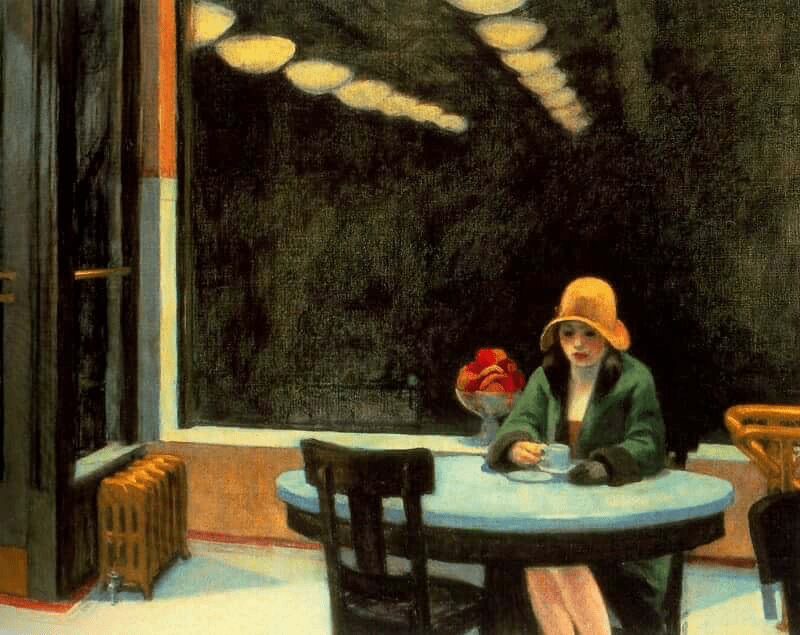
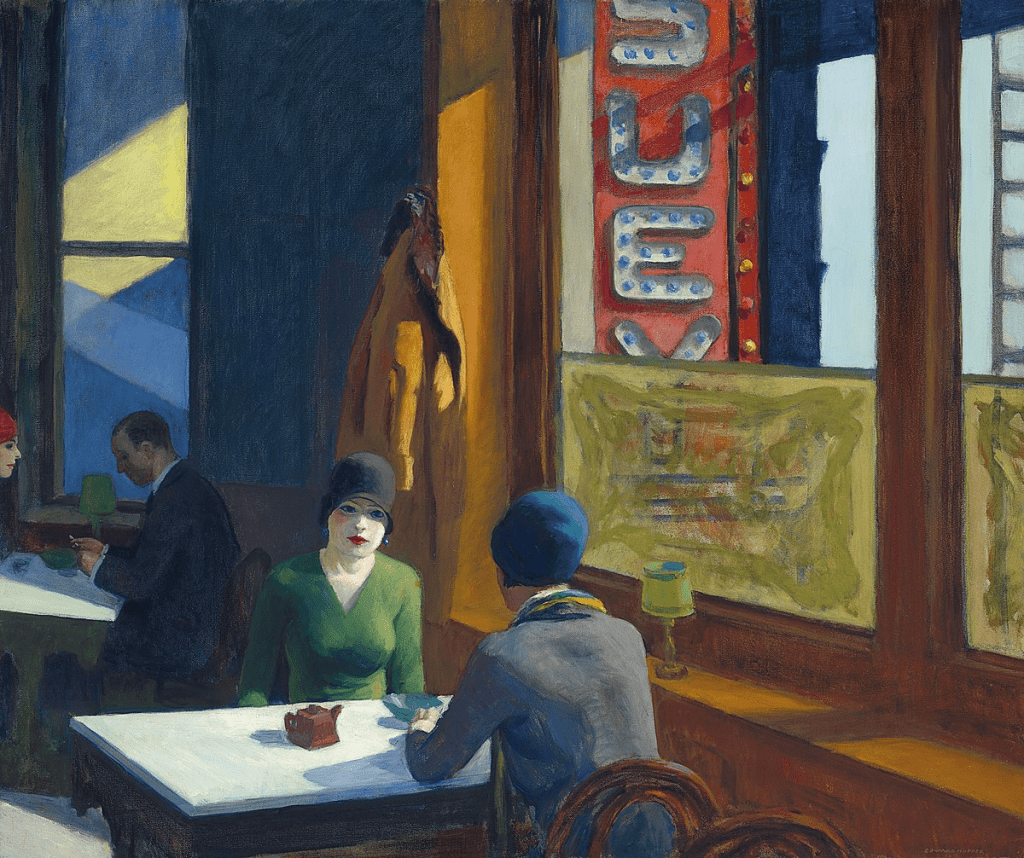
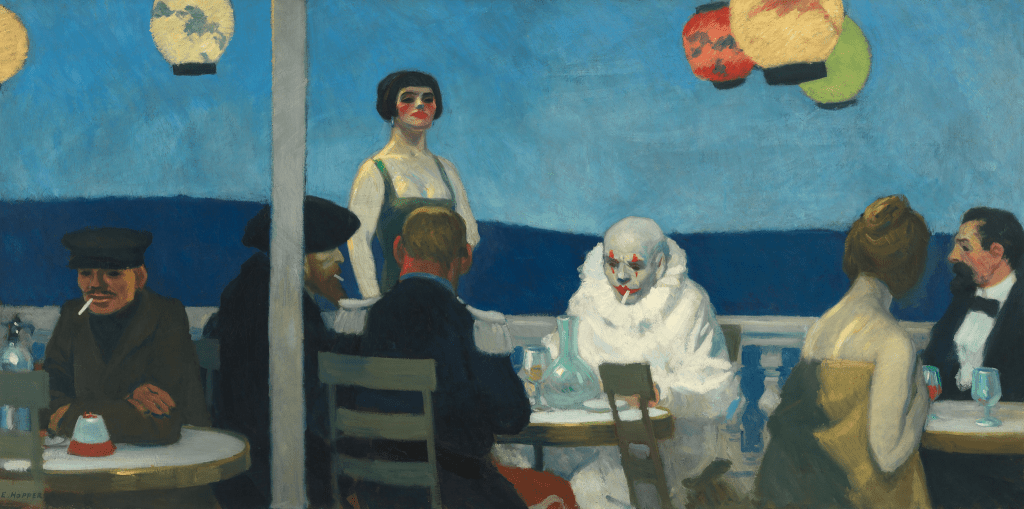
“Automat”, 1927, by Edward Hopper“Chop Suey”, 1929, by Edward Hopper“Soir Bleu”, 1924, by Edward Hopper
“When first approaching these works, we feel as if we are observers. We are watching these people from afar – in moments when they do not seem to realise we are even here – and we are left wondering who they are, or what they might be thinking, or what may have happened to them in the moments before we find them here. But then, the longer we look, the more it all starts to feel strangely personal too. Almost as if these people may be someone we know. Or someone we passed on the street earlier today. Or – certainly when it comes to Hopper’s paintings – perhaps they remind us of ourselves too . . . and those the times when we too may have sat alone in a late night diner, or felt those pangs of loneliness drifting on the air all around us. It is a remarkable experience.” -George Bothamley, “Art Every Day” Substack
A fun writing exercise to do is to go to a museum, journal in hand. Browse through the artwork until you find one that really lights you up. Then just stare at it, let your imagination take over, and write a story about the character(s) in the painting. Don’t edit yourself. Just keep writing until you’re done. (You can also do this online, but it’s way more fun to do it in person.)
Note: Edward Hopper is a great painter for this. His characters evoke so many different feelings when viewed. In his excellent “Art Every Day” Substack, George Bothamley, does a great job breaking down Hopper and Vermeer (another great painter for this exercise).
My friend and phenomenal teacher, Howard Fine, does a variation of this as an acting exercise. In his intro class, he has students go to a museum and find a painting that inspires them. They write their own “Who Am I?” backstory about the character in the painting. (The “Who Am I?” questions are detailed in Howard’s excellent book on the craft, which you can check out Here.) Taking this a step further, you then dress up in class as the painting. You’re asked all types of questions and are to answer “in character.” I loved it! Both doing and observing.
Lastly, in the terrific documentary, “It Takes A Lunatic”, acting teacher and artistic director, Wynn Handman, is shown “interviewing” actors working on scene study. He asks all kinds of questions and they answer “in character.”
All of these exercises have the following in common…They are super fun, artistically inspiring and get you out of your head, and into another person’s skin.
Give one or more a try at some point. And if you do, let me know how it goes!
“Never be limited by other people’s limited imaginations.” -Dr. Mae Jemison
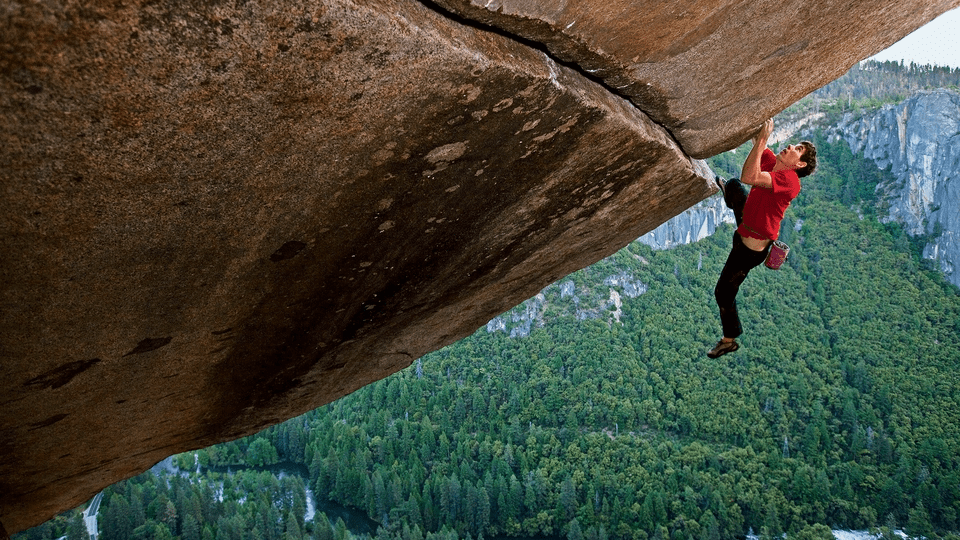
Just like it’s useless to expect most people to understand why Alex Honnold wanted to free solo up El Capitan, or spend thirty years on a novel like Karl Malantes did writing “Matterhorn”, it’s useless to expect most people to understand why you need and want to make this piece of art. It’s not rational or logical (to them). It’s not traditional. It’s not “worldly.” It doesn’t “make sense.”
But that doesn’t mean you shouldn’t do it.
If you have a burning desire, then you must heed the call, and go make it. Don’t let anyone talk you out of it.
When it’s done, then you can tell them why you made it and why you’d love for them to show up.
“You know when you’re walking in the woods on a dark night…and you see a light shining far off in the distance…and you think to yourself: even though I’m tired and it’s dark and the branches are scratching my face…everything is gonna be okay…because I have that light? And I’ll get there eventually? Well, I work–you know this–I work harder than anyone else in this county. I mean, I’m beaten down, Sonya, I suffer unbearably…but I have no light in the distance. I can’t see anything up ahead. I no longer expect anything of myself and I don’t think I’m capable of really loving people.” -Astrov to Sonya in Uncle Vanya by Anton Chekhov (translated by Annie Baker)
If you can force your heart and nerve and sinew To serve your turn long after they are gone, And so hold on when there is nothing in you Except the Will which says to them: ‘Hold on!’ -Rudyard Kipling, poem “If”
“And when the creative well runs dry, it feels like the end of the world. It feels like there is no purpose to fulfill, no checklists to complete, no meaning to be made. Doubt, frustration, discomfort. We need to remember to uncomplicate our hearts, to be here, to be present, and to learn to embrace the journey all over again. After a period of losing your writing mojo, inspiration doesn’t jump back into your life. It slowly grows back in the crevices of your soul, and your eyes regain that glimmer of hope. We’re little plants sprouting in cracked concrete again and again. This is not the end. I’m staying the course, allowing myself to be proud of where I am right now, even if it’s scattered, chaotic, and absent at times. Even if I am feeling dreary, annoyed, and unimpressed by life. I shall not quit something with great long-term potential just because I can’t deal with the stress of the moment.” -excerpt from Medium post, “Know Thyself, Heal Thyself” by Diana C.
When you’re suffering and facing uncertainty, you don’t need to know how you’re gonna get through it.
“Suffering is not a sign of failure. And on the other side…Suffering is not a sign you’re doing great work. The suffering, the difficulty, the tension…it’s simply part of the deal.” -Gabe Anderson
In the process of going after your big goals, there will be times when it will feels easy and there will be times when it feels hard. Where you will suffer.
Neither feeling means you’re on the right or wrong path.
Neither feeling means anything other than what you choose to ascribe to the feeling.
If you’re looking for evidence that you’re doing “the right thing”, stop looking. All the evidence you need is knowing that you already decided this is what you’re going to do. No matter what.
“As you start to walk on the way, the way appears.” -Rumi
“The answer you are looking for is found in the action you are avoiding. You don’t find yourself through planning, you find yourself through acting. The path is found in the action. Act and adapt, don’t think and plan.” -Sahil Bloom
“We suffer far more in our imagination than in reality.” -Seneca
Yes, I understand That every life must end As we sit alone I know someday we must go
Oh, I’m a lucky man To count on both hands The ones I love Some folks just have one Yeah, others they got none
Stay with me Let’s just breathe -song, “Just Breathe” by Pearl Jam
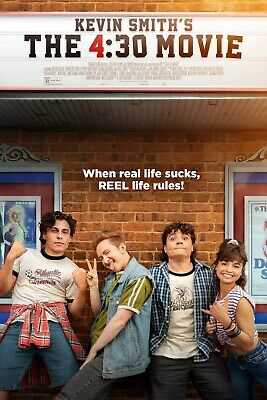
I recently listened to an incredible interview with the writer/director Kevin Smith on “The Movies That Made Me” podcast. Here’s a link. (H/t to Ron for turning me on to this one.). Early on in the interview, Smith mentioned that he “lost his marbles” and was admitted to a mental hospital. His vulnerability in admitting this was quite moving. Smith also offered some very wise and inspiring life advice that he gained in the process. I went back to the episode and transcribed this portion below…
Human beings tend to spend most of their time never in the present, but in two other places–in the past and the future. They relitigate everything they’ve ever done in the past and fret about things they said, injustices they’ve suffered, injustices they’ve visited upon others. And spend so much waking-hours time dwelling on the past relitigating things they can do nothing about. You can’t do anything about the past kids, except learn from it…Stay out of the past, it’s not healthy.
The future is the other place a lot of people like to live. The future is unknown. It’s fraught with peril because we don’t know what it is, and that’s when our most inventive, creative minds come to the fort. I don’t care who you are. If you’re one of those people that’s like, ‘I’m not creative like you.’ Bullshit! Everybody in this audience is a far better writer than me and the best writer’s they’ve ever met when it comes to predicting the failures of their future. Oh, you can be so creative when it comes to making up what might happen! And it’ll stop you from making life choices in the present as you fear about things that haven’t even come to pass. You don’t know the future. There’s no point sweating anxiety about it. If you’re gonna make up a story about how bad things are, and you don’t know what’s really gonna happen, then you might as well make up a story about how everything works out and you’re the hero. It’s just as likely to come to bear. But either way, stay out of the future.
The best place you can be is in the present, man. They call it the present because it’s a gift. Here is where everything is happening. If you want to correct the things that you worry about, the mistakes you made, that’s about living in the present, making sure you don’t do that sort of stuff again. No point in wondering what’s gonna happen. If you are worried about what’s gonna happen in the future, well then build toward it. All the steps you put in motion now are the things that you can step into later on…The best course of action is to set yourself up for success in the future right now. You have to set the table now so that the idiot version of you in the future can just stumble into it, and have it all done for them. It’s a mind trick. It’s basically a life hack about doing it now as opposed to assuming that you’re gonna be better enough to do it in the future. Which you’re not.
So, stay out of the past, stay out of the future, live in the present my friend. And the best place to do that, the best way to do that, is to ground yourself in the present…Breathe. In and out…You cannot breathe in the past and you cannot breathe in the future. You can only breathe in the present.
“Facts are important, but facts don’t create learning. Stories do. A story fits into (and changes) our understanding of the world. Good teachers are storytellers, and storytellers are teachers.” -Seth Godin
Facts are fine. But stories are where the gold is.
If you want to teach people or inspire them to take action, tell them a great story. (Bonus points when you can weave facts into the story.)
Speaking of, here’s q quick one for you (h/t to Sahil Bloom’s Curiosity Chronicle):
The villagers had been coming to the local wise man every week, many complaining about the same problems each time.
One day he told them a joke and everyone roared in laughter. After a couple of minutes, he told them the same joke and only a few of them smiled. When he told the same joke for the third time, no one laughed.
The wise man smiled and said, “You can’t laugh at the same joke over and over. So why are you always complaining about the same problem?”