“You can do anything, but not everything.” -David Allen
“Desire is a contract you make with yourself to be unhappy until you get what you want.” -Naval Ravikant
I can’t quit you baby So I’m gonna put you down for awhile I said I can’t quit you baby I guess I gotta put you down for awhile -song, “I Can’t Quit You Baby” by Led Zeppelin (originally written by Chicago blues artist Willie Dixon)
For anything you’re wanting or thinking of doing, first ask yourself the following question…
“Is this a nice-to-have or a must-have?”
If it’s a “nice-to-have”, then you don’t really care if it comes true. And in spite of your not caring or exerting tremendous effort, it still might happen. (Luck or divinity of timing, for example.). If it does, then that would nice and fun and cool. And you’d probably be happy.
If it’s a “must-have”, then by its very definition, rest assured you will be miserable until you get it. (Or until you quit and pick something else.) Therefore, cultivate as few of these “must-haves” as possible.
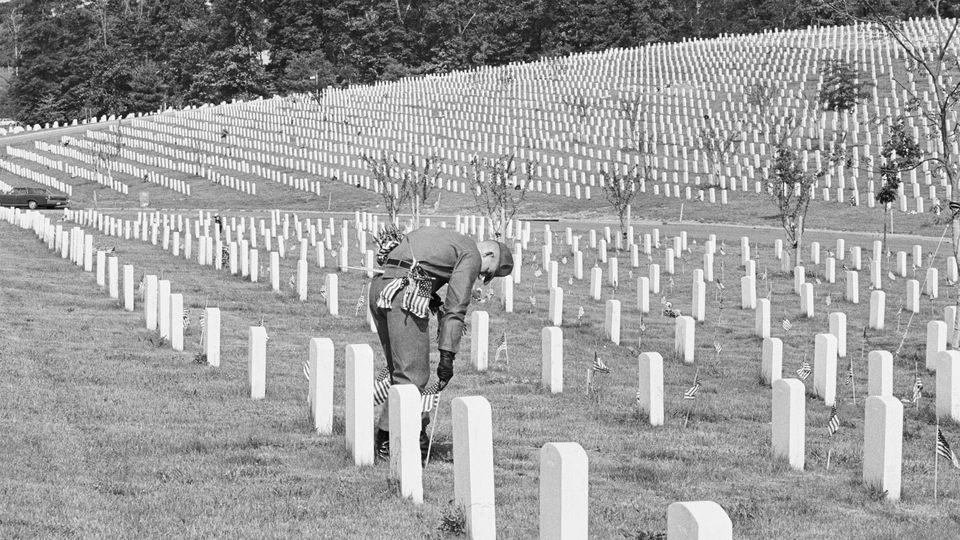
Sleep, comrades, sleep and rest On this Field of the Grounded Arms, Where foes no more molest, Nor sentry’s shot alarms!
Ye have slept on the ground before, And started to your feet At the cannon’s sudden roar, Or the drum’s redoubling beat.
But in this camp of Death No sound your slumber breaks; Here is no fevered breath, No wound that bleeds and aches.
All is repose and peace, Untrampled lies the sod; The shouts of battle cease, It is the Truce of God!
Rest, comrades, rest and sleep! The thoughts of men shall be As sentinels to keep Your rest from danger free.
Your silent tents of green We deck with fragrant flowers; Yours has the suffering been, The memory shall be ours. -poem, “Decoration Day” by Henry Wadsworth Longfellow
“Love is not affectionate feeling, but a steady wish for the loved person’s ultimate good as far as it can be obtained.” -C.S. Lewis
Today we honor all those men and women who died while serving in the United States Armed Forces. They made the ultimate sacrifice. It’s a reminder that our freedom isn’t free. We must never take it for granted, and constantly seek out ways to not only ensure this freedom is upheld, but also to make it flourish. To work to better our community, our country and our planet.
“DESTINY is a feeling you have that you know something about yourself nobody else does. The picture you have in your own mind of what you’re about WILL COME TRUE. It’s a kind of a thing you kind of have to keep to your own self, because it’s a fragile feeling, and you put it out there, then someone will kill it. It’s best to keep that all inside.” -Bob Dylan, The Bob Dylan Scrapbook: 1956-1966
That exciting vision you have, that thing you’re on fire about…it’s tempting and fun as hell to go tell a bunch of people your dreams.
Don’t.
Resist at every turn, the impulse to talk about it.
Instead, get busy. Get to work.
Capture what’s in your head. Write it all down until you have some clarity.
Set goals and then turn those goals into projects. Complete with micro steps and deadlines.
“I have a competition in me.”- Daniel Plainview in There Will Be Blood
The best athlete wants his opponent at his best. The best general enters the mind of his enemy. The best businessman serves the communal good. The best leader follows the will of the people. All of them embody the virtue of non-competition. Not that they don’t love to compete, but they do it in the spirit of play. In this they are like children and in harmony with the Tao. -“Tao Te Ching” by Lao-Tzu (translated by Stephen Mitchell)
“When people are placed in positions slightly above what they expect, they are apt to excel.” -Richard Branson
“Success comes from knowing that you did your best to become the best that you are capable of becoming.” -John Wooden
If you truly love something, you want to give it your very best.
Having a worthy competitor (or as The Tao Te Ching would call “an opponent’) enables this. Besides being exciting and energizing, the sense of competition tests you and forces you to go to places you didn’t think you were capable of.
While I’m not advocating a maniacal sense of competition like Daniel Plainview had, I do believe that there’s a lot of good that comes from healthy competition. Sports is an obvious one, but art too is abundant with examples where competition brings out the very best. Think of fun rivalries like the Beach Boys and The Beatles or Hemingway and Fitzgerald or Matisse and Picasso. (On a personal level, I strive to find roles that initially scare the crap out of me. And to work with other actors and artists I respect and admire. Who are intimidatingly great. Who will force me to bring my “A” game to every rehearsal and then to every single performance.)
In his masterpiece, The Inner Game Of Tennis, the author Timothy Gallwey devotes an entire chapter to competition. He talks extensively about his struggles as a young tennis pro, dealing with the pressures (most of which were self imposed) of winning. He walked away from the game entirely.
Later on however, he made a breakthrough when thinking about surfing and trying to catch the biggest wave. He realized that competition was a great thing. He had just thought about it all wrong. Competition wasn’t about indulging the ego or winning trophies or having status or any of that. But rather, it was about love and cooperation. He writes…
“Once one recognizes the value of having difficult obstacles to overcome, it is a simple matter to see the true benefit that can be gained from competitive sports. In tennis who is it that provides a person with the obstacles he needs in order to experience his highest limits? His opponent, of course! Then is your opponent a friend or an enemy? He is a friend to the extent that he does his best to make things difficult for you. Only by playing the role of your enemy does he become your true friend. Only by competing with you does he in fact cooperate! No one wants to stand around on the court waiting for the big wave. In this use of competition it is the duty of your opponent to create the greatest possible difficulties for you, just as it is yours to try to create obstacles for him. Only by doing this do you give each other the opportunity to find out to what heights each can rise.
So I arrived at the startling conclusion that true competition is identical with true cooperation. Each player tries his hardest to defeat the other, but in this use of competition it isn’t the other person we are defeating; it is simply a matter of overcoming the obstacles he presents. In true competition no person is defeated. Both players benefit by their efforts to overcome the obstacles presented by the other. Like two bulls butting their heads against one another, both grow stronger and each participates in the development of the other.”
Strive only for love and excellence and generosity.
Release the need for institutional validation or commercial success. (Most often, it’s not correlated with talent or skill anyway.)
If you do this, then you can rest assured in the knowledge that regardless of “industry trends” or “technological changes” or any other kind of shifts, your art will always be in style.
The Trappist Monk Thomas Keating teaches this beautiful contemplative practice:
Imagine yourself sitting on the bank of a river. Observe each of your thoughts coming along as if they’re saying, “Think me, think me.” Watch your feelings come by saying, “Feel me, feel me.” Acknowledge that you’re having the feeling; acknowledge that you’re having the thought. Don’t hate it, don’t judge it, don’t critique it, don’t, in any way, move against it. Simply name it: “resentment toward so and so,” “a thought about such and such.” Admit that you’re having it, then place it on a boat and let it go down the river. The river is your stream of consciousness.
The writer, teacher and modern mystic Cynthia Bourgeault, offers this wonderful reflection on Keating’s river exercise…
No matter what path of meditation you practice, I think his basic picture here holds true. What he imagines is the river of consciousness – remember this? – and it’s flowing on downstream. And down this river of consciousness float boats. The boats being the thoughts that present themselves to us, that pop up in our unconscious out of nowhere….There are various boats, but what they all have in common is that in our normal life as soon as a thought pops up into our consciousness we find ourselves obligated to think it. There it comes and all of a sudden we get bound up with it. The next thing you know, we’re thinking it and responding to it and reacting to it as if we have no choice at all. Thomas says that what we do is whenever a boat floats down the stream normally we feel impelled to climb into its hold and examine the contents. And what meditation really teaches us is to be a little diver sitting down on a rock down at the bottom of the river of consciousness and just letting the boats float by. So the thoughts can come and go, but we realize that just because a thought pops into our consciousness, we are not obligated to think it, react to it, respond to it, get caught in it, float downstream on it.
Remember you’re not in the boat, you’re sitting on the bank of the river. You can just let all the boats (aka your thoughts) idly go by. One by one.
If at some point you get interested in one of the boats and want to jump in, go for it.
If you’d rather just keep watching the boats float on by, go for it.
Both are choices. Either choice is appropriate. And you have the power to choose.
“Between stimulus and response there is a space. In that space is our power to choose our response. In our response lies our growth and our freedom.” -Viktor E. Frankl, Man’s Search For Meaning
Good news…No matter how bad your thoughts are, no one knows them and no one cares.
All that matters are your actions.
Bad news…No matter how good or well-intentioned your thoughts are, no one knows them and no one cares.
All that matters are your actions.
The best news of all…While you can’t control your thoughts, you can control your actions.
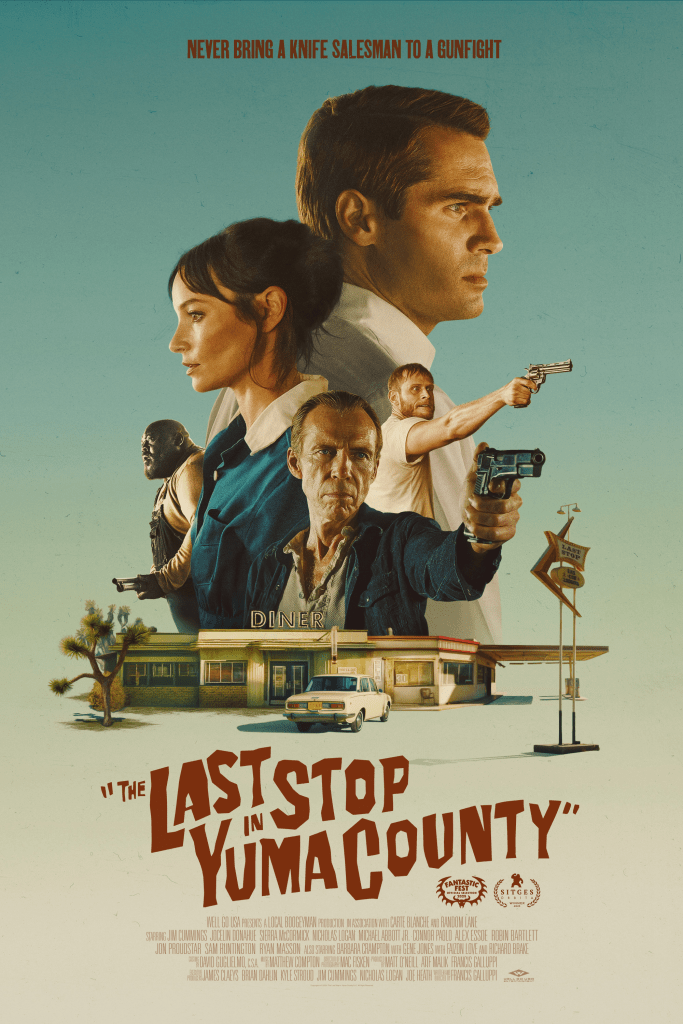
This article on the making of the just released, independent film “The Last Stop In Yuma County” is inspiring on many levels.
I especially love the below quote from writer/director Francis Gallupi who after being fed up with the development process, took matters into his own hands, and proceeded as if the move was happening (even though he had no money)…
“I just started trying to pretend like we had money. I started shotlisting and photoboarding and writing letters to all these actors, hiring heads of departments and getting producers on board. Basically, everything you can do without any money.”
For any passion project, why not act as if it’s happening? Ask yourself what would you do if you had all the money in the bank. List out all the possible action steps. Create a work plan. Set deadlines. And go do as many of those things that don’t require money.
Worst case, you learn a ton from all your efforts.
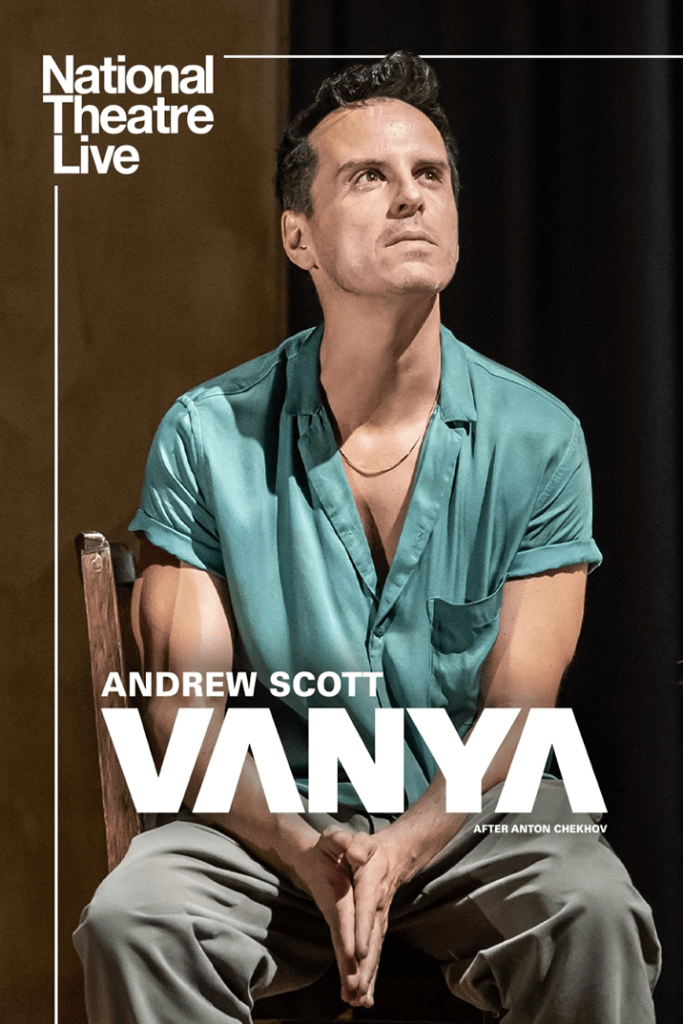
Speaking of a regular “takeaway practice”, here’s a personal example re: VANYA…
One of the greatest plays I’ve ever seen is…a film?
Wait a second..Isn’t the whole point of theatre that you’re seeing something live and experiencing this “aliveness” with other people.
Yes.
But, the size of the venue matters greatly.
If you see a play from the back of the house, especially in a big theatre, it’s vastly different than seeing the exact same production from the first few rows. It’s two completely different shows. Two completely different experiences. For one thing, you miss all the nuances of what the actors are doing and feeling.
Which is why I love and make intimate theatre. (Grotowski said no more than 30 seats. Our Vs. space was 28.)
Or…
You can go see a National Theatre Live broadcast. Yes, they do live productions. But they also film them, and do so with craft and attention to detail. The result is what I experienced seeing VANYA on screen at the UCLA James Bridges Theater.
I was completely immersed in and mesmerized by the production. Andrew Scott was incredible. A one person tour de force. I loved how he gave each character a signature gesture that was consistent throughout. This allowed him to seamlessly transition back and forth among each character (a total of eight I believe) and for the audience to never get lost. The direction was tight and playwright Simon Stephens wrote an excellent, modern adaptation of Chekhov’s masterpiece. I also loved the nondescript, rehearsal room-like set. It fit perfectly with this being a one person show.
Afterwards, my friend Michael and I both said it was one of the best things we’ve ever seen. I told him and some other friends in attendance that unless I had the ability to see VANYA live and sit in the first few rows, I’d much prefer seeing it this way. I’m inspired to seek out more NT Live broadcasts.
P.S. – Seeing VANYA in a packed house (as opposed to streaming it in my house) also contributed greatly to my takeaway of it. Going through the emotional roller-coaster of the play, live with other invested audience members, provided the best of both worlds (theatre and film).


 The Vs. Studio Blog