The playwright, director and audience all have this in common…
They can’t wait to watch actors say those lines.
Likewise, actors…
The main reason to do the play is you can’t wait to say those lines.
The playwright, director and audience all have this in common…
They can’t wait to watch actors say those lines.
Likewise, actors…
The main reason to do the play is you can’t wait to say those lines.
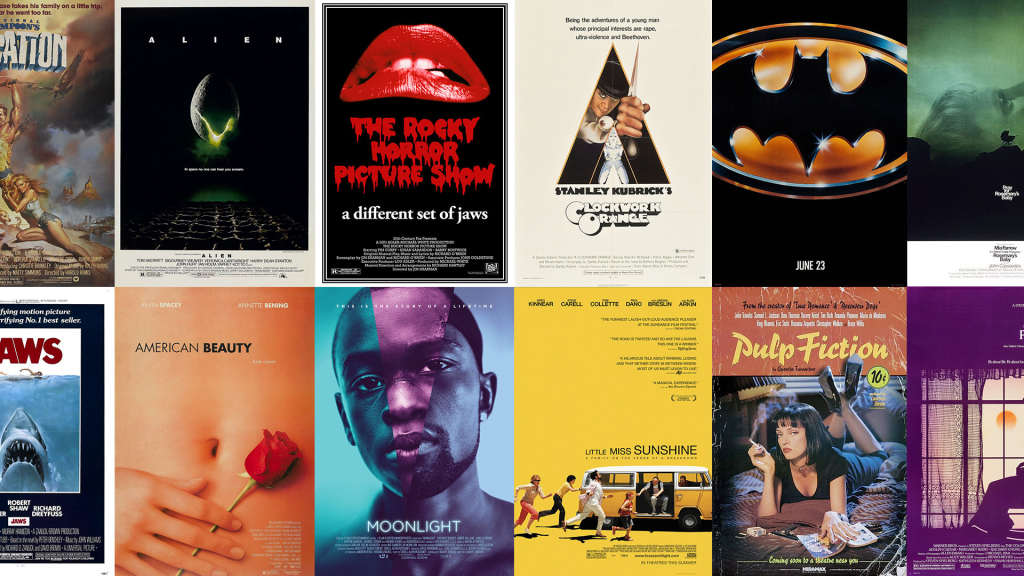


It’s true you can’t entirely judge the book (or the movie or the album or the play) by the cover (or the poster).
But it’s a helluva clue.
About the creator’s taste and attention to detail for the art you’re about to experience.


“Even if you’re not self-employed, your boss is you. You manage your career, your day, your responses. You manage how you sell your services and your education and the way you talk to yourself. Odds are, you’re doing it poorly…There are few good books on being a good manager. Fewer still on managing yourself. It’s hard to think of a more essential thing to learn.” -Seth Godin
You may think a great reason to become an entrepreneur is that you will no longer have a boss. No one telling you what to do and when to do it by.
You’re wrong.
You still have two bosses:
-You.
-Your client/customer.
You must work hard for and treat both with enormous respect.
Otherwise, you’ll end up firing yourself.
P.S. – This phenomenal post from Seth.
“You know, no one’s really that great. You know who’s great? The people that just put a tremendous amount of hours into it. It’s a game of tonnage—how many hours are you going to work? Per week? Per month? Per year?…[If I could do it over] What I really should have done is I should have had a giant flag behind me, and when I pulled a string, it would roll down, and on the flag, it would just say two words: Just work.” -Jerry Seinfeld
“The secret of happiness is not to do what you like to do, but to learn to like what you have to do.” -King George V
“Every habit and capability is confirmed and grows in its corresponding actions, walking by walking, and running by running . . . therefore, if you want to do something make a habit of it, if you don’t want to do that, don’t, but make a habit of something else instead. The same principle is at work in our state of mind. When you get angry, you’ve not only experienced that evil, but you’ve also reinforced a bad habit, adding fuel to the fire…If you don’t wish to be a hot-head, don’t feed your habit. Try as a first step to remain calm and count the days you haven’t been angry. I used to be angry every day, now every other day, then every third or fourth . . . if you make it as far as 30 days, thank God! For habit is first weakened and then obliterated. When you can say ‘I didn’t lose my temper today, or the next day, or for three or four months, but kept my cool under provocation,’ you will know you are in better health.” -Epictetus, Discourses
“I fear not the man who has practiced 10,000 kicks once, but I fear the man who had practiced one kick 10,000 times.” -Bruce Lee
You’ve probably heard some variation of the old adage that the majority of success in life comes from just showing up.
(I would also add knowing your definition of success. Figuring out exactly what you want and why you want it, but that’s a different blog post.)
So, just show up.
Sound too easy?
Okay, give it a try.
Just show up.
And then keep showing up.
Every.
Single.
Day.
Especially when you don’t feel like showing up.
One week.
One month.
One year.
No missed days. (If you miss, just don’t miss again.)
Challenge accepted?
I look forward to hearing back.
“Pressure is a privilege.” -Robert D’Avanzo
“If you’re not feeling those butterflies, you’re not taking a big enough risk.” -Ray Manzarek
You were caught in the crossfire of childhood and stardom
Blown on the steel breeze
Come on, you target for faraway laughter
Come on, you stranger, you legend, you martyr, and shine -song “Shine On You Crazy Diamond” by Pink Floyd
Feeling nervous?
Good.
That means you care deeply about something.
It means you’re doing something you love.
It means you’re ALIVE.
What a gift.
Most people don’t get that gift.
But you do.
Don’t waste it.
Use the nerves as fuel. As energy.
Channel them.
Focus.
Go out there and shine on you crazy diamond.
“Change happens when the pain of staying the same is greater than the pain of change.” -Tony Robbins
“Before a big movie comes out, I just remind myself: I was evicted when I was 14, we were kicked off the island, we couldn’t live in Hawaii, had no place to live, a lot of shit happened when I moved to Nashville, I was arrested multiple times before I was 16 years old…I remember that…What helps me is to keep the hard times in the front of my mind because it allows me to go into these big moments that I worked my ass off to get with a different perspective…What it also does for me is that I keep my back against this motherfcker [points to wall] because it’s what I believe in. And when my back is against this motherfcker then there is nowhere else to go but [forward].” -excerpt from Dwayne “The Rock” Johnson speech to the Los Angeles Lakers in 2018.
Per Wikipedia, the Region Beta Paradox is “the phenomenon that people can sometimes recover more quickly from more distressing experiences than from less distressing ones. The hypothesized reason is that intense states trigger psychological defense processes that reduce the distress, while less intense states do not trigger the same psychological defense processes and, therefore, less effective attenuation of the stress occurs.”
Or put another way per this Medium article, it is “a weird human tendency to remain in a state of mild discomfort and only jump into action (or make that decision) when things get super uncomfortable or downright painful. It’s like waiting until our bedrooms are a total disaster zone before we clean it up or waiting until the last moment to do a project…This becomes an issue when we decide to make a decision only at a certain point or threshold…Region Beta is just short of our threshold of ‘badness’.”
The term was first coined by psychologist Daniel Gilbert in a paper that gave the example of a commuter who if they have to travel under a mile, will walk. If over a while, they’ll drive (or ride a bike). Since the car is faster, the commuter will reach some distant locations more quickly than nearer destinations (region beta in their diagram), reversing the normal tendency to arrive later at more distant locations. Therefore, paradoxically we would go a longer distance faster, in effect making a worse situation better.
It’s a fascinating phenomenon and yet another example that highlights we don’t always behave rationally or logically.
Is there anything we can do to avoid being stuck in this paradox for months or years on end?
I think it starts with just being aware. Noticing areas in your life where the barnacle of complacency has set in. You might need to do something to purposely shake things up.
Or as The Rock advises…intentionally put your back against the motherf-cking wall.
As the artistic director of Vs. Theatre Company, there are two questions I always ask myself before deciding to produce a play:
(1) This very well could be the last play we ever do. Is this the one I want to go out on?
(2) With the resources at our disposal (e.g. theatre space, finances, etc…), can we do the definitive version of this play? It’s art and by definition, one has no idea if it will work. But I need to feel like we have a fighting chance to do a world class production. We owe it to the play, the playwright, the artists and the audience.
If the answer to either of the above questions is “No”, I pass. It’s that simple.
I shared this producing philosophy recently with some colleagues after seeing 52 Pick-Up at the Hollywood Fringe. (A great show by the way. The two actors, JJ and Ann (she also wrote it), are dynamite together. Don’t miss it.) My friend and talented artist Matt, overhead the conversation and politely asked to interject. Below is our exchange (some paraphrasing):
Matt: “I love this philosophy. But if I may, I would add a third question.”
Me: “Sure. What is it?”
Matt: “Do I mean it?”
Me: “….”
Matt: “If you answer yes to the first two questions, then you’re gonna produce the play, right? But as you know, it’s a ton of work. The timing has to be right. Other stuff…So to move forward with a production, you kinda have to challenge yourself…Ask yourself if you mean it….Do you really mean your ‘Yes” answers to the first two questions.”
Me: “Yes!”
Such a great third question. (Thank you Matt.)
And one that has universal application.
Before setting out to do anything, ask yourself, “Do I mean it?…Do I really mean it?”
If yes, then proceed.
“We don’t get a chance to do yesterday over again. The best reason to think about the past is because it gives us the opportunity to improve the future. Because we don’t get tomorrow over again either.” -Seth Godin
“Pain + Reflection = Progress.” -Ray Dalio
“If there is no struggle, there is no progress.” – Frederick Douglass
“Struggle is a never ending process. Freedom is never really won,
you earn it and win it in every generation.” -Coretta Scott King
“With a tear for the dark past, turn we then to the dazzling future, and, veiling our eyes, press forward. The long and weary winter of the race is ended. Its summer has begun. Humanity has burst the chrysalis. The heavens are before it.” -Edward Bellamy, Looking Backward
As painful as it is to reflect on the mistakes you made yesterday, it is the necessary learning and fuel in order to imagine and create your better tomorrow.
Look Back to Look Forward.
P.S. – Happy Juneteenth.
“There’s a kind of unexplainable energy you tap into — if you just start. One word, then another, and before long, you’re gone.” -Stephen King, On Writing
“The mystique of rock climbing is climbing; you get to the top of a rock glad it’s over but really wish it would go on forever. The justification of climbing is climbing, like the justification of poetry is writing; you don’t conquer anything except things in yourself…. The act of writing justifies poetry. Climbing is the same: recognizing that you are a flow. The purpose of the flow is to keep on flowing, not looking for a peak or utopia but staying in the flow. It is not a moving up but a continuous flowing; you move up to keep the flow going. There is no possible reason for climbing except the climbing itself; it is a self-communication.”
― Mihaly Csikszentmihalyi, Flow: The Psychology of Optimal Experience
“‘Muscle memory’ doesn’t live in our hands or legs. The real control centre is in the brain. This is where movement begins, guided by systems that plan and initiate what we do. From there, messages travel through long chains of nerve cells – from the brain down the spine and out to the rest of the body. Millions of tiny electrical signals, known as action potentials, move back and forth, telling our muscles, organs and even the tips of our fingers what to do next…The idea is to ‘program’ the right moves in our brain so they become so automatic we can use them to, yes, feel, and to find flow…One thing is for sure, if you keep chasing flow by some sort of celestial action, waiting for your inner genius to strike from nowhere, you’ll keep failing. Because that genius, apologies for being blunt, is, in fact, nowhere to be found. Genius is work…Creatives who invite regular technique practice into their life will experience their art as second nature.” -Julia F. Christensen
“Control over consciousness is not simply a cognitive skill. At least as much as intelligence, it requires the commitment of emotions and will. It is not enough to know how to do it; one must do it, consistently, in the same way as athletes or musicians who must keep practicing what they know in theory.”
―Mihaly Csikszentmihalyi, Flow: The Psychology of Optimal Experience
Wanna find more flow?
Start by practicing more and doing so deliberately. With concentration, intention and purpose. (e.g. The musician practicing scales. The dancer doing barre work. The athlete doing drills. The actor working on the text.)
The harder you practice it.
The easier it is to let it go.
And just let it flow.
Thomas Merton, the great writer and Trappist monk, was once asked how a person can have more mystical experiences in their life. His reply:
“You’ve just got to put in the time.”
P.S. – This excellent Aeon article on flow and mastery.
“In pursuit of knowledge,
every day something is added.
In the practice of the Tao,
every day something is dropped.
Less and less do you need to force things,
until finally you arrive at non-action.
When nothing is done,
nothing is left undone. –Tao Te Ching by Lao-Tzu (Stephen Mitchell translation)
Perfection is achieved, not when there is nothing more to add, but when there is nothing left to take away.” — Antoine de Saint-Exupéry
Give it away, give it away, give it away now
Give it away, give it away, give it away now
Give it away, give it away, give it away now
I can’t tell, if I’m a kingpin or a pauper -song “Give It Away” by Red Hot Chili Peppers
“The sculpture is already complete within the marble block, before I start my work. It is already there, I just have to chisel away the superfluous material.” -Michelangelo
“Essentialism is not about how to get more things done; it’s about how to get the right things done. It doesn’t mean just doing less for the sake of less either. It is about making the wisest possible investment of your time and energy in order to operate at our highest point of contribution by doing only what is essential.” -Greg Mckeown, Essentialism: The Disciplined Pursuit of Less
Instead of trying to add more to your life. More desires, more stuff, more whatever.
See how much you can take away.
Eventually you will arrive where you started. With everything you need. Nothing more. Nothing less. True satisfaction. True perfection.
Take it away. Take it away. Take it away now.
Have a WordPress.com account? Log in now.

