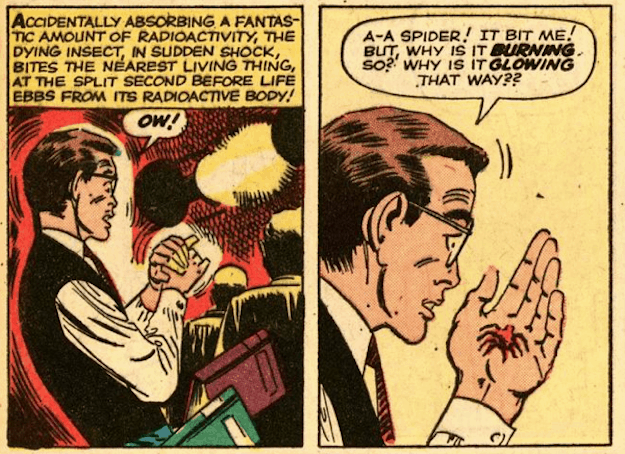
“There is nothing either good or bad but thinking makes it so.” -Shakespeare, Hamlet
Like any great script, there will be all kinds of unexpected twists and turns along your producing journey. Try not to label them as good or bad events. They just are what they are. And your job is to flow, to move through each one of them with grace. Until the final outcome.
A great story from the Huai Nan Tzu reinforces this concept…
A poor farmer’s horse ran off into the country of the barbarians. All his neighbors offered their condolences, but his father said, “How do you know that this isn’t good fortune?” After a few months the horse returned with a barbarian horse of excellent stock. All his neighbors offered their congratulations, but his father said, “How do you know this isn’t a disaster?”. The two horses bred, and the family became rich in fine horses. The farmer’s son spent much of his time riding them; one day he fell off and broke his hipbone. All his neighbors offered the farmer their condolences, but his father said, “How do you know that this isn’t good fortune?” Another year passed, and the barbarians invaded the frontier. All the able-bodied young men were conscripted, and nine-tenths of them died in the war. Thus good fortune can be disaster and vice versa. Who can tell how events will be transformed?
“What we’ve got here…is failure to communicate.” -Captain in the film Cool Hand Luke
“Communication breakdown, it’s always the same. Havin’ a nervous breakdown, a-drive me insane.” -Led Zeppelin from their song Communication Breakdown
A central theme in any drama or comedy is the characters inability to communicate with one another. That leads to conflict which makes for interesting viewing.
Just like in real life, there are many reasons for the characters communication breakdown. Ego, not knowing what they want, not being in touch with their emotions, being afraid to speak up, assuming your message was delivered, etc…
As a producer, you must be an excellent communicator. You must OVER COMMUNICATE. Early, often and throughout. Be super clear with what you want and your expectations of others. Set reasonable deadlines. Don’t assume your email did the job. Pick up the phone and also call the person. Meet with them when you can. Have empathy. Try to put yourself in the other artist’s shoes. How would you receive your message if you were them?
Like most things, communication is a skill that you can dramatically improve with desire and practice. And there’s no better way to practice than diving in and manifesting your passion project. You’ll grow tremendously as a communicator (you’ll be forced to) and be ready and sharper for your next one.
If culture is the story we all agree on, then it makes sense that in order to change the culture, we need to tell a different story.
That starts with ourselves. To “be the change we wish to see in the world” as Ghandi advised, let’s first make sure the narrative running in our head is an empowering one.
Think back on your life, the events that shaped you. Was there are a moment or key moments that made you who you are? Who you aspire to be?
Go tell that story.
P.S. – For a deeper dive on this topic, check out Seth Godin’s podcast episode Here. He tells a great origin story.
My favorite question to ask a fellow artist (and one someday for the Vs. Studio podcast): “What production, either one you were in or saw, made a significant impact on you? And why?”
Following up my most recent post about August Wilson’s Jitney, I’d be remiss if I didn’t discuss another giant personal takeaway from that show.
It was 2006. I was producing and acting in Brett Neveu’s Eric LaRue for Vs. at the Elephant Theatre (now Sacred Fools Theatre). In the same building, at the Lilian Theatre, was Jitney. Every night there was a big line of people to see it and the buzz afterward was electric. One of their producers, Alan Naggar, was always there to greet and thank the audience for coming. (Alan passed away a couple of years ago. He was a friend and a great actor and producer.) One night Alan and I struck up a conversation outside the Lilian, under the streetlights. He had heard good things about our show and planned to see it. He also invited me to see Jitney when our run ended.
I took him up on his offer and was…poleaxed. Everything about Jitney was first rate–the acting, the direction, the set, the costumes, the lighting, the sound design, I mean EVERYTHING–you could see and feel just how much love and care went into the show. When I got home I told my wife how phenomenal it was. And in the ensuing days I reached out to everyone in Vs. and other colleagues and told them they HAD to see it. I went back many times, bringing people with me each time. I found my lodestar. While I was very proud of the work we were doing, THIS was on another level. THIS was where I wanted Vs. to go.
One night Alan introduced me to the cast, including the actor who was also a producer. I peppered the actor with questions. Showered him with praise. He patiently and thoroughly answered everything and received my compliments with true grace and humility. When he left, Alan told me a secret…The actor didn’t have all the money to pay for this production. But because he was so passionate about the part and the play, the actor, who was also married with a new baby, had taken out a second mortgage on his home.
“Whoa.”
I vowed right then and there that Vs. wouldn’t produce another play unless it was something we absolutely loved. Something we HAD to do…Two years later, after numerous appeals to get the rights, we produced John Kolvenbach’s On An Average Day. It was a seminal work for us. We turned a corner with it and haven’t looked back since.
I will forever be grateful to that actor, to Alan, and the entire Jitney production for inspiring me on a deep and soulful level. For affirming just what can happen when you hold out for what you love, and you have a strong why, and you commit to excellence and generosity throughout.
P.S. – I’d love to hear any stories about shows that impacted you!
The gift of a great script is that if the actor simply commits to learning the lines exactly as written, they will then get the rhythm, and once they have the rhythm, they will then have the character.
One of the greatest productions I ever saw was of August Wilson’s Jitney. I saw it many times and got to know one of the actors through those repeat viewings. I asked him about the director’s rehearsal process. He said that for the most part, the director just closed his eyes and listened to the piece. If the rhythm was right, he let the actors keep going. If it was off, and it was almost always because of a blown pause or saying the wrong word, the director would stop and have them go back.
Once the cast could get through the whole script without stopping is when they knew they were on the right track.
A common response a celebrity gives when asked why they pursued a career in such a brutal industry like show business:
“I had no choice. I just couldn’t do anything else.”
When you make your own art, you choose. You could do many other things, more lucrative and “safe” things, but because you love and care so much about the idea in your head and want to share it with others, you do it anyway.
That’s way more powerful than doing something because you had no other choice.
“You can do anything. But not everything.” -David Allen
It’s the end of January and about that time when many people abandon their New Year’s resolutions. This excellent article by Arthur Brooks of The Atlantic details why.
One reason we abandon our goals is because we’ve simply made too many. In a fit of enthusiasm we jotted down all these things we wanted to accomplish without being realistic to our life and time and responsibilities. Once realization sets in, we throw in the towel on ALL our resolutions.
Before reaching that point, look closer at your list. Similar to the magic focusing question, ask yourself what is your “domino goal.” Meaning what single goal, if completed, would render all the other goals un-necessary or less important. Double down, focus on all your efforts on accomplishing that one.
P.S. – For more inspiration check out this OK Go video Here.
Lebron James was in the zone last night. He scored 46 points and shot 73 percent from the field including 7 for 11 from the 3 point line. An absurdly great and efficient performance.
Over the years, athletes and artists have described what it feels like to be in the zone. “A flow state”, “Everything just slows down”, “Out of body”, “Not thinking”, “Fully present”, “Every choice just feels right” are some of the descriptions given. We wish we can be in the zone all the time, yet it remains rare and elusive. Legend has it that Lawrence Olivier famously broke down in his dressing room after giving what he thought was the greatest performance of “Hamlet” in his life. The reason for his sobbing was because he had no idea how he did it or if he could ever do it again.
We don’t need to be in the zone to feel good about our work. Yes, it’s a beautiful and fun thing when it happens. But it’s our passion, our discipline, our commitment to excellence, and our constant effort that’s left behind when the zone has come and gone. That’s what we can hold onto.
A most generous thing you can do for any artist, whether it be a project you’re producing or just a friend who’s struggling to finish something…
Think creatively, call them up and get them to agree to an arbitrary deadline. Maybe it’s a small group reading of their script? Or an entry into a contest you found? Doesn’t matter what it is. Just that they now have a date on the calendar to shoot for.
“Hoping for the best, prepared for the worst, and unsurprised by anything in between.” -Maya Angelou, I Know Why The Caged Bird Sings
“Two weeks.” In the hilarious film The Money Pit, that’s the answer given to Walter Fielding (played by Tom Hanks) whenever he asks how long the renovation will take. Walter knows better, but his optimism and “wanting it to go well” gets the better of him. He allows himself to believe everything will go smooth. That doesn’t happen as evidenced by this scene and this scene and this climactic one.
Let’s face it, as artists, most of us are eternal optimists. We try to see the good in everything and everyone. We hope for positive outcomes and constantly imagine a better tomorrow. But that doesn’t mean we can’t also be pragmatic and practical. Especially when wearing our producer hat.
One way to do that is with budgeting. Once we estimate how long something will take, how much it will cost and how much revenue it will generate (e.g. ticket sales, donations, etc…), a good exercise is to create a separate budget. Call it a “worst case scenario” budget. Cut your revenues by 50-75 percent. Double the time it will take. Double the cost. Then ask yourself, “If this worst case scenario budget happens, will I still be okay? Can I still make this project happen.”
If yes, move forward with confidence that you can withstand any contingencies that might arise. Of course you want to do better than worst case scenario and you probably will. But now you have a floor to manage against.
If no, you might want to do some more fundraising or scale back some of your ambitions for the project. Or both.
Either way, you’ll be a better and more prepared producer by having undergone this exercise. You can focus more time on the art and less time dealing with unexpected emergencies.