“They’re stuck in a job they don’t like. They’re stuck working for a boss they don’t like. They’re stuck on a team they don’t like…I just tell them, ‘Be great.’ The reality of life is that you can’t just always quit your job. You can’t just always go to your boss and say, ‘Give me the promotion, or I’m out of here.’ So when you’re stuck, you’ve gotta find it within yourself to say, ‘Ok, this is where I am. And if I’m going to be here, I’m going to be great.’ The benefit is, first, “it always feels great to be great.” And, second, “if you’re great at your job, typically other people and companies find out, so it creates opportunities.” -Mark Cuban
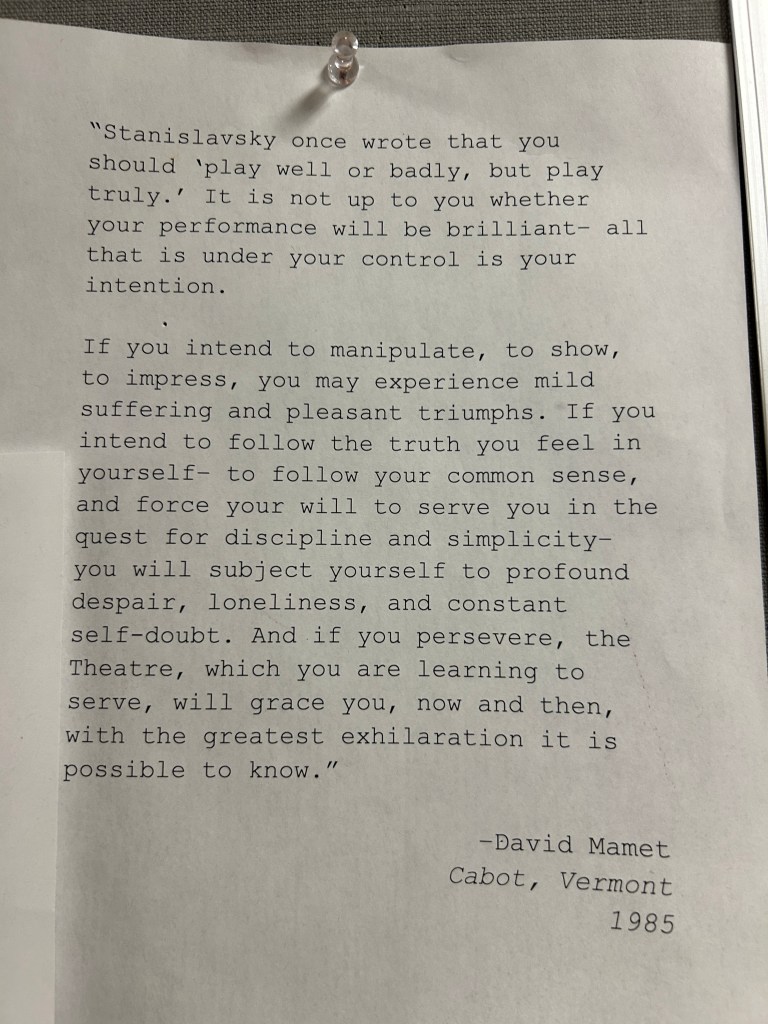
“This is something a teacher told me years ago, and he’s right: even if you’re auditioning for something that you know you’re never going to get or for something you read and didn’t like—if you get a chance to act in a room that somebody else has paid rent for, then you’re given a free chance to practice your craft. And in that moment, you should act as well as you can. Because when you act as well as you can, there’s no way the people who have watched you will forget it. So it leads to opportunities, but more importantly, at the end of the day, all that matters is the work. Everybody knows that. If I show up one day and the work I’m doing isn’t any good, then I’m just a guy who’s not acting well…So I would say it to anybody starting out: if you’re given a chance to act, take those words and bring them alive. If you do that, something good will transpire ultimately.” -Philipp Seymour Hoffman
“Start where you are. Use what you have. Do what you can.” -Arthur Ashe
Feeling stuck in your job, in your art, in your life?
Wanna get unstuck?
Focus on being great where you are now. Even if you don’t like it.
One of three things will happen if you lean in and do become great. Perhaps all three at once.
(1) You might realize you do love the thing after all.
(2) Someone will find you with an amazing opportunity that is your perfect fit.
(3) You’ll have learned some valuable new skills and developed incredible grit.
I’ll close with this Tom Brady story. It’s from Billy Oppenheimer who inspired this blog post…
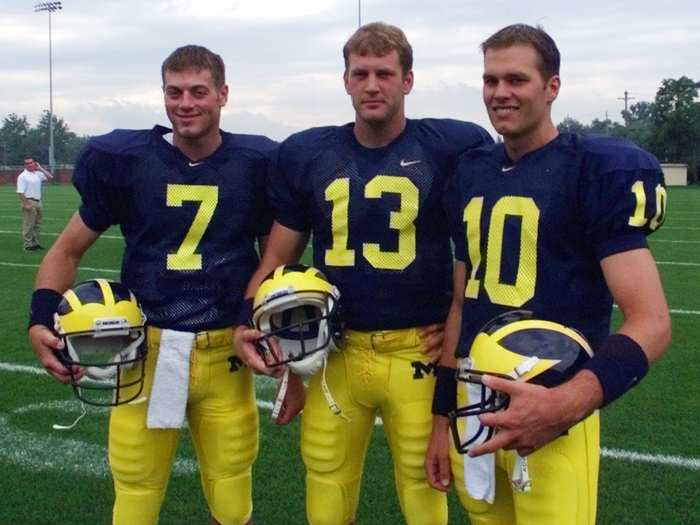
After his second year at Michigan, Tom Brady wanted to transfer. He wasn’t playing in games, and he was so low on the depth chart that he only got 2 reps in practice. Brady met with his coach to express his frustration, “The other quarterbacks get all the reps.” His coach replied, “Brady, I want you to stop worrying about what all the other players on our team are doing. All you do is worry about what the starter is doing, what the second guy is doing, what everyone else is doing. You don’t worry about what you’re doing.” Coach reminded him, “You came here to be the best. If you’re going to be the best, you have to beat out the best.” And then he recommended that Brady start meeting with Greg Harden, a counselor who worked in Michigan’s athletic department. Brady went to Harden’s office and whined, “I’m never going to get my chance. They’re only giving me 2 reps.” Harden simply replied, “Just go out there and focus on doing the best you can with those 2 reps. Make them as perfect as you possibly can.” “So that’s what I did,” Brady said. “They’d put me in for those 2 reps, man, I’d sprint out there like it was Super Bowl 39. ‘Let’s go boys! Here we go! What play we got?’” “And I started to do really well with those 2 reps. Because I brought enthusiasm, I brought energy.” Soon, it went from getting 2 reps to getting 4 reps. Then from 4 to 10, “and before you knew it,” Brady said, “with this new mindset that Greg instilled in me—to focus on what you can control, to focus on what you’re getting, not what anyone else is getting, to treat every rep like it’s the Super Bowl—eventually, I became the starter.”


 The Vs. Studio Blog