“He that hasteth with his feet sinneth.” -Proverbs 19:2, KJV
“Be quick but don’t hurry.” -John Wooden
But mama said you can’t hurry love No you just have to wait She said love don’t come easy It’s a game of give and take You can’t hurry love No, you just have to wait You gotta trust, give it time No matter how long it takes -song “You Can’t Hurry Love” by The Supremes
It’s impossible to…
…Be kind.
…Be present.
…Be grateful.
…Be helpful
…Be patient.
…Be joyful.
…Be good.
…Be focused.
…Be relaxed.
…Be confident
…Be loving.
Or embody any other positive and productive trait when you’re…
…In a hurry.
You’re too distracted,
So don’t be in a hurry.
Be on time.
Better yet.
Be early.
It will make a huge difference in your overall quality of life.
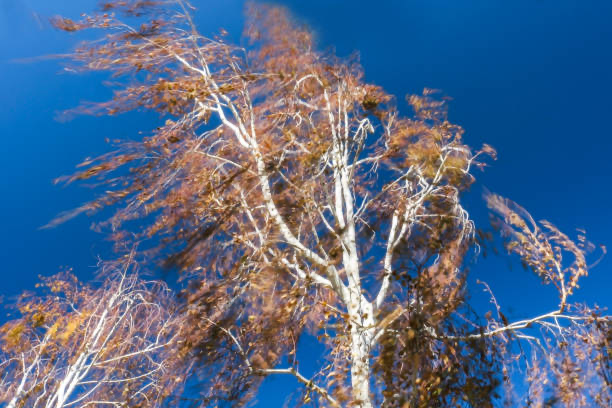
“But when I walk through a forest that I saved, when I hear the sound of wind rustling in young trees, trees that I planted myself, I realize that I have my own little bit of control over the climate. And if after thousands of years one person is happier because of it, well then…I can’t tell you the feeling I get when I plant a birch tree and I see it grow up and sprout leaves, I…I mean, I fill up with pride, I… -Astrov in Uncle Vanya by Anton Chekhov
“The wind blows where it wishes, and you hear its sound, but you do not know where it comes from or where it goes. So it is with everyone who is born of the Spirit” -John 3:8
“A longing to wander tears my heart when I hear trees rustling in the wind at evening. …[It] leads home.” -Herman Hesse, Bäume
One of the many wonderful things about working in depth on a great play and character is how it works on you. I’ve recommended before having an anchor play. Something you can read and reflect on every day, even if it’s just 5 minutes. That constancy of effort over a long period of time (I recommend one year at least) will yield amazing discoveries. You’ll start to notice things you never did before. You’ll look at the world with fresh eyes. You’ll have greater empathy and tolerance for people. I could go on and on about the myriad benefits of this practice.
One personal example…I’ve been working on Astrovin Uncle Vanya for years now. As a result, I’m much more appreciative of nature. I take long walks just to look, listen and linger. I try to take in everything. One thing I always notice is the wind rustling in trees. It’s a beautiful sight and sound and the variations are infinite. I’m grateful for how the play and part have worked on me
And you may ask yourself, “Well, how did I get here?” -song, “Once In A Lifetime” by Talking Heads
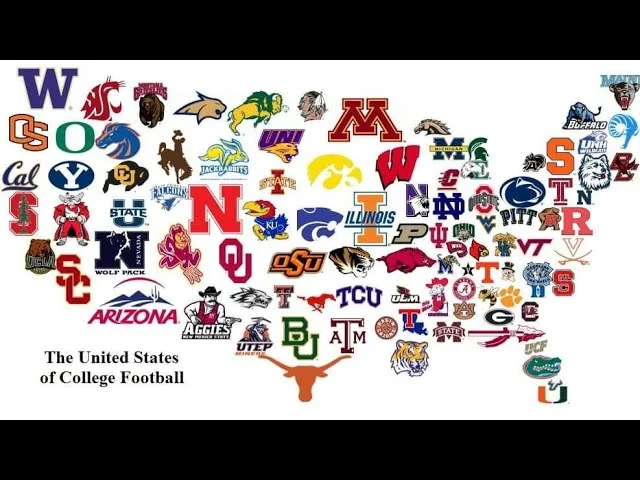
In ten days, millions of high school seniors, including my son Truman, will decide which college is right for them. Where do they want spend four of their most formative years. For many, it can be a daunting and overwhelming decision.
Here’s some of the advice I gave Truman:
(1) Start with gratitude. The fact that you even can attend college, let alone have some good options, puts you way ahead. Not everyone has this choice. Be thankful for this opportunity.
(2) If you don’t know, pick the school where you “can see yourself there.” Something that “feels kinda right.” Don’t over-analyze why it feels right. If it does, go with that.
(3) Don’t worry if after you pick, you’re still unsure. For every person who attends their “dream school”, there are hundreds who just chose. And it worked out great. Often better.
(4) Any school becomes the right school if you make great friends there. People you have fun and make memories with, who are different than you and you can learn from, who bring out your best, and who are still in your life decades later. (I’m fortunate to have those kinds of friendships from my University of Chicago experience. What a gift.)
(5) Once you pick, make it stick. Lean in to your choice and go all in. Don’t look back. Otherwise when the inevitable difficulty arises…the tough class, the brutal weather, the homesickness, etc…you will want to quit. If you can push through and get to the other side, that’s where the magic happens.
(6) Once you get to campus, go first. Be outside as much as possible. Get your head out of your phone. Make eye contact. Smile. Say hello. Sign up for stuff. Join clubs and teams. Go to games, parties, events. Volunteer. Get an on-campus job. Take every class that interests you, not just the ones that are “practical” or for your major. If someone asks you to do something, say yes. Go to every single class. Sit up front. Go to office hours. Ask interesting questions. Join (or form your own) study groups.
If you do your part and control what you can control, any school you pick will be the right school.
(Note: This advice also applies to jobs and projects and just about any situation you find yourself in.)
“The most important thing to understand is that the process of creating art makes art of you. Let me repeat that—the book, the painting, the film script is not the only art. It’s important, but in a way, it’s just a receipt. It’s a diploma…In the end of it all, you are the art. The most important change made by an artistic endeavor is the change it makes in you.” -novelist, Brandon Sanderson
You are the art.
The art is in you.
The goal of making art isn’t the art.
It’s who you become as a result of making the art.
It’s time to release the art that’s been inside you all along.
H/t to Suse Sternkopf for sharing the above 3 provocative quotes on last night’s Vs. “Bring Your Art” Night.
What is “Bring Your Art” night, you ask?
So we started doing Vs. Tuesday Night Readings on Zoom back in March, 2020. It was a way to keep art and community alive during Covid. Since then, we’ve done over 300 Tuesday Nights and read over 250 plays. (Prior to Covid, we used to do weekly live readings back in the old Vs. space. Also every Tuesday).
About 4 times per year or once per quarter, we host a night where anyone can bring in something to share with the group (i.e. their “art”). It can be a poem, monologue, scene, short story, journal entry, song, piece of writing, painting, sculpture, short film, favorite dance move, whatever…anything that’s meaningful or inspiring to the person sharing.
I so love these nights because (a) it gets everyone involved and (b) I am continually blown away by the talent and beautiful spirits of our community. I am very grateful for all of them.
Speaking of which, Suse shared the above 3 quotes and some context behind them, and now I am sharing with all of you.
Enjoy and I look forward to seeing you at the next “Bring Your Art” night!
You feel pressure when your decisions matter, and people depend on you. It can feel uncomfortable at times, but it’s also a privilege. When no one relies on you — when no one expects something from you — you’re irrelevant.
Pressure is a privilege.” -Shane Parrish
Can’t we give ourselves one more chance? Why can’t we give love that one more chance? Why can’t we give love, give love, give love, give love Give love, give love, give love, give love, give love?
‘Cause love’s such an old-fashioned word And love dares you to care for The people on the (People on streets) edge of the night And love (People on streets) dares you to change our way of Caring about ourselves This is our last dance This is our last dance This is ourselves Under pressure Under pressure Pressure -song “Under Pressure” by Queen & David Bowie
“Watch your thoughts, they become your words; watch your words, they become your actions; watch your actions, they become your habits; watch your habits, they become your character; watch your character, it becomes your destiny.” -Lao Tzu
As much as possible, you want to avoid thinking and certainly saying, “I don’t want” statements. The reason? The more you express what you don’t want, the more you increase your chances of getting it. There’s even a name for this effect. It’s called the Ironic Process Theory and scientific studies validate it. This Sahil Bloom article goes into more detail.
So what to do about this effect?
Catch yourself in the act. Turn your X’s to Y’s.
The next time you feel yourself thinking “I don’t want X…”, turn it around. Instead think, “I want Y…”
For example, “I don’t want to be broke” turns to “I want to live a life where I am financially free and my money can make a real impact on the world.” Or, “I don’t want to work a job I hate” turns to “I want to engage in meaningful work that aligns with my passion.”
It’s a subtle shift, but it can be a game changer.
And like anything, it’s a habit, a practice, and thus, takes work. Don’t worry if you’re not perfect. Just be intentional.
At the very least, you’ll feel your mood and energy level improve. And that’s reason enough to try it, right?
“Men formulate perishable dogmas, and call them Truth. Truth cannot be formulated; it is ineffable, and ever beyond the reach of intellect. It can only be experienced by practice; it can only be manifested as a stainless heart and a perfect life.
Who, then, in the midst of the ceaseless pandemonium of schools and creeds and parties, has the Truth? He who lives it. He who practices it. He who, having risen above that pandemonium by overcoming himself, no longer engages in it, but sits apart, quiet, subdued, calm, and self-possessed, freed from all strife, all bias, all condemnation, and bestows upon all the glad and unselfish love of the divinity within him.” -James Allen, From Poverty To Power
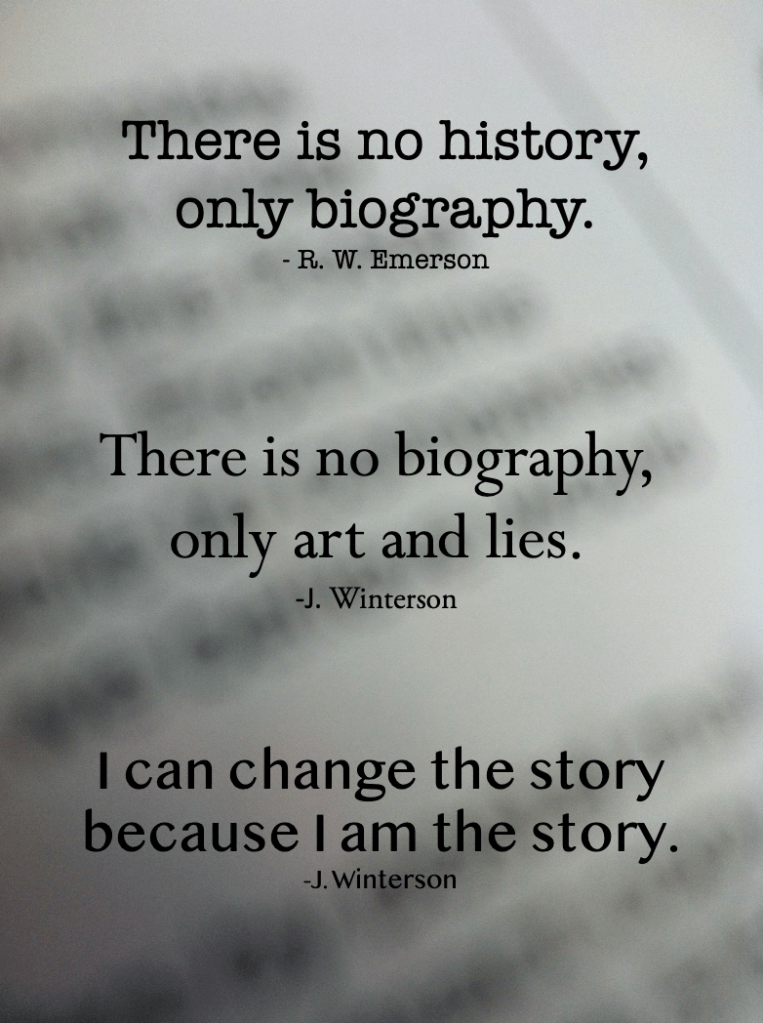
We’re all unreliable narrators.
We can try to tell the exact truth of the events of our lives, but no matter what, our storytelling will be a simulacrum. Because every event is filtered through our own experience, values, and beliefs. But even more so, through the meaning we ascribe to these events. We can’t help it. We’re meaning-making machines.
So if that’s the case, let’s start telling a better story.
An empowering story. An energizing story. An “I-can’t-wait-to-get-out-of-bed-and-tell-this” story.