“If you need to be proven right, learning is a challenge. If you’re eager to be proven wrong, learning is delightful.” -Seth Godin
“Strong opinions. Weakly held.” -Marc Andreessen
Yes, you absolutely need the vision, the belief, the conviction, to start your passion project.
But you also need to be open-minded to new information you learn along the way. That way you can tweak, iterate, or full pivot if need be.
Just like a great entrepreneur, scientist, or documentary filmmaker does…start with a thesis, but then allow the real story to unfold. Capture the truth of the events and be delighted to be proven wrong.
“Faced with a choice between changing one’s mind and proving there is no need to do so, almost everyone gets busy with the proof.” -J.K. Galbraith
“The most difficult subjects can be explained to the most slow-witted man if he has not formed any idea of them already; but the simplest thing cannot be made clear to the most intelligent man if he is firmly persuaded that he knows already, without a shadow of doubt, what is laid before him.” -Leo Tolstoy
“Belief makes us human. Belief is our tool to dance with a possible future, confront our fears, and build community. Our personal taste and our preferences belong to us as well, helping us believe in ourselves…There’s more proof in the world than ever before, not less. It’s no longer, “I’ll believe it when I see it,” but instead, “I am confident enough to change my mind and informed enough to do the math and understand the concepts”…But the time we spend arguing about proof that we’re not prepared to accept is simply wasted. Belief needs proof the way a fish needs a bicycle.” – Seth Godin
“Always remember that to argue, and win, is to break down the reality of the person you are arguing against. It is painful to lose your reality, so be kind, even if you are right.” -Haruki Murakami
“I criticize by creation. Not by finding fault.” -Cicero
Some excellent articles have been written about this subject. Like this one and this one. Interestingly enough, all three articles employ the exact same headline “Why Facts Don’t Change Our Minds.” I encourage you to read and reflect on them.
TLDR/Spoiler alert: So much of the answer comes down to one word…
Belief.
Yours and theirs.
Once you become aware of this, you’ll have much more empathy and kindness.
Towards yourself. And others.
One reason great art can penetrate is that it aims for the heart. Not the head.
“Comparison is the thief of joy.” -Teddy Roosevelt
The best athlete wants his opponent at his best. The best general enters the mind of his enemy. The best businessman serves the communal good. The best leader follows the will of the people. All of them embody the virtue of non-competition. Not that they don’t love to compete, but they do it in the spirit of play. In this they are like children and in harmony with the Tao. -“Tao Te Ching” by Lao-Tzu (translated by Stephen Mitchell)
“Art is about the maker. Its aim: to be the expression of who we are. This makes competition absurd. You are creating the work that best represents you. Another artist is making the work that best represents them. The two cannot be measured against one another. Art relates to the artist making it, and the unique contribution they are bringing to the culture…Being made happy by someone else’s best work, and then letting it inspire you to rise to the occasion, is not competition. It’s collaboration…Great art is an invitation, calling to creators everywhere to strive for still higher and deeper levels.” Rick Rubin: The Creative Act: A Way Of Being
“If I ever do anything in my life, I’m going to make that good an album. I was so happy to hear it that I went and started writing ‘God Only Knows.’ ” -Brian Wilson on The Beatles Rubber Soul
“God Only Knows’ is the best song ever written.” -Paul McCartney.
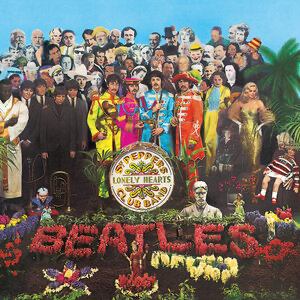
“Without Pet Sounds, Sgt. Pepper never would have happened.” -Beatles producer George Martin
A healthy sense of competition (or really “collaboration” per Rick Rubin in the quote above) should invite, inspire and energize you. It should fill you with joy at what’s possible. Ala The Beach Boys and The Beatles going back and forth on making two of the greatest albums of all time.
An unhealthy sense of competition just leaves you feeling depressed, enervated and at worst, envious.
You’ll know which kind you have by how you feel and if you’re moved to take action.
“All the world’s a stage, And all the men and women merely players” -from the play As You Like It by William Shakespeare
“Everything’s copy.” -Nora Ephron
“Each of us has a container within. It is constantly being filled with data. It holds the sum total of our thoughts, feelings, dreams, and experiences in the world. Let’s call this the vessel. Information does not enter the vessel directly, like rain filling into a barrel. It is filtered in a unique way for each of us…One can think of the creative act as taking the sum of our vessel’s contents as potential material, selecting for elements that seem useful or significant in the moment, and representing them. This is Source drawn through us and made into books, movies, buildings, paintings, meals, businesses–whatever projects we embark on. If we choose to share what we make, our work can recirculate and become source material for others.” -Rick Rubin, The Creative Act: A Way Of Being
One of the many wonderful things about being an artist is that all of life becomes source material.
Whatever happens to you, good or bad, allow for the source and when you’re ready, use it to make your art. Know that by doing do, you’re helping others and potentially giving them their own source material.
Just like grace, it’s a beautiful and infinite loop.
“I will listen to anyone’s convictions, but pray keep your doubts to yourself.” -Johann Wolfgang von Goethe
If you’re not fully convinced in what you have to offer, then why would you expect anyone else to come to your show, by your product or invest in your business?
You can have your doubts at first (that’s part of being a great artist), but by the time the lights go up, you better have absolute conviction in what you have to say.
Otherwise, please exit the stage and make room for someone else who does.
“Be regular and orderly in your life, so that you may be violent and original in your work.” – Gustave Flaubert
“We’re interested in (and give our attention to) lots of different kinds of people…funny, serious, contemplative, unlikable, talented, clumsy, innovative, annoying, sensitive, naive, confident, rebellious…The one none of us have time for is boring.” -Gabe Anderson
The legendary Broadway director Arthur Penn was interviewed in the 1990s about the state of the theater. He described going to a very mediocre professional production. Afterward he asks the director why a particular part in the play had been given to a particular actor:
‘He’s a great guy,’ was the response. ‘Prince of a fellow.’ Well, perhaps, but send him home to be a prince to his wife and children; he is a shattering mediocrity. But nice and easy counts for far too much these days. Another director told me—proudly—that he had just completed his third play in which there wasn’t one difficult player; not one distraction; not one argument. Can I add that these were among the most boring plays of our time? … All great work comes to us through various forms of friction … I keep hearing Kim Stanley was difficult. Yes she was: in the best sense of the word. She questioned everything; nailed everything down; got answers; motivated everyone to work at her demonically high standard … Is that difficult? Bring more of them on.
I’m not suggesting that for a production to be successful, it needs to be chock full of strife or tension or conflict. Or that people have to be assholes and egomaniacs. And there’s absolutely no place for toxicity.
But…
If a couple feathers aren’t getting ruffled…If people aren’t having deep discussions and healthy disagreements…If there’s no edge…(All in service of the work of course.)
Beware.
It might be a clue that people aren’t digging deep enough. They’re not risking. Not giving their pound of flesh.
And what you’ll end up with is far worse than a bad production.
It’ll be a boring one.
P.S. – Speaking of the great Kim Stanley, this scene. Watch the behavior. Watch her simmer like a boiling pot before she explodes. So good!
starts from beneath your feet. –Tao Te Ching by Lao-Tzu, (Translated by Stephen Mitchell)
“Faith is to believe what you do not yet see; the reward for this faith is to see what you believe.” -Saint Augustine
“The work reveals itself as you go.” -Rick Rubin, book The Creative Act: A Way Of Being
Deciding to make your art is a giant leap of faith. You have no idea if it will work out, let alone all the steps you need to get there.
The good news is that you don’t need to know all the steps.
You just need to know (or believe in) one…The next faithful step.
And then take it.
Trust that after you take it, the next faithful step will then reveal itself.
And so on and so on.
Until you’ve reached the end of your creative journey. Looking back, you’ll have no idea how you got there. It was just the culmination of a thousand faithful steps.
(Bad marketers and less than savory individuals and companies prey on that fear.)
Instead, be confident in your own decision-making capabilities.
When deciding, in the time that is allotted you…deliberate, journal, ideate, ask thoughtful questions, ignore sunk costs, be aware of your own cognitive biases, poll a few close allies…and then go.
Decide.
Trust that you made the best decision possible for all parties involved with whatever information you had.
Also, trust that if circumstances change or you get new information, you’ll make a new, best decision possible.
Look, and it can’t be seen. Listen, and it can’t be heard. Reach, and it can’t be grasped. –Tao Te Ching by Lao-Tzu (translation by Stephen Mitchell)
“What could I say to you that would be of value, except that perhaps you seek too much, that as a result of your seeking you cannot find.” ― Hermann Hesse, Siddhartha
“The contemplative way of life is so called because it’s the way of life devoted to the cultivation of contemplative experience. That’s our starting place. To contemplate means to observe carefully, to pay close attention. Most of the things that we notice, we notice in passing, on our way to something else; then, every so often, something gives us reason to pause. Something catches our eye or draws our attention, and we’re drawn for a moment to ponder or to reflect on that which awakened us in this way.” -James Finley, “Turning To The Mystics” podcast
“I was found by those who did not seek me; I revealed myself to those who did not ask for me.” -Romans 10:20
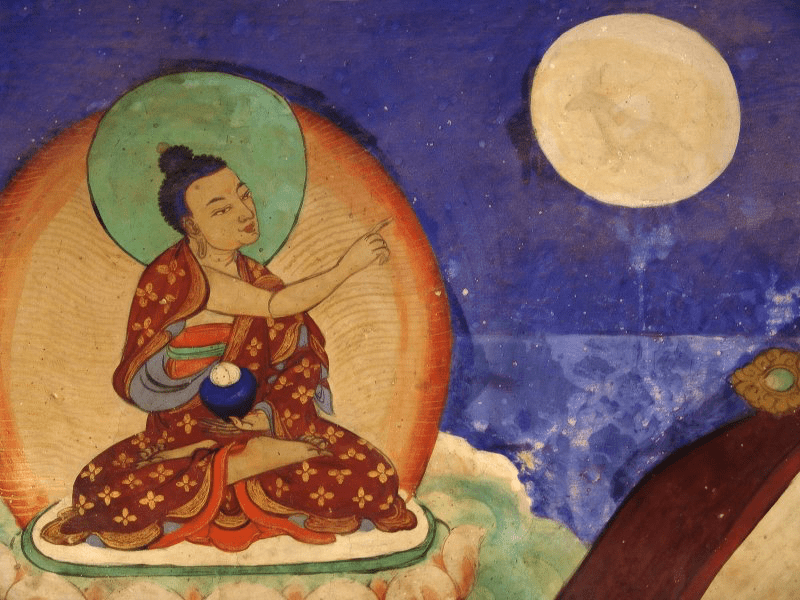
“Life is like a finger pointing away to the moon. Don’t concentrate on the finger or you will miss all that heavenly glory.” -Bruce Lee, Striking Thoughts: Bruce Lee’s Wisdom for Daily Living
If you spend all your time seeking, you’ll never have any time finding (another word for finding might be enjoying).
And perhaps all that you seek, you already have. You just don’t realize it because you’re too busy seeking.


 The Vs. Studio Blog