“For any arena of life, you can create an A Goal, B Goal, and C Goal. On days when you feel great, you hit your A Goal. On days when you feel ok (most days!), you hit your B Goal. On days when you feel bad, you hit your C Goal.” -Sahil Bloom
“A goal is a dream with a deadline.” -Napoleon Hill
“Imperfect action is better than perfect inaction.” -Harry S. Truman
Next, think of all the action steps, micro and macro, it will take until completion.
Third, for all these action steps, ask yourself what an A, B and C would look like. “A” being you knocked it out of the park. “C” being you completed said task, but know you could’ve done better, especially if you had more time. But you still feel good about your effort. You got it done. You can live with a “C” and it’s way better than doing nothing at all. “B” is somewhere in between.
The fourth step is to set realistic deadlines.
The fifth is to start. Take massive and continuous action.
P.S. – For more on the ABC system, check out this excellent article from Sahil Bloom.
“My three prayers are variations on Help, Thanks, Wow. That’s all I’ll ever need, besides the silence, the pain, and the pause sufficient for me to stop, close my eyes, and turn inward.” – Anne Lamott, Help Thanks Wow: The Three Essential Prayers
“Remember the past with gratitude. Live the present with enthusiasm. Look forward to the future with confidence.” — St. John Paul II
“Thank you” covers a lot of ground.
If you’re struggling with how exactly to pray, just say “Thank you.” (“Help” and “Wow” are also great.)
If you receive a compliment and are unsure how to reciprocate, just look the person in the eye and say “Thank you.”
If someone does something really nice on your behalf and you’re struggling with how to communicate your gratitude, just say “Thank you.”
If you want to stay joyous and positive, no matter the circumstances, just keep saying silently to yourself, “Thank you.”
And for all of you dear readers on this Thanksgiving day…
If you find yourself in any kind of mentorship position (e.g. parent, teacher, coach, director, etc.), realize it’s a privilege and know there are several incredible gifts you can give your mentee.
The first is to get them to believe in themselves.
The second is to inspire them to think big.
The third is to motivate them to strive for excellence. Don’t let them settle.
The fourth is to keep them on the path. Build their reservoir of resiliency. Remind them frequently that the obstacle is the way.
The last (and most important gift) is to get them to no longer need you.
“A gift that cannot be given away ceases to be a gift. The spirit of a gift is kept alive by its constant donation.” – Lewis Hyde, book The Gift: Creativity and the Artist in the Modern World
The sun some day is going to die That’s why I’m giving it all away tonight Because I’ve given up on everything that’s mine For no reason I’m tied to trees My shoulders scarred from shaky leaves Run and hide along roadsides I’m giving it all away tonight -song, “Giving It All Away” by Matt Pond PA
Give it away, give it away, give it away, now Give it away, give it away, give it away, now Give it away, give it away, give it away, now Give it away, give it away, give it away, now -song “Give It Away” by Red Hot Chili Peppers
Whatever your passion and talent, realize it’s a gift. You’re cooperating with forces bigger than you could ever imagine.
And just like grace, the size of the gift is measured in how much and how freely you give it away to others.
Because if you’re gonna write 1,000 posts, why not go for 1,001 right? Maybe that’s the one that will really resonate. That will be the one that really counts. But you won’t have reached that without writing the first 1,000.
Or how a great trainer will get you to do a certain number of reps, and then push you to do one more, and then another, and then another. It’s those last couple that really make all the difference.
I heard a great meditation teacher once say that if you do 20 minutes of meditation, the first 19 minutes are just “the foam on top of the beer.” It’s the last minute that really counts. But you need the first 19 to get to the good sip.
Great art takes what it takes. Sometimes that means a lot of wandering in the desert. But with consistency of effort, you will eventually find the oasis.
Time is a factor so it’s time that counts Count not the negative actions of one Speakers of soul say it’s time to shout Three forms the soul to a positive sum Dance to this fix and flex every muscle Space can be filled if you rise like my lumber Advance to the tune but don’t do the hustle Shake, rattle, roll to my magic number -De La Soul, song “Magic Number”
Today (on the eve of my birthday which is some pretty cool synchronicity) marks my 1,000th blog post.
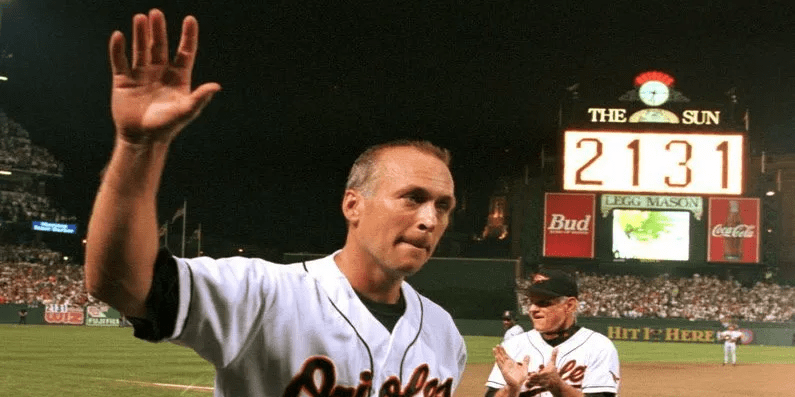
1,000 was my magic number. Seth Godin, my virtual mentor and who inspired me to start this blog, occasionally gives a shout out to people who’ve written 1,000 posts. I remember thinking, “That’s it. That’s the number. 1,000. I’d like to get to that someday.”
And I did it.
WE did it.
Some gratitude is in order…
First and foremost, thank you dear reader from the bottom of my heart for reading this blog, for commenting, for encouraging, for sharing the posts, for sending me notes when something resonated. It was all very meaningful and kept me going, especially through the difficult days, and there have been some of those.
Thank you Seth for all the incredible work you do and always responding to my emails. You’re awesome. Everyone, sign up for Seth’s blog Here. (I think he’s written over 10,000 posts now.) Or listen to his podcast Here. Or get any of his books (if you care at all about our planet, start with The Carbon Almanac) as well as all his other work Here. You’ll be glad you did. Trust me.
Thanks to all my other great virtual mentors out there whose work I consistently interact with and think about. Ryan Holiday, Margo Aaron, Tim Ferriss, Susan Cain, Bishop Robert Baron, Shane Parrish, Mark Duplass, Ethan Hawke, James Clear, Gabe The Bass Player, Tara Brach, Andre Gregory, Fr. Mike Schmitz, Maria Popova, Arthur Brooks, Brene Brown and Richard Rohr come to mind. Be sure to check out their work.
Also thanks to some of those giants who’ve come before us. Their quotes and thoughts routinely show up in this blog…Marcus Aurelius, Seneca, Epictetus, Lao-Tzu, Dorothy Day, Thomas Merton, Shakespeare, Sam Shepard, August Wilson and Anton Chekhov, to name a few.
Thank you to my family and friends. My wife Amy for being my rock. My boys, Callum and Truman for allowing me to be your dad. I learn stuff every day by watching and hanging out with you two.
Finally, thanks to the O.G. My dad. My hero. My best friend. My number one fan. He loved reading these posts and talking to me in depth about them. Love you and miss you every day, big guy.
So, what do you think?…Should we try for 2,000?
P.S. – As De La Soul would advise, the real magic number is Three. It’s impossible to listen to this song and not immediately be in a good mood.
But no one wants to be around someone who’s needy.
“This is happening” should be your mindset when recruiting collaborators for your passion project. They’ll see your passion and commitment to excellence by how far you’ve already taken it solo. They’ll know you’re going to do it no matter what.
But…
To make the project the best it possibly can be, you need and want them. Because you’ve seen they’re work and are lit up by it. Let them know that.
“The things that we love tell us what we are.” -Saint Thomas Aquinas
“If you want to know who you are, you can make a case, a very compelling case that God is telling you who you are by what you love. And if you get close to what you love, what you love expands. In the pursuit of excellence, in any talent that you are given, in the expression of excellence at it, you do honor to your maker.” -Ethan Hawke, WOF Podcast, Understanding Flannery O’Connor
“You must cultivate activities that you love. You must discover work that you do, not for its utility, but for itself, whether it succeeds or not, whether you are praised for it or not, whether you are loved and rewarded for it or not, whether people know about it and are grateful to you for it or not. How many activities can you count in your life that you engage in simply because they delight you and grip your soul? Find them out, cultivate them, for they are your passport to freedom and to love.” -Anthony de Mello, The Way To Love
When no one is around, love will always love you -Cat Power, song “Say”
If you’re searching, if you’re trying to answer the big questions, if you’re struggling to figure out your purpose, look no further than who and what you love. Once you’ve identified that love, do it to the very best of your abilities. For the love of doing it, and no other reason.
You were made from love and made to love. There is no higher calling than the pursuit of excellence.

 The Vs. Studio Blog