Speaking of a daily ideas practice, why not come up with a list of ideas that might help someone else.
For example, one of my favorite exercises in our Vs. Studio Producing Workshop is to have each participant come up with a list of 5-10 plays for another participant in the class. Roles that they think the other person would be great in. It’s a really fun exercise and people are always surprised and flattered by how others see and think of them. Why not do this for your favorite actor friend today?
You could also gift your ideas for an organization or cause that you admire. Write to them and tell them how much you love and why you love what they do. And while you’re at it, give them a list of 10 ideas or suggestions for new initiatives they could undertake.
Not that you’re doing it for this reason…but you never know…they might just write you back and ask you to come aboard and carry out said initiative(s). That’d be fun, right?
“Coming up with ten ideas a day is like exercise. And exercise makes the idea muscle stronger.” -James Altucher
A great daily practice (recommended by author James Altucher) is forcing yourself to come up with ten ideas per day. It can be about anything, any topic you want, big or small, doesn’t matter. If you do this practice every day for a year, then you’ll have come up with a total of 3,650 ideas. That’s a helluva lot of ideas. One of them is bound to be a good one. At the very least, you’ll have strengthened your creativity and engaged your curiosity.
If you want to take this daily idea practice a little further, then after you’ve written down your ten ideas, pick one idea, and force yourself to write down ten possible action steps (P.A.S.) for that idea.
If you want to go even further, pick one of those action steps and take action. (Could be as simple as doing a google search to learn more.)
By doing so, you’ll not only come up with a lot of ideas, but you’ll consistently and deliberately practice the most important part of any idea and what stops almost everyone…learning how to take action.
“As human beings, we come and go quickly, and we get to make works that stand as monuments to our time here. Enduring affirmations of existence. Michelangelo’s David, the first cave paintings, a child’s figure-paint landscapes–they all echo the same human cry, like graffiti scrawled in a bathroom stall:
I was here. -Rick Rubin, The Creative Act
If you’re looking for a reason to make and share your art, look no further than just to declare that you were here.
You were here. On this earth. In this universe. At this time. By some miracle that is beyond you.
You saw this. You heard this. You learned this. You felt this.
So much so, that you were compelled to make it and share it with all of us.
In hopes that we’d all feel just a little less alone.
… Well, I spent a lifetime lookin’ for you Single bars and good time lovers were never true Playing a fools game, hopin’ to win And tellin’ those sweet lies and losin’ again … I was lookin’ for love in all the wrong places Lookin’ for love in too many faces Searchin’ their eyes Lookin’ for traces of what I’m dreaming of Hoping to find a friend and a lover I’ll bless the day I discover another heart Lookin’ for love … And I was alone then, no love in sight -song “Lookin’ For Love” by Johnny Lee
“Where there is no love, put love, and you will find love.” -St. John of the Cross
Yeah, that’s right, I’m the Egg Man, driving around King of the town (yeah) Always got my windows rolled down Ready to throw You know, I’m the Egg Man Once upon a time Egg Man -song “Egg Man” by Beastie Boys
I’m not sure why, but often when you think you’ve done your best work, the initial response to it is…crickets.
It’s a reminder to stay present. Focus on what you can control, which is doing your best work and then shipping the work. That’s it. That’s all you can do.
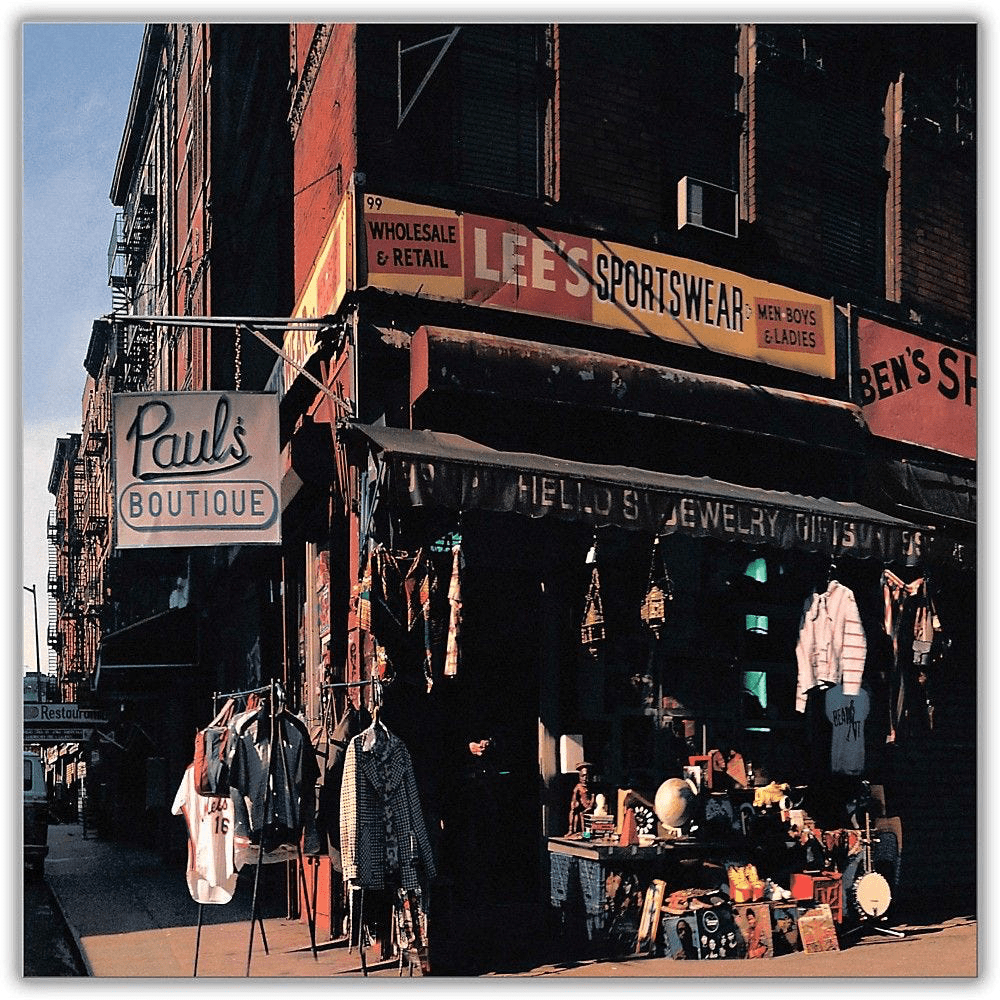
In the documentary “Beastie Boys Story” Mike D and Ad-Rock talk about how they thought Paul’s Boutique–their second album and my personal favorite by far–was infinitely better than their debut and massive hit, License To Ill. They worked much harder and longer, they experimented (working with Matt Dike and The Dust Brothers), they pushed boundaries, they spent a fortune and when it was finally done, they were really proud of it. They felt it truly represented who they were as artists. When Paul’s Boutique was released, they were excited and ready for it to be a giant hit. It was gonna slay.
Instead, it was a flop.
Who knows why? Perhaps it was because it was way ahead of its time. Or because it was a radically different sound than License To Ill. But to their credit, the Beastie Boys didn’t let it daunt them. They kept making kickass and genre-defying albums like Ill Communication and Hello Nasty among others.
Oh…and many years later, fans did come around. Paul’s Boutique went multi-platinum. Critics hail it as a “masterpiece…the Sgt. Pepper of hi-hop.” I would agree.
“There is always light, if only we’re brave enough to see it. If only we’re brave enough to be it.” -Amanda Gorman
“Use your own light and return to the source of light. This is called practicing eternity.” –Tao Te Ching by Lao-Tzu
“You have to carry the fire.” I don’t know how to.” Yes, you do.” Is the fire real? The fire?” Yes it is.” Where is it? I don’t know where it is.” Yes you do. It’s inside you. It always was there. I can see it.” ― novel The Road by Cormac McCarthy
There is a light and it never goes out. -The Smiths
When you’re lit up, we’re lit up.
No matter how dark it gets outside, never let your light go out inside.
“Although we avoid deadlines early in the process, in the Completion phase, a due date could help bring time into focus and support you in completing the work. Art doesn’t get made on the clock. But it can get finished on the clock…Each new project is another opportunity to communicate what’s coming through you. It’s another chance at bat. Another opportunity to connect. Another page filled in the diary of your life.” -Rick Rubin, The Creative Act
Whether it’s crossing an item off your to-do list, posting a blog entry, turning in a grant proposal or closing night of the play you produced, completing something feels good. Really good. (Closing nights always feel really sad too.)
Doing hard things won’t make the next hard thing any easier. But it will increase your capability and boost your confidence to attack the next hard thing that comes your way.
If you want more of the good completion vibes, then resolve to turn all your big goals into projects. Create a work plan. List all the steps you think are needed and break those steps down further into micro steps. Set arbitrary deadlines for each. Continuously update. And then take massive and consistent action.
One last thing…it might be helpful to know what a satisfactory completion of said project looks like. What a “C” looks like? Yes you want an A–we all do–and you’ll go all out to get the A, but life happens. Unexpected stuff comes up. If worse comes to worse, could you still live with a “C?” Is a “C” better than not doing the project at all? (Also, it’s not a “C” for effort and desire, it’s a “C” for how the project ended up as compared to your original expectations.) This completion mindset helps avert the resistance trap.
Alright, get going. We can’t wait to see what you complete!
“I’d rather be a hypocrite than the same person forever.” -Adam Horowitz aka Ad-Rock
“The sage has no fixed mind; she is aware of the needs of others.” –Tao Te Ching by Lao-Tzu
The scientific method revolves around stating a hypothesis, and then running numerous experiments to see if the hypothesis is correct. If the experiments and evidence support the original hypothesis, great. If they don’t, the scientist comes up with a new hypothesis. They change their mind. They don’t double down on their original belief.
In the same way, we can start out with a theory or belief. This belief can guide our initial actions. But as we encounter more people, places and things, as we learn more, as our worldview expands, if we now believe something else, then it’s perfectly okay to change our minds. To have a new belief. To say, “You know what, I was wrong. I’ve changed my mind.” This is what having a growth mindset is all about.
One great reason to make your art is that it engenders empathy for the entire human condition. At its best, art can truly can change people’s hearts and minds.


 The Vs. Studio Blog