“If you are genetically endowed with an optimistic bias, you hardly need to be told that you are a lucky person—you already feel fortunate. An optimistic attitude is largely inherited, and it is part of a general disposition for well-being, which may also include a preference for seeing the bright side of everything. If you were allowed one wish for your child, seriously consider wishing him or her optimism. Optimists are normally cheerful and happy, and therefore popular; they are resilient in adapting to failures and hardships, their chances of clinical depression are reduced, their immune system is stronger, they take better care of their health, they feel healthier than others and are in fact likely to live longer. -Daniel Kahneman, Thinking, Fast and Slow
“You must never confuse faith that you will prevail in the end — which you can never afford to lose — with the discipline to confront the most brutal facts of your current reality, whatever they might be.” -Jim Stockdale (Medal of Honor winner who spent 8 years as a P.OW. in Vietnam)
“Hope” is the thing with feathers – That perches in the soul – And sings the tune without the words – And never stops – at all –
And sweetest – in the Gale – is heard – And sore must be the storm – That could abash the little Bird That kept so many warm –
I’ve heard it in the chillest land – And on the strangest Sea – Yet – never – in Extremity, It asked a crumb – of me. -poem “Hope is the thing with feathers” by Emily Dickinson
Optimism is great, but it’s not enough. For those really difficult and uncertain times, when circumstances are brutal, when you don’t know if you’re gonna make it through, when you don’t see any light in the distance, when you can’t possibly fathom how this story ends well, enter hope.
Hope is mysterious and mystical. Hope is relational. It’s trust in one another and something much bigger and more powerful than just yourself and your optimistic mindset.
You don’t need to know how or when you will get through this. You just need to know and have constant hope that you will.
That hope and trust is what allows you to take the necessary steps and actions to just get through this minute, this hour, this day. And to help each other do the same.
Well I don’t know about your right and wrong I got a muse from the east to the west All I know is if I never said it before I’m going to say it with my last breath
I will never forget your healing hands my love I thought my heart had stopped I swore I had given up I will never forget your healing hands my love You gave me daylight you gave me sunlight -song “Healing Hands” by Citizen Cope
It’s been incredibly heartwarming to see Angelenos coming together to help one another during these fires. I thought to share a beautiful story about the power of art, brotherhood and radical generosity. (Courtesy of George Bothamley and his always excellent “Art Every Day” Substack, I’ve cut and paste it below. You can also read it directly on his site Here. )
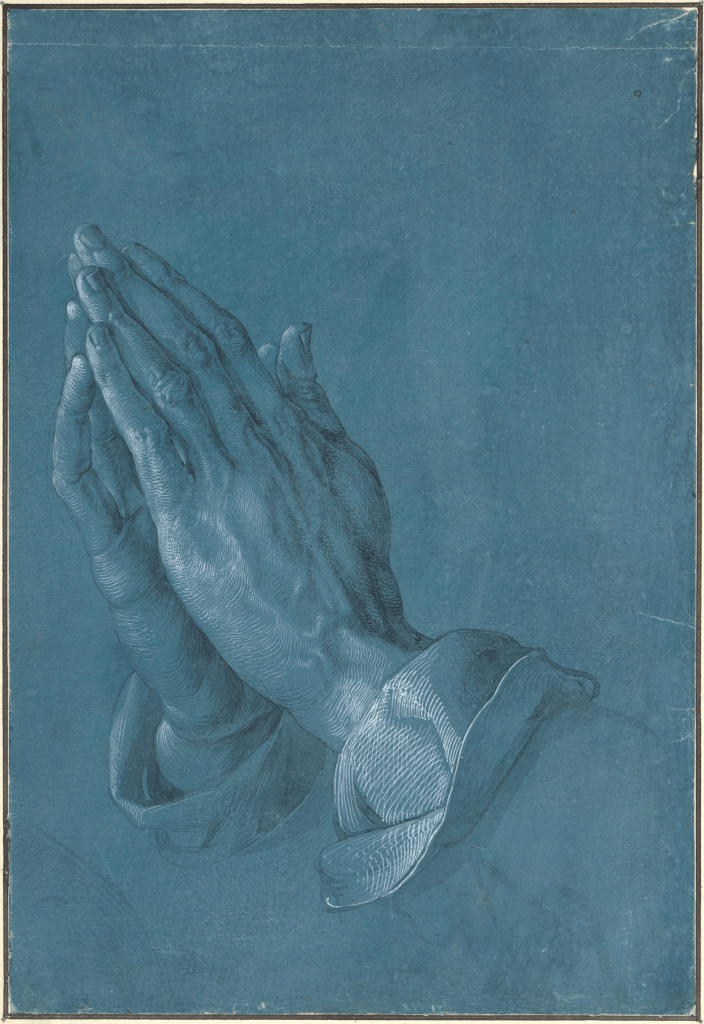
For a long time, Albrecht Dürer’s drawing of these praying hands was interpreted as being kind of self portrait – i.e the artist seems to be depicting his own hands as a symbol of both his spiritual and artistic devotion.
But, actually, the truth about this picture is that the hands actually belong to the artist’s brother – Albert Dürer
And for the real story behind its deeper meaning, we need to briefly go back to when the two brothers were growing up in poverty together; in a small town just outside of Nuremberg.
Albert was the eldest of the two brothers, but they were always very close; and in sharing a mutual love of art, they would spend many happy days together making drawings, or dreaming of becoming professional painters when they grew up.
Back then, the artistic talent in both young boys was undeniable – so, had they been born into a wealthier family, there would have been no question that the two of them would have been sent off to study together in an academy, or for a joint apprenticeship under a master painter in Nuremberg.
But, sadly, the Dürer family were struggling financially at this time due to Albrecht the elder’s business as a goldsmith taking a bit of a down turn.
And in the 15th century – much like now – being an artist was not always the most lucrative field to go into.
So, when the brothers were on the cusp of coming of age, they settled on a little agreement together.
They knew that it could be possible for at least one of them to go on to study art professionally, as long as the other stayed behind to take care of the family.
Thus, in an attempt at the fairest possible way of making this decision, they put their future fate on a coin toss.
Heads for Albert – Tails for Albrecht.
In other words, if the coin landed on heads – then Albert would go off to pursue artistic training in Nuremburg; and the younger Albrecht would instead take a job as a labourer in the local mine, to support to family.
And if it landed on tails . . . then roles would be reversed. Albrecht would go to Nuremburg – Albert would stay behind.
The coin was tossed – and it was the younger brother who came out as the luckier of the two.
Thus, only a few weeks later, Albrecht Dürer was on his way to the city, with a letter of recommendation to become an artist apprentice. And Albert, just as he promised, stayed in the family home . . . taking a job in the local coal mine.
A few years passed – and clearly the result of the brother’s coin toss paid off.
Albert’s work was physically exhausting – but it helped keep the family above the poverty line until business picked up again.
And Albrecht excelled so much in his painting apprenticeship, that he found himself rather unexpectedly set en-route to becoming the most sought after artists in all of Germany.
At only 21 years old – soon after painting the portrait seen below- the young man returned to his home town like a celebrity. But, of course, Albrecht still carried with him a certain amount of guilt about all his success too.
He was deeply aware of just how much of a sacrifice his brother had made for him. And he couldn’t escape the thought that, if a simply coin toss had gone a different way, all of this success would have been Albert’s instead.
So, one evening – when the two brothers finally had some alone time together at their family home – Albrecht said to his brother
“Brother, listen to me. You’ve sacrificed so much for all of us . . . isn’t it time you followed your dream too? You know, I am earning well now. I can provide for everyone quite comfortably. And you don’t have to go back down to those mines anymore. Come with me . . . come to Nuremberg! I’ll help you get started as a painter – and we’ll achieve what we both dreamt about all those years ago together. You will create marvellous things, I’m sure of it!”
But- in spite of his deep gratitude for all that had been said – sadly, Albert could not share his brother’s enthusiasm
“No.” he said “It is not possible. My time has gone now.Albrecht, look at these hands of mine. You see the fingers? In these few years of work, I have broken all of them – multiple times. And you see these scars? These lumps? These marks where my hands have been beaten, bruised, calloused, and crushed by so much stone. You know . . . I can hardly even hold a knife and fork delicately when I eat, such is my loss of feeling in these hands now. So how could I ever hold a paintbrush or pencil?! No, brother. For me . . . it is too late.”
Then, letting go of his brother once more, Albert brought his broken hands together in prayer – saying
“Come. Let’s just pray together – as we used to when we were children. We should be grateful that you have achieved enough for both of us!”
And clearly, this moment is one that Albrecht would never forget; because it is the very thing he captures in his most famous drawing here – sketched over a decade later, when the two brothers were in their mid to late thirties
Technically, it was designed as a “preparatory” sketch for a larger altarpiece commission that the artist was working on at the time (now destroyed).
But in all the tenderness and painstaking care taken over the work here – we can see that, for Albrecht, this drawing is so much more than just a study of hands.
In truth, it is an expression of gratitude instead ; paying tribute to his brother’s sacrifice.
And for that reason, the underlying message of this work is that Albrecht Dürer may have been the artist in practice . . . but nonetheless, his entire career was in fact the result of his brother Albert’s hands too!
This doesn’t just apply to “artists” or making “art”, but to anyone who feels a calling inside and wants to help.
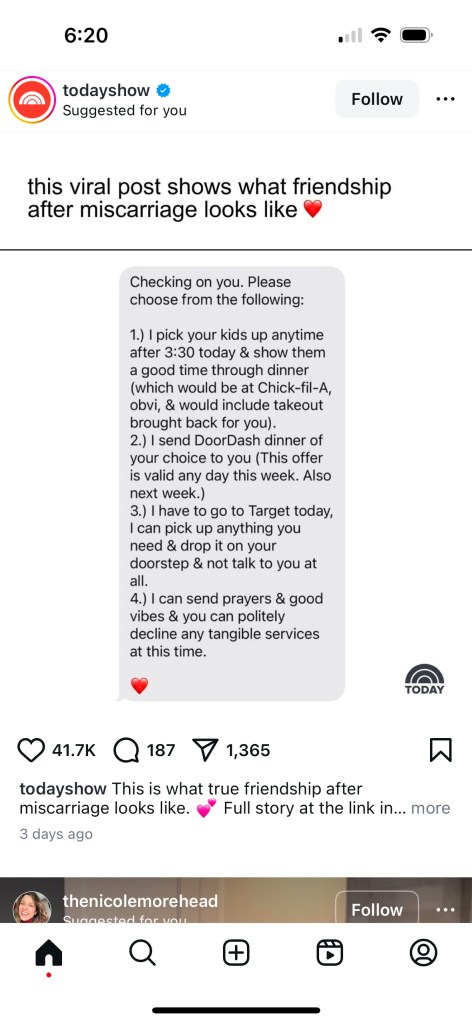
A little while back my wife sent me this beautiful post about friendship:
When people are going through a particularly difficult time, they often (a) don’t reach out for help and/or (b) are so overwhelmed, they can’t think specifically about what they might need. They need everything. And you can help them by doing the thinking for them. Even if, and this is key, what you think they might need “might not work.” That’s the “art” of your generosity.
These fires are a chance to reach out to anyone we know who has lost their home. Inspired by the above IG post, we might right each to them with a short text and put together a numbered list of specific ways we can help. Including providing the option to decline our offer and just pray for them. As what they might need most right now, is just time and space to process coupled with the knowledge you are there for them.
P.S. – If you’re wanting to help those affected by the fires, this LA Times article provides an updated list of resources and things you can do. Stay safe out there everyone. Take good care of yourselves and each other. We will get through it.
“The bamboo that bends is stronger than the oak that resists.” -Japanese Proverb
“We cannot choose our external circumstances, but we can always choose how we respond to them.” -Epictetus
“Nothing is softer or more flexible than water, yet nothing can resist it.” -Lao Tzu
When a crisis or emergency happens, it’s not about anticipating every single problem that could’ve happened with one hundred percent accuracy. That’s impossible. (Though some preparation is always a good thing.)
Far more important, and within your control, is having a flexible mindset to deal with circumstance. Something happens and you quickly have to make a decision. A new thing happens and you have to make a brand new decision. And so on and so forth.
Until the crisis is over.
When it is over, that’s the time to go back and evaluate your decisions. Learn from them and perhaps be a little better prepared for the next one.
But no matter this event or future events, it is your flexible mindset that will get you through it. And you will get through it.
P.S. – Thank you to all those who’ve checked in on us during the fires. It means a lot. Our bags are packed and we’re ready to go at a moment’s notice. But we’re okay and I hope and pray you are too. My heart and prayers go out to all those who have lost homes and been affected by this terrible tragedy.
“The chief task in life is simply this: to identify and separate matters so that I can say clearly to myself which are externals not under my control, and which have to do with the choices I actually control. Where then do I look for good and evil? Not to uncontrollable externals, but within myself to the choices that are my own.” -Epictetus, Discourses
“God, grant me the serenity to accept the things I cannot change, the courage to change the things I can, and the wisdom to know the difference.” -Serenity Prayer
“You have power over your mind, not outside events. Realize this and you will find strength.” -Marcus Aurelius, Meditations
“The following little reminder sums up the three most essential parts of Stoic philosophy worth carrying with you every day, into every decision:
Control your perceptions. Direct your actions properly. Willingly accept what’s outside your control. That’s all we need to do.” –The Daily Stoic: 366 Meditations on Wisdom, Perseverance, and the Art of Living by Ryan Holiday, Stephen Hanselman
So much of Stoicism is about identifying what is in and out of our control. This not only applies to the events of our lives (reactive), but also to the goals we set for ourselves (proactive).
A good practice is after you set your goals or intentions, immediately ask yourself which are within your control and which are out of your control.
Two examples that might help clarify this point:
(1) You set a goal to win an Academy Award for Best Actor.
Awesome. Nothing wrong with big goals and dreams. Go for it! Just realize this one is not in your control. It is dependent on external forces.
(2) You set a goal to become the best actor you can be.
This one is within your control. You can study, train, observe, read, watch, perform, self-produce, etc…Over the course of a year, two, five, ten, a lifetime…you will inevitably get better and better and “become the best actor you can be.”
Again, there is room for both kinds of goals. Just be aware of the difference. (Another way to differentiate is Stretch vs. SMART goals.)
Oh and by the way, as a result of focusing on your in control goal of “becoming the best actor you can be”, you might just get the out of control goal of “winning the Academy Award” thrown in for free.
“Fame is the peversion of the natural human instinct for validation and attention.” -Heathcote Williams
“I was leery of the media glare that came with film roles. I saw the future for myself when I did repertory theater. These were plays that could change my life; these playwrights were prophets. They made me a better actor, gave me an education, offered me a deeper understanding of the world, and filled me with joy. Who wouldn’t be satisfied with that? I remember feeling I could be perfectly content doing just that.” –Sonny Boy: A Memoir by Al Pacino
Would you sign a “lifetime artist contract” if it included the below clauses?…
-You won’t be famous or recognizable. No one will ever know your name.
-You will make little, if any, money off your art. You will always have to work another job to make ends meet.
-You will rarely, if ever, get picked. More often than not, you will have to pick yourself. That means producing your own work.
-You will be artistically fulfilled. (Provided you consistently commit to finding your passion projects and producing them with excellence and generosity.)
-You will get to make art with your friends and others whose work you respect and admire. As a result of your producing efforts, you will create meaningful experiences for your artist friends as well as the audience who experience your passion in action.
-You will get to do the kind of work that lights you up and made you want to be an artist in the first place.
-You will always stay humble, hungry, motivated, creative, open-minded, and inspired.
“Challenges are what makes life interesting and overcoming them is what makes life meaningful.” -Joshua J. Marine
“When life gets tough, some of us feel that we’ve lost the game and life has won. But life isn’t trying to defeat you. Life isn’t even a participant—the game is yours.” -Mo Gawdat, Solve for Happy
“Your habits are often a byproduct of convenience. Humans are wired to seek the path of least resistance, which means the most convenient option is often the one that wins. Make good choices more convenient and bad choices less so. Behavior will improve naturally.” -James Clear
“Consider it pure joy, my brothers and sisters, whenever you face trials of many kinds.” -James 1:2
“As Carl Jung put it, ‘Man needs difficulties. They are necessary for health.’ Yet most people instinctually avoid pain. This is true whether we are talking about building the body (e.g., weight lifting) or the mind (e.g., frustration, mental struggle, embarrassment, shame)–and especially true when people confront the harsh reality of their own imperfections.” -Ray Dalio
“Self-esteem comes from achieving something important when it’s hard to do.” -Clayton Christensen
It’s hard today because you’re not yet fully the person you’re meant to be. You might have to learn new skills, increase your capacity or get stronger mentally and physically.
The good news is…when you do hard things, when you freely and joyfully accept challenges, when you allow for some discomfort, you develop all of the above. You grow as a human being.
So much so that the hard things today will feel like a walk in the park tomorrow.
“The quality of your questions determines the quality of your life.” -Tim Ferriss
“With a tear for the dark past, turn we then to the dazzling future, and, veiling our eyes, press forward. The long and weary winter of the race is ended. Its summer has begun. Humanity has burst the chrysalis. The heavens are before it.” -Edward Bellamy, Looking Backward
A great practice for this is to perform an annual review. I’ve come across several different versions and strategies. Here’s one from Sahil Bloom. Another one from Tim Ferriss. Another one from Shane Parrish. And one more from James Clear.
What these all have in common is questions. Asking yourself quality and meaningful questions about how successful you were at achieving your intentions and goals. Here are some good questions I culled from the sites:
What created or drained energy from my life?
What were my greatest hits and misses?
What am I most proud of?
What did I learn? (I’d edit this to “What blew my mind or radically changed my perspective?”)
What’s working well and why? What’s not and why not? What should I keep doing? What should I eliminate?
What did I not do because I was afraid?
What habit is consistently getting in my way? How can I change it?
The answers to these questions or any others you come up with, can shed light on what you want to accomplish in 2025.
Two more tips:
(1) Instead of waiting until the end of the year to do a review, why not do one every quarter or every month? You can also do a simpler weekly or even daily review.
(2) Continuously ask yourself the focusing question. Which is, “What’s the one thing I can do such that by doing it will render everything else easier or unnecessary?
Good luck reviewing 2024 and good luck moving forward in 2025!
I had a goal to read or see 100 plays this year. I fell a bit short at 70. Still, not bad.
If you want to read or see more plays in 2025, then I have two amazing resources for you! The first is our Vs. Tuesday Night Reading Series. We read a play every Tuesday night either on Zoom or live at Pacific Resident Theatre in Venice. (Started back in 2018 in the lobby of our old home space, we’ve now read over 250 plays). The second is Vs. Theatre Club. We gather as a group–on average, about once per month–to go see plays and support our local theatre community. Started in 2022, we’ve had over 30 club outings. If you’re interested in joining either or both groups, drop me a line and I’ll add you to the distro list. All are welcome!
I’ll start off with some of my favorite plays READ in 2024 (in alphabetical order and only including NEW plays that I hadn’t read prior):
A Case For The Existence Of God by Samuel Hunter (h/t to Pete for the recommend; grateful to AK and Sue for an amazing Vs. Tuesday Night read that has definitely stayed with me)
A Soldier’s Play by Charles Fuller (I had only seen the film, never read or seen the play; grateful to Will and Andy for bringing this one in for a Vs. Tuesday Night)
Aunt Jo by John Kolvenbach (LOVE this play, a future Vs. Tuesday Night reading is in the works!)
Grand Guignol (such a fun macabre live night @PRT; a Halloween celebration featuring all original works by Gareth Williams; h/t to Gareth for organizing the festivities; Jeffrey Johnson’s MC’s skills are second to none!)
Rathmine’s Road by Deidra Kinahan (h/t to Alex for the recommend)
Sam and Lizzie by Emily Kaczmarek (h/t to Jen C for the recommend; LOVE this play, a future Vs. reading is in the works!)
Something Clean by Selina Fillinger (h/t to Jen C)
The Fall To Earth by Joel Drake Johnson (h/t to Carolina for bringing this one in for a Vs. Tuesday Night)
When You Comin’ Back Red Ryder by Mark Medoff (the inaugural Vs. Live@PRT reading! thank you again to Dalia V and PRT for offering us space; h/t to Marla for bringing this one in; hadn’t read this play before and it really resonated)
Below are some of my favorite plays SEEN live in 2024 (in alphabetical order and almost all were Vs. Theatre Club nights!):
A Doll’s House Part 2 by Lucas Hnath (directed by Allen Barton at Beverly Hills Playhouse)
A Permanent Image by Samuel Hunter (directed by Andrew D. Weyman at Pacific Resident Theatre; this was actually the second time I’ve seen the play as it was done a while back at Rogue Machine; Dalia and the rest of the ensemble were spectacular and loved that it was the same cast as the original Vs. Tuesday Night reading!)
Crevasse by Tom Jacobson (directed by Matthew McCray at Victory Theater Center; Ann Noble and Leo Marks both give tour de force performances)
Dido Of Idaho by Abby Rosebrock (directed by Abigail Deser at Echo Theater)
Ghost Waltz by Oliver Mayer (directed by Alberto Barboza at LATC)
Here Comes The Night by Lisa Kenner Grissom (directed by Hailey McAfee at the Zephyr Theatre; love that this was a prior Vs. Tuesday Night reading and that the production had the same two dynamite actors from the reading)
Hollywood Fringe (I saw several fringe shows this year, all featuring Vs. Tuesday Night artists and all awesome! I love that some of these shows originated from prior Tuesday Night readings)
I, Daniel Blake adapted for the stage by Ken Loach (directed by Simon Levy at the Fountain Theatre; JD Cullum was riveting as Daniel Blake and headlined a terrific ensemble)
If I Needed Someone by Neil LaBute (directed by Frederique Michel at City Garage Theatre)
Iphigenia In Splott by Gary Owen (directed by Rosie Glen-Lambert at the Broadwater Black Box Theatre; Hailey McAfee, who also directed Here Comes The Night, was the actor in this one-person show and she was fantastic; I wrote this blog post about it)
Iron Skirt Stories Salon (directed by Andrew Hawkes at RD Studios; I’ve seen every single Iron Skirt show and they’re always amazing; Amy and Sasha do an incredible job sourcing and producing an all-star lineup of all-female storytellers)
The Brother’s Size by Tarell Alvin McCraney (directed by Bijan Sheibani at the Geffen Playhouse; this was actually the second time I’ve seen this play as I saw it many years back at the Fountain Theatre; a great inaugural production for the Geffen’s new AD who is also the playwright; I wrote this blog post about it; two other great shows I saw at the Geffen in 2024 were Fat Ham and Waiting For Godot; a terrific season and look forward to upcoming shows!)
The Civil Twilight by Shem Bitterman (directed by Ann Hearn Tobolowsky at the Boroadwater Studio; Andrew Elvis Miller and Taylor Gilbert were a dynamite duo; the show has extended yet again through January 26th)
Three Witches by Michael Perlmutter (directed by Ann Noble at Moving Arts; another prior Vs. Tuesday Night reading that made its way into full production; I especially love that the night I saw it, the theatre was almost entirely comprised of Vs. artists and allies; such a fun Vs. Theatre Club night!)
Vanya by Anton Chekhov, adapted by Simon Stephens (directed by Sam Yates; this one person adaptation of Chekhov’s masterpiece, Uncle Vanya, was one of the best pieces of theatre I’ve ever seen in my life…and I saw it on the big screen at the UCLA as part of their National Theatre Live programming; Andrew Scott was as good as it gets, an acting clinic; I wrote this blog post about it; loved it so much that I plan to make it the inaugural Vs. Films screening; coming soon in 2025!)
Well, that’s a wrap for 2024. It was a great year for live theatre, and I’m really excited for 2025.
Happy New Year! May it bring you continued community, much love, good health and creative fulfillment.
P.S. – Thank you again for reading this blog. I am very grateful for all of you!