There’s nothing like the feeling and magic of opening night.
Once it’s over, it’s on to the run of the show.
But keep in mind every single night during the run is the audience’s opening night.
That’s the beauty and ephemerality of live theatre. A new audience every time. Embrace that. Don’t take any nights for granted. Don’t cheat the audience out of their opening night.
P.S. – Speaking of which, tonight (and tomorrow) are opening nights for “What’s Next?…Volume 2.” I can’t wait for you to see these artists shine!
“…And the sun’s coming up. It makes me feel like anything’s possible. Ya’ know? Like a beginning. I love beginnings.” –Sam Shepard, True West
I’m very excited to announce our two Vs. Studio Producing Workshop Live Presentation Nights! They are Tuesday, June 3rd, and Wednesday, June 4th, at 8pm at Pacific Resident Theatre in Venice. Below is the program note I included. (Click Here to see the full, online program that has more info.)
Dear Friend & Vs. Ally,
Thank you for coming out tonight and supporting the Vs. Studio Producing Workshop!
Over the last two months, fourteen committed artists met weekly to find and manifest the work they’re passionate about. As well as to learn how to produce with excellence and generosity for themselves, their fellow artists and the audience they seek to serve. Tonight represents a big first step on their journey. You get to see a scene from the work they intend to produce.
Moving forward, my vision for Vs. is that of a thriving, deeply-connected and radically supportive community where more artists are doing the work they love. This benefits everyone…the artists working on the play, the playwrights whose work is handled with the utmost care and respect, and the audience who get to watch and experience passion in action. A virtuous cycle is created. I believe this workshop will serve as a springboard for all kinds of interesting and terrific work.
Once again, thank you for being here and supporting live theatre. I can’t wait to see “What’s Next.”
Sincerely,
Johnny Clark Artistic Director Vs. Theatre Company & The Vs. Studio
(And for further context, click Here for the original description of the Producing Workshop.)
Space tomorrow and Wednesday is very limited. So if you want to come and root these talented and committed artists on, please email whatsnextboxoffice@gmail.com ASAP.
A recent lesson from our Vs. Studio Producing Workshop…
Don’t wait for the reviews and audience feedback to see if your show is a hit.
That’s too late.
Assume it’s a hit from the very beginning. Waaaay before the show opens. And let all your marketing efforts reflect this confidence.
“How can I have this confidence before it opens?'” you might ask.
One…You took the time to find out what you’re truly passionate about and why it’s important to you.
Two…You decided to produce this passion project with excellence and generosity at all times. For yourself, your fellow artists and the audience you seek to serve (knowing who’s it for and what it’s for). You cared enough to make it and share it.
Three…you took massive and continuous action. Including telling people why you made it and why you’d love for them to show up.
Because you have these three (rare) elements, assume your show is a hit.
“Data becomes information when at least one of two related things are true:
(1) We learn something for next time.
(2) We make different decisions or take new actions.
If you’re not getting one of these things, then the data is simply noise. A distraction that wastes our time and confuses us.
Breaking news is up to the recipient.” -Seth Godin
“Knowledge is shit, okay? ‘Knowledge for Knowledge’s Sake’ is pure bullshit. All learning ever does is remind you of what you haven’t got. Teaches you about new stuff you’ll never be or have. Because unless you can apply that knowledge and do something with it…it’s useless. It’s crap. Worthless shit. An M.B.A. is one thing, but Jeopardy! is for assholes.” -Ben in the play The Mercy Seat by Neil LaBute
“How you do anything is how you do everything.” -Zen Buddhist proverb
“How we spend our days is, of course, how we spend our lives. What we do with this hour, and that one, is what we are doing. A schedule defends from chaos and whim. It is a net for catching days. It is a scaffolding on which a worker can stand and labor with both hands at sections of time. A schedule is a mock-up of reason and order—willed, faked, and so brought into being; it is a peace and a haven set into the wreck of time; it is a lifeboat on which you find yourself, decades later, still living. Each day is the same, so you remember the series afterward as a blurred and powerful pattern.” -Anne Dillard, The Writing Life
““Well-being is realized by small steps, but is truly no small thing.” -Zeno, quoted In Diogenes Laertius, Lives Of The Eminent Philosophers
“The truth is one we know well: the little things add up. Someone is a good person not because they say they are, but because they take good actions. One does not magically get one’s act together—it is a matter of many individual choices. It’s a matter of getting up at the right time, making your bed, resisting shortcuts, investing in yourself, doing your work. And make no mistake: while the individual action is small, its cumulative impact is not.” –The Daily Stoic: 366 Meditations on Wisdom, Perseverance, and the Art of Living by Ryan Holiday, Stephen Hanselman
After a painful buzzer beater, the losing basketball coach will often give a version of the following cliche in the press conference…
“We didn’t lose the game because of that final shot. We lost because of so many mistakes leading up to that final shot. If we did our job earlier in the game…protect the defensive glass, limit our turnovers, spread the ball around, etc…it wouldn’t have come down to that final play. But tip your hat to the other team. They executed better than we did…”
It’s true in sports as it is in life. Whether it’s the Final Exam or Opening Night or The Big Presentation, etc…it doesn’t have to be filled with so much pressure to be perfect. Everything doesn’t have to be riding on that single event.
“The test of a first-rate intelligence is the ability to hold two opposing ideas in mind at the same time and still retain the ability to function.” -F. Scott Fitzgerald
“You need all kinds of influences, including negative ones, to challenge what you believe in.” -Bill Murray
“Art is subjective, which is part of what makes it so beautiful. I find that even if a play/performance/production isn’t my favorite, there are always elements that I honestly respond to positively. I try to focus on communicating those aspects so that I am speaking from the heart.” -Danya Taymor
Some definitions of “ambivalence”:
-the state of having mixed feelings or contradictory ideas (such as attraction and repulsion) about something or someone.
-the experience of having an attitude towards someone or something that contains both positively and negatively valenced components.
-continual fluctuation (as between one thing and its opposite).
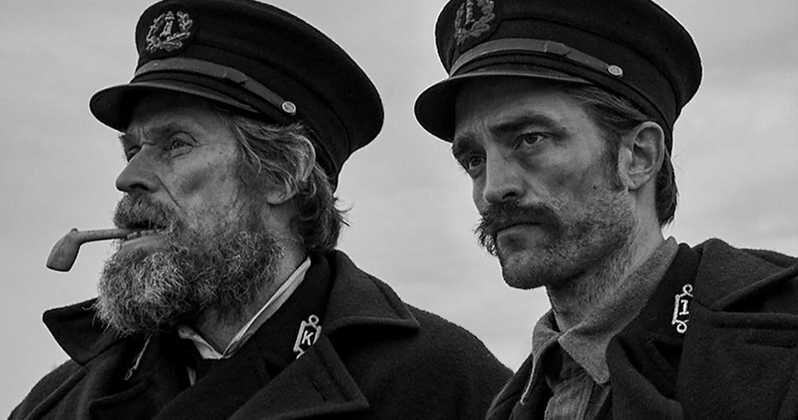
Me and my son Truman recently watched the film, The Lighthouse. I loved it until about the last 20 minutes. When it was over…
Me: “Well, that was weird.”
Truman: —-
Me: “I didn’t like the last 20 minutes or so. I was really into it and then it just got weird and depressing and turned into more of a horror film or something. And that ending…I don’t know…I just didn’t like where it went to, and…(blah, blah, blah)”
Truman: —-
Me: “So, what about you? What’d you think of it?”
Truman: “I want to think about it more before I comment or say anything.”
“We do not know one promise these men made, one pledge they gave, one word they spoke; but we do know they summed up and perfected, by one supreme act, the highest virtues of men and citizens. For love of country they accepted death, and thus resolved all doubts, and made immortal their patriotism and their virtue.” –James A. Garfield, May 30, 1868, Arlington National Cemetery
“Remember that when you leave this earth, you can take with you nothing that you have received – only what you have given: a full heart, enriched by honest service, love, sacrifice and courage.” -Saint Francis of Assisi
“Peace demands the most heroic labor and the most difficult sacrifice. -Thomas Merton
Such is my love, to thee I so belong, That for thy right myself will bear all wrong. -William Shakespeare, “Sonnett 88”
On this Memorial Day, as we celebrate and honor all the men and women who made the highest sacrifice, I thought to share this excellent post from The Daily Stoic…
Courage often has clear rewards. An entrepreneur takes a risk because there is hope for a payoff—to get something others are afraid to reach for. Someone decides to be unique or different because they realize that to live any other way is to live unhappily with a lie.
But there is something beyond this kind of ordinary courage that defines self-interest. Sacrificing oneself? Sacrificing everything for something? “Human folly,” a historian once said, “is easier to explain than human valor.”
On Memorial Day, it is worth reflecting on this very beautiful and almost baffling bit of human greatness. And it is indeed, utterly inexplicable to some. A particularly craven man once stood in a military cemetery and looked out over the graves of those who had been lost in the nation’s wars over the centuries. “I don’t get it,” he said derisively. “What was in it for them?”
When most people ask that question, it’s out of a kind of humility and awe, a desire to understand an incredible phenomenon. But for the transactional, the cowardly, or the selfish, it just doesn’t make any sense. Why would anyone give up their life for someone else? What kind of deal is that?
There’s courage and then there is heroism, the highest form of courage. The kind embodied in those who are willing to give, perhaps give everything, for someone else. Cato, who chose death over kneeling to Caesar (his daughter Porcia who followed suit by swallowing hot coals). Thrasea and Helvidius who died in resistance to Nero. Rutilius Rufus who gave him his home and his livelihood rather than be sucked into Rome’s culture of corruption. Stockdale, who perhaps thinking of Cato, tried to kill himself to end the torture of his fellow POWs.
There was nothing in it for these men and women, just as there was nothing in it for the soldiers who perished in uniform for their country. But they did it because they knew it wasn’t about them. It was about the person next to them, it was about the people back home, it was about the ideals to which they had sworn to uphold and protect.
True heroism shames us. Humbles us. It moves us beyond reason—because it came from something beyond reason. It’s self-evident why the survival rate of those who manage to transcend self-preservation to reach this greatness is not high. But then again, that is the beauty of it—in some cases, they died so that we could live. We fail them and we fail ourselves if we don’t wrestle with the meaning of this sacrifice.
If you ever wonder why they didn’t choose you, especially after you felt great about how it went (e.g. the audition, the job interview, etc.), then think about all the times you, yourself, got excited about something (e.g. an idea for a business, a story, a new project, a goal, etc.), and didn’t follow through on that initial burst of enthusiasm.
The truth is, there are a million reasons why they didn’t choose you. Most often it has nothing to do with how it went or you or the quality of your work. It has to do with a lot of factors that are beyond your control.
Be proud of yourself that you went for it. You put yourself out there. You risked. You were vulnerable.
And then get back to the hard, yet ultimately so much more fulfilling work, of choosing yourself.
“Think of many things; do only one.” -Portuguese proverb
“You can do anything, but you can’t do everything.” -David Allen
“When deciding whether to do something, if you feel anything less than ‘Wow! That would be amazing! Absolutely! Hell yeah!’ — then say “No.” -Derek Sivers
“What is the ONE thing you could do right now such that by doing it, everything else would be easier or unnecessary?” -Gary Keller
“‘What should I do next?’
Not next year or for the rest of my life. Right now.
The apparently trivial choice–whether or not to open an email, make a phone call or stand up to stretch. The endless list of options, some not even consciously considered, that we work through a thousand times a day.
Sum them up, and these millions of tiny decisions become the life we’ve chosen. One next at a time.” -Seth Godin
All of the above quotes are just different ways of attacking the eternal question, “What should I do?” Hopefully they provide some clarity and insight.
But make no mistake…not choosing or choosing everything, is a recipe for disaster.
The priorities you say you have. The priorities your actions show you have. I call the gap between the two the Say-Do Gap.
And here’s the uncomfortable truth: For most of us, it’s significant.” -Sahil Bloom
How to shrink the Say-Do Gap? Some helpful suggestions I’ve come up with after years of experimentation (and know that I am far from perfect on execution):
-GRATITUDE…Be grateful for your “to do list.” Rename it a “I Get To Do This list.”
-EARLY MORNING INDEX CARD…In the AM before you start your day, get out a 3×5 index card and write down your “get to do list”. If and once you fill up both sides (you don’t have to fill up), that’s it, you can’t write any more. Trust that what you wrote is plenty.
-REALISTIC…Be honest and realistic with your time. Look at your day/calendar and see if what you wrote down is actually achievable, given your schedule. Leave room for the inevitable and unexpected daily interruptions of life.
-PRIORITIZE…Put an asterisk next to the top 3 priority items on your card. Focus on those first. Get them completely done before you move on to anything else on your card.
-REFLECT…At the end of the day, before you go to sleep, take out another index card, and write down all that you did that day. This is your “I Did This List.” Feel great about your accomplishments (even if it’s only one small thing). Whatever remains from your “I Get To Do This” index card, leave it alone. When you wake up the next day, look at it with fresh eyes. Perhaps they will be that day’s priority items, or maybe you realize they weren’t even necessary to begin with.



 The Vs. Studio Blog