If you sit down to write something after you get an idea (a zig), and as you’re writing it, you hear a little voice telling you to move in “this direction” (a zag)…
…Listen and follow it. It’s your subconscious calling.
Don’t be married to your original idea. Let it go with gratitude.
For it got you to sit down and start writing in the first place.
P.S. – My initial title for this post was “That Little Voice” and then a little voice told me to change it to “Zig, Then Zag. So I listened to it.
“You don’t need more time, you just need to decide.” -Seth Godin
“To achieve great things, two things are needed: a plan and not quite enough time.” -Leonard Bernstein
(1) The Pareto Principle: 80% of the results you seek will come from 20% of your actions.
(2) Parkinson’s law: Work expands so as to fill the time available for its completion.
How to apply these two “P’s” towards anything you want to accomplish?…
Figure out the most vital actions. This will take some trial and error at the beginning. But commit to figuring out what those are. (Continuously asking yourself the magic focusing question will help.)
Once you’ve decided, eliminate everything else.
As a result of going through the first “P”, you can now apply the second “P.” Which is really just about having confidence that you can accomplish the vital action in whatever time you have. And do it really well.
Because you can. You really can.
P.S. – H/t to my friend Jeff for the Bernstein quote above.
In the pursuit of your goal or dream, there will be many days you just go through the motions. And when you do, you’ll feel like crap. Like you didn’t do much. You didn’t accomplish anything. You didn’t give your best. You’ll berate yourself. You’ll be tempted to quit your pursuit.
Please don’t.
Keep going.
Just go through the motions. Get through it.
Remind yourself that at least you’re in motion.
Which is far better than where you were before you took on this goal.
One more post about feedback (sorry, I couldn’t help myself). This one’s culled from personal experience…
When I was a younger actor and directors would give the cast notes after rehearsals, I’d sit there and silently hope I wouldn’t receive any. Or that I’d be the exception and get praise…”Johnny, I have no notes. That was perfect!” (My insecurity and ego both talking to each other.)
Of course that wasn’t the case.
I’d get notes, sometimes a whole lot of them, and upon receiving them, I’d either defend/explain what I was doing in the rehearsal or shut down because I felt like the worst actor in the world.
One day sensing my poor body language, a wise director pulled me aside and asked me what was going on. After several minutes of explaining myself, he stopped me and said (paraphrasing):
“You’re thinking about this all wrong…If I don’t give praise, that means you’re doing it right. So you don’t need to look for it. I cast you in this play because you’re a great actor and right for this part. I assume you know that…I only give notes on what needs work. And that’s because I care about you and the cast as well as this play and the audience…And by the way, if I didn’t care, then I wouldn’t say anything. Then, you really should be worried.”
That conversation changed me. Not that I’m perfect. I still get insecure and still have to battle my ego. But in those moments, I remind myself to actively seek out those notes. Because the notes are a gift. They are the only way to get better. To do the kind of meaningful and impactful work that we as artists all strive to do.
“When we seek feedback, we’re doing something brave and foolish. We’re asking to be proven wrong. To have people say “You thought you made something great, but you didn’t.” Ouch. What if, instead, we seek advice? Seek it like this: “I made something that I like, that I thought you’d like. How’d I do? What advice do you have for how I could make it fit your worldview more closely?” That’s not criticism. Or feedback. That sort of helpful advice reveals a lot about the person you’re engaging with. It helps us see his or her fears and dreams and wants. It’s a clue on how to get even closer next time.” -Seth Godin
Thanks to everyone for your great comments on yesterday’s blog post about seeking out feedback. I’m thrilled to hear it resonated.
For a bit of a deeper dive, I thought to share some prior posts I wrote about this topic:
“Everyone says they want feedback, but most just mean they want positive feedback. If you can seek out constructive feedback and embrace it, you will always outmatch the person who runs from it.” -Sahil Bloom
“Defensiveness shuts conversations down, inhibits curiosity and reconnection, and escalates friction…It leaves little room for understanding or repair—and gets in the way of the open, honest communication a relationship needs to thrive.” -Saba Harouni Lurie
Your whole life will change for the better when you learn the art of taking constructive feedback. When you realize what a gift it is that someone took the time to help you and your work.
When you’re doing it right, you’ll actually seek it out. Even when it’s tough to hear.
One last thing…if you’re not regularly getting constructive feedback, or worse, all you’re hearing is how great you are, then that’s the time to really seek it out.
In addition to recapping my end of year favorites (films, plays, books, albums, etc.) I thought for 2025, I’d share each month. Without further adieu and in no particular order, here are some June favorites… (Late again, but not as late as May was. I’m getting better. Ha!)
FILMS:
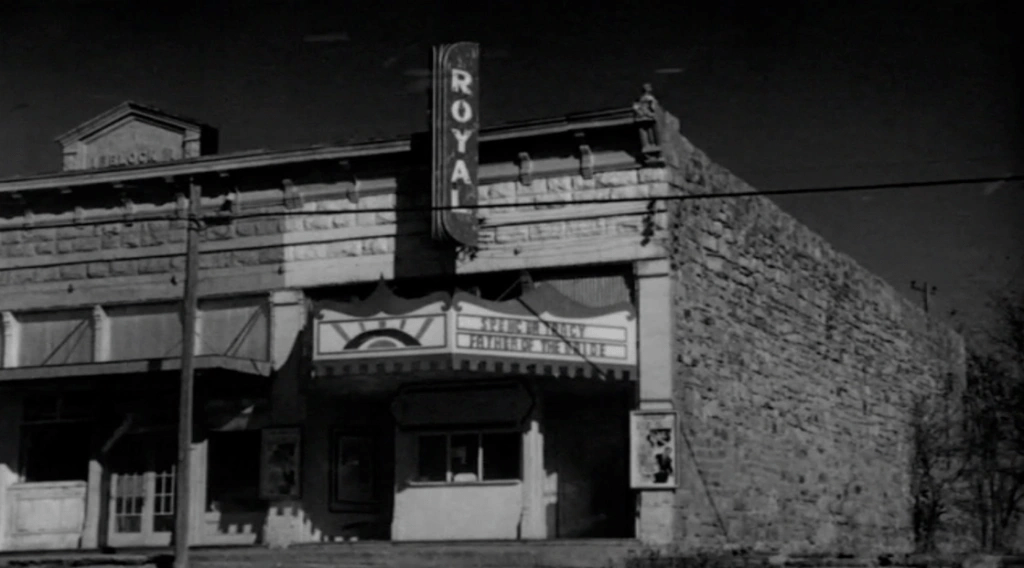
The Last Picture Show directed by Peter Bogdanovich – So good, I immediately purchased the 4K/Blu Ray and watched it again. And then a third time with my son Truman who also loved it. (The sequel, Texasville…Uh, not so good…For a great, in depth, two-part podcast about The Last Picture Show, click Here.)
Barry Lyndon directed by Stanley Kubrick – I’ve heard about this masterpiece for a while and finally got around to seeing it. I knew very little going in, including that it starred Ryan O’Neal, and he was transcendent. As is the film.
Remember My Name directed by Alan Rudolph – Anthony Perkins is great, but it’s the chilling and relentlessly-driven performance of Geraldine Chaplin (Charlie Chaplin’s daughter) that makes this special.
PLAYS (Live, In Person):
What’s Next?…Volume 2 – Our Vs. Studio Producing Workshop Live Presentation. 12 scenes, over thirty actors, and two packed houses at Pacific Resident Theatre. Such a blast and here’s hoping this becomes an annual or even semi-annual event. And that some of the scenes turn into full productions. I have a sneaky feeling they will.
Hollywood Fringe – There were over 400 shows at this year’s Hollywood Fringe which is so awesome. I caught the below three from Vs. friends and artists and we had Vs. Theatre Club nights for all of them. Double awesome! They all happened to be at the Broadwater, so it was great fun to hang post show at the Broadwater Plunge bar and celebrate the terrific work:
A Tail Of Two Kitties: Paws Across The World – A solo show written and performed by Cindy D’Andrea. A hilarious, yet also heartbreaking show. Cindy leaves it all out there and her ongoing commitment to animal rescue is commendable and remarkable.
52 Pick-Up – written by Ann Noble – Performed by Jeffrey Johnson and Ann Noble. Their chemistry is a thing of beauty. Coming back for an encore at the Echo Theatre. Click Here for tix/info. Don’t miss it!
Polite Conversations And Wine – written by Michael Perlmutter – Performed by Leah Jarvik, Mikki Hernandez, Robin McDonald and Amy Marcs, who were all awesome. We actually did a Vs. Tuesday Night reading of this play a while back. So cool to see it turn into a full production!
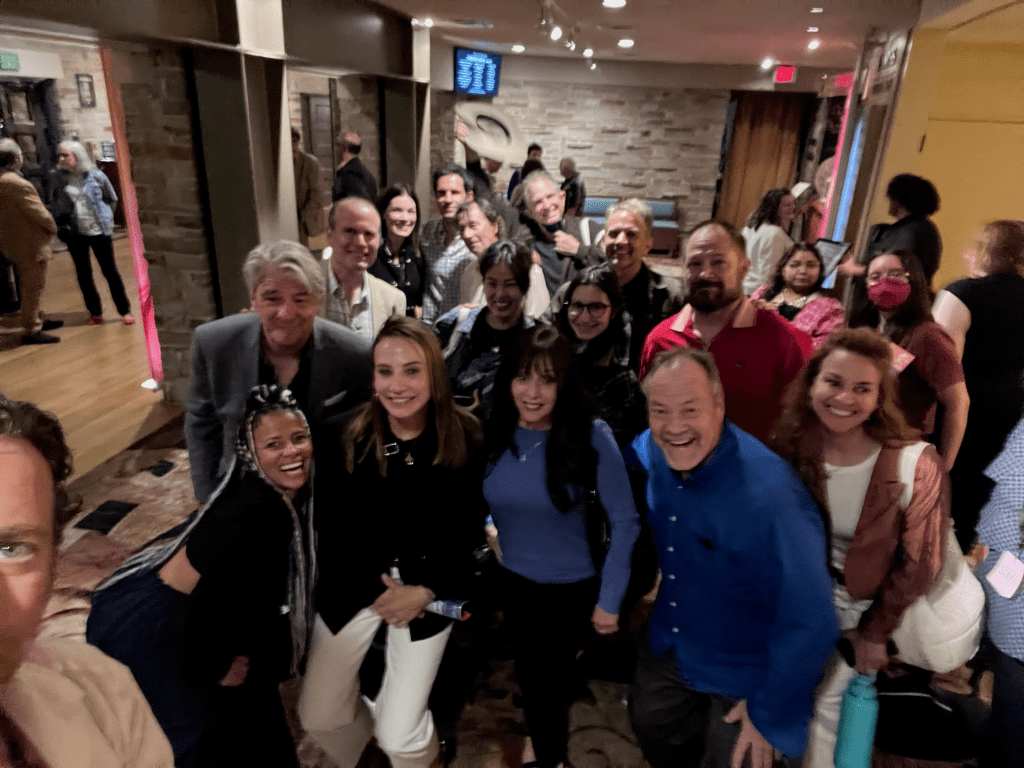
The Reservoir written by Jake Brasch – A spectacular Vs. Ally Night at the Geffen Playhouse and terrific show! See post show pic below…
Post show, The Reservoir at the Geffen Playhouse (selfie courtesy of Jeffrey Johnson)
ALBUMS:
Jose Gonzales – “Veneer”
Wet Leg – “Wet Leg” – Catchy as hell and the wordplay is awesome. Listened to this one a ton and am excited to listen to their latest effort. Click Here to read this NYT Magazine article on the band.
ARTICLES:
Ted Gioia – “An Ugly New Marketing Strategy Is Driving Me Nuts (and You Too)” – A great article which inspired this blog post. Click Here to read the article.
The New Yorker – “The Wizard Behind Hollywood’s Golden Age.” – All about Irving Thallberg and his impact on early Hollywood. Fascinating. Click Here to read.
“Simply, if you’re working with good material, then it’s right there, and you don’t have to try so hard as an actor; you don’t have to do so much. Just let the material sit inside you and let it come out. Just say the words.” -Dule Hill
“There’s no great plan except doing really good scripts, meeting great filmmakers. And I have to have something that I can bring to the role” -Sissy Spacek
“Making movies is 80 percent script and 20 percent getting great actors. There’s nothing else to it” -William Wyler
A simple cheat code for the actor who wants to be great:
(1) Find (or write) a great script, with a great part for you, that you can bring something great to. and demands greatness from you.
(2) Find a great director, who loves the script, who cares as much as you do, and will inspire greatness from you and your fellow actors and artists.
(3) Produce it yourself. Strive for greatness in every aspect of producing.
I said it was simple. Not easy.
But it is a way.
And really if you think about it, it’s the only way.
“When you fall in love with the process rather than the product, you don’t have to wait to give yourself permission to be happy. You can be satisfied anytime your system is running. And a system can be successful in many different forms, not just the one you first envision.” -James Clear
“We can develop different processes simultaneously—one for our day jobs, one for our passion projects, one for the way we shop for groceries. And we can scale our processes, thinking about them on the level of lifelong goals and on the level of how we run our days. However, process-based thinking isn’t as simple as wanting a thing and creating ways to work toward that thing. To accomplish anything challenging and worthwhile, we have to care enough to push through the times when we want to stop or give up—when our phones are too tempting, or when the prospect of another job interview makes us nauseous, or when it’s the end of the workday and we don’t really want to do all those sit-ups because it would be a lot easier to flop onto the couch and watch TV. Sometimes we call this desire “passion.” Sometimes “motivation.” Sometimes “grit” or “determination” or “resilience.” But really, it’s this: in the long run, it feels better to do it than to not do it. As in, we like it. That’s the trick: turning the pursuit of a long-term goal into something that’s inherently enjoyable by figuring out what it is we love about the day-to-day of working toward that goal.
This is turning our process into our product—setting a long-term goal, coming up with a system for how to arrive at that goal, and then becoming so captivated by our system that the goal stops being a destination and starts being a signpost on the route to fulfillment, meaning, and long-term satisfaction.” -Paul Shirley, book The Process Is The Product
Here’s the thing…having a long-term goal or desired result is necessary at the start. It leads you to trying and iterating and eventually figuring out a process.
But then what happens is you fall so in love with the process that you no longer really care about the goal or desired result. You just want to keep doing the process.
And finally, the kicker…when you keep doing the process for a long period of time, you very often stumble into achieving the original goal or desired result. Sometimes, in ways that are bigger and better than you ever could have imagined.
And once you achieve said goal, you’re like “That’s cool…Now. How do I get back to process?”
“Mystery creates wonder and wonder is the basis of man’s desire to understand. -Neil Armstrong
“When people lack a sense of awe, there will be disaster. When people do not fear worldly power, a greater power will arrive. Do not limit the view of yourself. Do not despise the conditions of your birth. Do not resist the natural course of your life. In this way you will never weary of this world.” –Tao Te Ching by Lao-Tzu
“Why stay in bed when you could be high-fiving the sunrise? Human awe is an endangered species. Do not let your astonishment go extinct. Go wild for the wildness of your being. Sing off key and call it a yet-to-be-invented note.” –The Birds Wrote Me A Poem by Andrea Gibson
Today, July 26th, marks the 56th anniversary of Apollo 11 setting out on its mission to land an astronaut on the moon. Neil Armstrong would accomplish the mission 4 days later on July 20th, 1969. Click Here to view some of that footage.
Every single time I look up at the moon, I’m amazed that we humans have walked on it. Incredible. Unbelievable. Astonishing.
Say “Yes!” to your mystery.
Say “Yes!” to your awe and wonder.
Say “Yes!” to your childlike curiosity.
Say “Yes!” to your belief that you can do incredible things.
Say “Yes!” to your imagination of a better world.
In honor of Andrea Gibson, who sadly passed away yesterday, I’ll leave you with the poem SAY YES. (H/t to Sue Gisser who introduced me to Andrea’s work five years ago and did a remarkable reading of it last night on our Vs. “Bring Your Art” night. Thank you Sue.)
Say Yes by Andrea Gibson
When two violins are placed in a room if a chord on one violin is struck the other violin will sound the note If this is your definition of hope This is for you The ones who know how powerful we are Who know we can sound the music in the people around us simply by playing our own strings for the ones who sing life into broken wings open their chests and offer their breath as wind on a still day when nothing seems to be moving Spare those intent on proving god is dead
For you when your fingers are red from clutching your heart so it will beat faster For the time you mastered the art of giving yourself for the sake of someone else For the ones who have felt what it is to crush the lies and lift truth so high the steeples bow to the sky This is for you
This is also for the people who wake early to watch flowers bloom Who notice the moon at noon on a day when the world has slapped them in the face with its lack of light For the mothers who feed their children first and thirst for nothing when they’re full
This is for women And for the men who taught me only women bleed with the moon but there are men who cry when women bleed men who bleed from women’s wounds and this is for that moon on the nights she seems hung by a noose For the people who cut her loose and for the people still waiting for the rope to burn about to learn they have scissors in their hands
This is for the man who showed me the hardest thing about having nothing is having nothing to give Who said the only reason to live is to give ourselves away So this is for the day we’ll quit or jobs and work for something real We’ll feel for sunshine in the shadows look for sunrays in the shade
This is for the people who rattle the cage that slave wage built and for the ones who didn’t know the filth until tonight But right now are beginning songs that sound something like people turning their porch lights on and calling the homeless back home
This is for all the shit we own and for the day we’ll learn how much we have when we learn to give that shit away This is for doubt becoming faith For falling from grace and climbing back up For trading our silver platters for something that matters like the gold that shines from our hands when we hold each other
This is for the grandmother who walked a thousand miles on broken glass to find that single patch of grass to plant a family tree where the fruit would grow to laugh For the ones who know the math of war has always been subtraction so they live like an action of addition For you when you give like every star is wishing on you and for the people still wishing on stars this is for you too
This is for the times you went through hell so someone else wouldn’t have to For the time you taught a 14 year old girl she was powerful This is for the time you taught a 14 year old boy he was beautiful For the radical anarchist asking a republican to dance cause what’s the chance of everyone moving from right to left if the only moves they see are NBC and CBS
This is for the no becoming yes For scars becoming breath For saying I love you to people who will never say it to us For scraping away the rust and remembering how to shine For the dime you gave away when you didn’t have a penny For the many beautiful things we do For every song we’ve ever sung For refusing to believe in miracles because miracles are the impossible coming true and everything is possible
This is for the possibility that guides us and for the possibilities still waiting to sing and spread their wings inside us ‘Cause tonight saturn is on his knees proposing with all of his ten thousand rings that whatever song we’ve been singing we sing even more The world needs us right now more than it ever has before Pull all your strings Play every chord If you’re writing letters to the prisoners start tearing down the bars If you’re handing our flashlights in the dark start handing our stars Never go a second hushing the percussion of your heart Play loud Play like you know the clouds have left too many people cold and broken and you’re their last chance for sun Play like there’s no time for hoping brighter days will come Play like the apocalypse is only 4…3…2 but you have a drum in your chest that could save us You have a song like a breath that could raise us like the sunrise into a dark sky that cries to be blue Play like you know we won’t survive if you don’t but we will if you do Play like saturn is on his knees proposing with all of his ten thousand rings that we give every single breath this is for saying–yes This is for saying yes

 The Vs. Studio Blog