“Life moves pretty fast. If you don’t stop and look around once in a while, you could miss it.” -Ferris Bueller
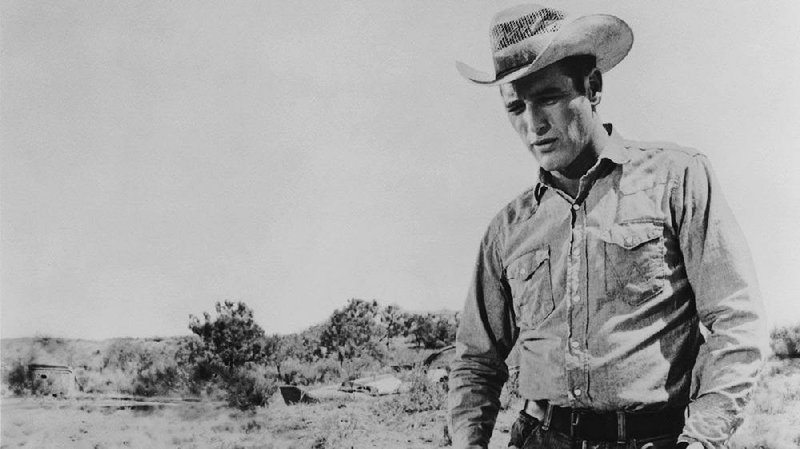
There’s a classic Paul Newman story…I can’t recall which film or director, but supposedly after several takes, the director approached Newman, said the scene was dragging and politely asked if he could he speed it up. Maybe talk faster?
Newman replied, “Sure thing.”
They went back, did the take. The director LOVED it. He came running up to Newman saying how wonderful the scene was. It was a print. They could move on. The director then asked Newman what he did to make it so riveting.
“There is nothing either good or bad, only thinking makes it so.” -Hamlet
“You have power over your mind, not outside events. Realize this and you will find strength.” -Marcus Aurelius, Meditations
The following story was told by Anthony De Mello in his book, Awareness which I highly recommend. It’ll be a longer post today but worth your time. Warning in advance…it’s not the happiest, most uplifting tale, but I think illustrates the Stoic mindset. Specifically that of not judging or trying to control events. And being prepared for whatever life sends our way.
Okay, I’ll let the story speak for itself…
We’re always bothered by the problem of evil. There’s a powerful story about a little boy walking along the bank of a river. He sees a crocodile who is trapped in a net. The crocodile says, “Would you have pity on me and release me? I may look ugly, but it isn’t my fault, you know. I was made this way. But whatever my external appearance, I have a mother’s heart. I came this morning in search of food for my young ones and got caught in this trap!”
So the boy says, “Ah, if I were to help you out of that trap, you’d grab me and kill me.”
The crocodile asks, “Do you think I would do that to my benefactor and liberator?”
So the boy is persuaded to take the net off and the crocodile grabs him.
As he is being forced between the jaws of the crocodile, he says, “So this is what Iget for my good actions.” And the crocodile says, “Well, don’t take it personally, son, this is the way the world is, this is the law of life.”
The boy disputes this, so the crocodile says, “Do you want to ask someone if it isn’t so?”
The boy sees a bird sitting on a branch and says, “Bird, is what the crocodile says right?” The bird says, “The crocodile is right. Look at me. I was coming home one day with food for my fledglings. Imagine my horror to see a snake crawling up the tree, making straight for my nest. I was totally helpless. It kept devouring my young ones, one after the other. I kept screaming and shouting, but it was useless. The crocodile is right, this is the law of life, this is the way the world is.”
“See,” says the crocodile. But the boy says, “Let me ask someone else.” So the crocodile says, “Well, all right, go ahead.”
There was an old donkey passing by on the bank of the river. “Donkey,” says the boy, “this is what the crocodile says. Is the crocodile right?”
The donkey says, “The crocodile is quite right. Look at me. I’ve worked and slaved for my master all my life and he barely gave me enough to eat. Now that I’m old and useless, he has turned me loose, and here I am wandering in the jungle, waiting for some wild beast to pounce on me and put an end to my life. The crocodile is right, this is the law of life, this is the way the world is.”
“See,” says the crocodile. “Let’s go!”
The boy says, “Give me one more chance, one last chance. Let me ask one otherbeing. Remember how good I was to you?” So the crocodile says, “All right, your last chance.”
The boy sees a rabbit passing by, and he says, “Rabbit, is the crocodile right?”
The rabbit sits on his haunches and says to the crocodile, “Did you say that to that boy? The crocodile says, “Yes, I did.” “Wait a minute,” says the rabbit. “We’ve got to discuss this.” “Yes,” says the crocodile. But the rabbit says, “How can we discuss it when you’ve got that boy in your mouth? Release him; he’s got to take part in the discussion, too.” The crocodile says, “You’re a clever one, you are. The moment I release him, he’ll run away.” The rabbit says, “I thought you had more sense than that. If he attempted to run away, one slash of your tail would kill him.”
“Fair enough,” says the crocodile, and he released the boy. The moment the boy is released, the rabbit says, “Run!” And the boy runs and escapes. Then the rabbit says to the boy, “Don’t you enjoy crocodile flesh? Wouldn’t the people in your village like a good meal? You didn’t really release that crocodile; most of his body is still caught in that net. Why don’t you go to the village and bring everybody and have a banquet.”
That’s exactly what the boy does. He goes to the village and calls all the men folk. They come with their axes and staves and spears and kill the crocodile. The boy’sdog comes, too, and when the dog sees the rabbit, he gives chase, catches hold of the rabbit, and throttles him. The boy comes on the scene too late, and as he watches the rabbit die, he says, “The crocodile was right, this is the way the world is, this is the law of life.”
“The ultimate is not to win, but to reach within the depths of your capabilities and to compete against yourself to the greatest extent possible. When you do that, you have dignity. You have the pride. You can walk about with character and pride no matter in what place you happen to finish.” -Billy Mills
Second Wind: A phenomenon in distance running, such as marathons or road running (as well as other sports), whereby an athlete who is out of breath and too tired to continue suddenly finds the strength to press on at top performance with less exertion. Various theories have been suggested to be the cause of gaining ‘second-wind’ during running but as of yet, there has been no definite confirmation for the onset. Some researchers suggest that the second wind may be a result of the body counteracting the balance of the body’s oxygen consumption requirements and the build-up and removal of lactic acid within the working muscles. Others claim that the second wind phenomena is due to the release of endorphins during running which are the body’s naturally producing brain chemicals that are secreted and act to lower pain levels and reduce feelings of stress. Some scientists believe the phenomena may be psychological.
Second winds are just like making art.
No matter how many times prior your second wind has kicked in, you feel this time it won’t. This time is different. This time you’ll be exposed. You’re scared. You’re in pain. You don’t know what to do.
The only thing keeping you going is sheer will. And belief.
Belief in yourself. Belief in your idea. Belief that at some point your second wind will kick in. And when it does, you’ll be okay.
It’s the getting there that sucks.
Don’t give up. Keep going. Keep going through the suck. You’ll get there.
P.S. – Billy Mills, pictured above, has an incredible Olympic story. Watch this clip from the 1964 Olympics. Talk about a second wind and finishing kick! There’s also a terrific movie about him called “Running Brave.”
“I coulda had class. I coulda been a contender. I coulda been somebody, instead of a bum, which is what I am, let’s face it.” -Terry Malloy in On The Waterfront
“Maybe all one can do is hope to end up with the right regrets.” —Arthur Miller, The Ride Down Mt. Morgan
Does the below monologue sound familiar? Or some form of it? Have you heard or said something similar? I used a financial example (a) because it comes up fairly often around me (I have a background in finance and investing) and (b) a neighbor friend just said it to me yesterday morning. (I paraphrased slightly, but not much.)
I think it’s applicable to any type of goal or dream or burning desire we have in life…
“Aw man, I knew this stock was gonna go up. I just knew it. I watched it every day, I was reading articles, I know the industry really well…I told my wife, I told friends, I was like, we should invest big. At the time, it was like $3 a share and now it’s over $70! If I just…(insert whatever excuse you choose), I woulda invested.
“If I woulda invested, then I coulda been done. Outta here. Rich…Of course, I didn’t do anything.”
(Long ass pause.)
“Motherf-cker. I shoulda listened to myself.”
Don’t woulda coulda shoulda.
Go make your art.
P.S. – To watch one of the greatest film acting scenes of all time, click Here.
A prior post was about sunk costs. They deal with the past.
We should also be aware of opportunity costs. They deal with the future.
In microeconomic theory, the opportunity cost is the loss of value or benefit that would be incurred (the cost) by engaging in an activity or choosing an option, versus/relative to engaging in the alternative activity or choosing the alternative option that would offer the highest return in value or benefit.
Put more simply, when you decide to do something, be aware of all the other things you won’t be able to do as a result of your choice. That’s opportunity cost.
We can apply this to making art.
If you decide to do a passion project and go all in, realize all the other things you’re giving up. Things you won’t be doing as a result of your decision. Don’t let that paralyze you. Just be aware. If after bringing awareness to this fact, you still feel that engaging in this project will bring you more value (I don’t mean monetarily, although that could be part of it. But really personal value, artistic value, psychological value, etc… ) than doing any of those other things, (or not doing anything at all) then it’s worth it. Go for it. Feel great about your choice.
One of the most brilliant pieces of acting advice I ever received was this:
“The frustration is the acting.”
All the stuff that happens in between your next line–often the opposite of what you want as the character, yet are feeling deeply–is riveting to watch and super fun to play.
No one exemplifies this more than Jackie Gleason in The Honeymooners. Watch this clip here. (Or really, every single episode.)
“I write entirely to find out what I’m thinking, what I’m looking at, what I see and what it means. What I want and what I fear.” -Joan Didion
Playwrights…
Leave your thesis statements behind. Don’t try to prove anything. Don’t know where you’re going.
Instead, know your characters inside and out. Put them in a room and get ’em talking. Trust them and the power of your subconscious to illuminate the way.
There’s a famous acting adage that goes: “The more interested you are, the more interested we are.” This is why we can endlessly watch babies at play. Or people fully engaged in their work (aka “flow”). Even the old man feeding the pigeons in the park can be captivating. (This is why authentic behavior on stage or screen is an absolute must. Another post for another time.)
The same holds true when it comes to the element of surprise. For your acting and your writing.
The more you can surprise yourself with what just happened, the feeling of “Where in the world did that come from?”, the more surprised we will be.
And guess what?…When we’re surprised, that means you’re unpredictable.
And when you’re unpredictable that means we’re riveted. Because we have no idea and can’t wait to see what happens next.
And when that happens, you’ve got us right where you want us. Open, alert and ready to receive whatever it is you have to offer.


 The Vs. Studio Blog