“In 1977, the science fiction writer Orson Scott Card sent a draft of his later-to-be award-winning and film-adapted Ender’s Game to the science fiction magazine Analog Science Fiction and Fact. The magazine’s editor Ben Bova wrote back to Card. In the letter, Bova said that, though he liked Ender’s Game, it needed to be cut in half. Before he sent the draft out, Card had read and reread Ender’s Game over and over and over. “If something could be cut out,” he said, “I didn’t put it in.” As Card thought about Bova’s note, he eventually realized this: when Bova says the story needs to be cut in half, what he’s also implicitly saying is, ‘to me, it feels way too long.’ So Card asked himself, why did it feel too long? What did I do that made it feel too long? “I realized I probably had too many battles in it,” he said. “I went in and cut out one battle entirely. I cut another one in half. Then I realized a few places where I wanted to elaborate on things. So the manuscript I sent back to Ben was a page or two longer than the one he had told me I should cut in half. But I didn’t remind him that he told me to cut it in half. What I said was, ‘I addressed the problems you mentioned. Let me know what you think of it.’” The feeling that the story was too long was apparently gone, because Bova said nothing about the fact that the manuscript was now even longer, replying instead with a contract and a check to publish it. “So much for ‘cut it in half,’” Card said. -Billy Oppenheimer, Six at Six newsletter
“When people say that something is wrong, they are almost always right. When they tell you how to fix it, they are almost always wrong.” -Ryan Holiday
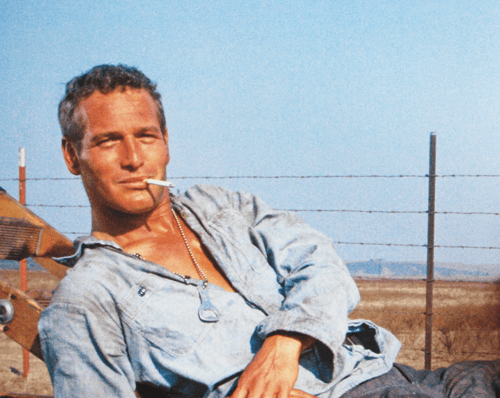
The Orson Scott Card story above reminds me of a classic Paul Newman story…I can’t recall which film or director, but supposedly after several takes, the director approached Newman, said the scene was dragging and politely asked if he could speed it up. Maybe talk faster?
Newman replied, “Sure thing.”
They went back, did the take. The director LOVED it. He came running up to Newman saying how wonderful the scene was. It was a print. They could move on. The director then asked Newman what he did to make it so riveting.
To which Newman replied, “I went slower.”

