When asked to do something difficult or faced with a new challenge…
The cocky person says “I got this.” And then does nothing other than relying on their self-perceived “talent” to come through. They usually don’t.
The confident person says “I think I can do this.” And then works their tail off/acquires new skills/does whatever it takes to come through. They usually do. If they don’t, at least they can live knowing they did the absolute best they could.
“It seems to me that every step forward in my life has been one that brings me to a better understanding of this: that you do your thing every day the best that you can, and you approach any success at it with humility.” -Val Kilmer
“Expose yourself to your deepest fear; after that, fear has no power, and the fear of freedom shrinks and vanishes. You are free.” -Jim Morrison
I’ve blogged before about the greatness of the documentary VAL Here. If you haven’t seen, please do so immediately. You will love it.
One of my favorite parts is Val making his own audition tapes for directors he admires. You can watch a clip Here.
At the time, Val was coming off TOP GUN and was being offered tons of money for traditional leading man roles. But he still had the heart of a character actor and just wanted to work with his directing heroes…Kubrick, Scorcese, etc…He wasn’t being considered for their films and couldn’t even get an audition. But he didn’t let that stop him. Shelving any movie star ego, he made his own “home movies” with him playing the character in their scripts. At one point he flew six thousand miles miles to hand deliver the tape to Mr. Kubrick himself.
None of the home movie ploys worked. He wasn’t cast. But that didn’t matter. What did matter is he gave it everything he had. He risked. He followed his heart. He was vulnerable. He knew deep down he did everything he possibly could. He could live knowing that.
And it’s probably no coincidence that the universe rewarded him shortly thereafter with the role of a lifetime…Jim Morrison in Oliver Stone’s THE DOORS.
“If you’re not feeling those butterflies, you’re not taking a big enough risk.” -Ray Manzarek
A perfect mantra or tattoo or billboard or t-shirt would be:
“No risk. No art.”
And it actually is a t-shirt…The actor and director Fisher Stevens once made his own with the above quote and wore it constantly. To remind himself to always be risking. What a perfect encapsulation of our inspiring definition of art! (H/T to my friend Gareth for this backstory).
Unless you work in the theatre, you might be wondering what the heck is a dramaturg? This article and this one explain in detail. Basically it’s someone who provides valuable research and context to theatre (and opera-makers). They also help playwrights shape material similarly to how an editor helps writers.
The best dramaturgs, editors, coaches, teachers, etc…anyone involved with providing feedback, follow one simple rule:
How do I help the person make the best possible version of what THEY are trying for?
It’s not about the the dramaturg or editor’s personal taste or preference. It’s about the artist. What does the artist (or player or student) want?
The best dramaturgs help playwrights recognize what exactly they’re trying for and how best to manifest excellence with it. As such, they must love and be steeped in all kinds of different art forms. They must be students of history. They never stop learning. They remain open to all possibilities and new ways of doing things.
If you’re lucky enough to work with a world class dramaturg (or editor), thank them today and everyday going forward. If not, seek one out. Much like a great coach, they’ll push you to heights you never thought possible.
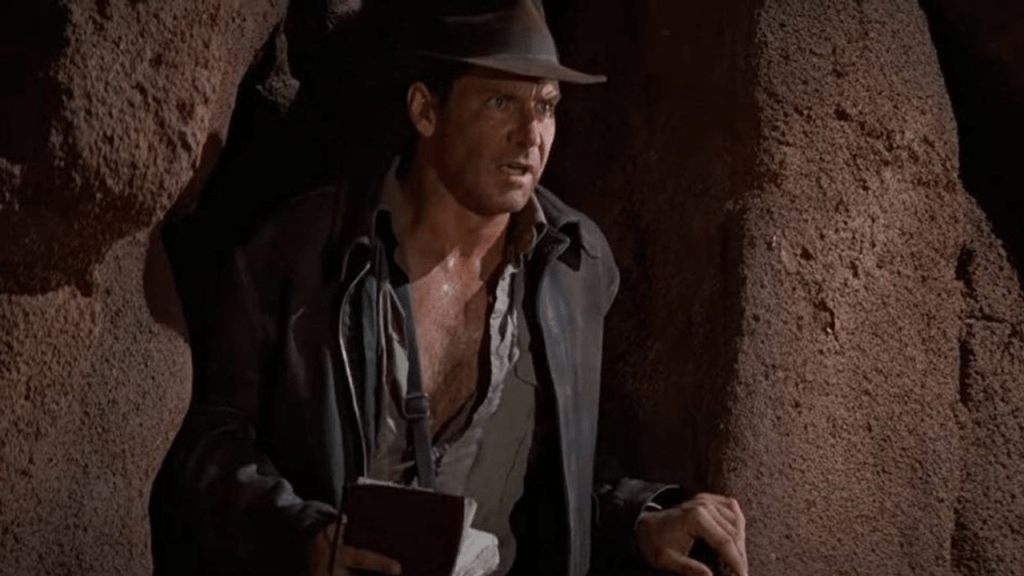
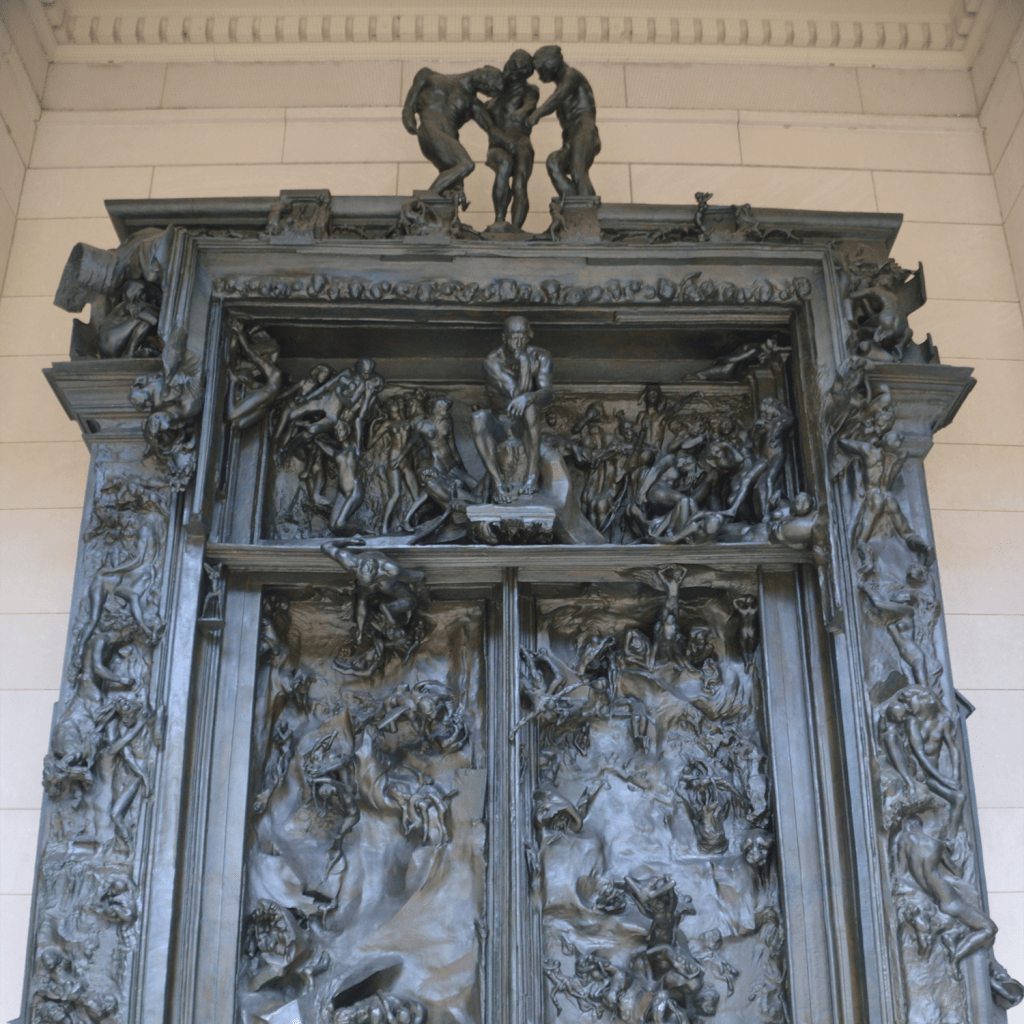
“The cave you fear to enter holds the treasure you seek.” -Joseph Campbell
There are lots of reasons people love scary movies. As this article points out, some include wanting novel experiences, sensory stimulation, and curiosity about our darker or shadow sides.
I think another reason is presence. Feeling alive. Being focused on one thing and one thing only. Similar to a flow state.
If you want a good scare tonight, you could watch “Halloween” or go visit a haunted house.
Or even scarier…making your own art. What about inventing your own scary story and telling it to someone else? Just like a stand up comedian working out a new routine for the first time…that risk of falling flat on your face?…Now that’s terrifying.
“Do not spoil what you have by desiring what you have not; remember that what you now have was once among the things you only hopedfor.” -Epicurus
I can’t get no satisfaction I can’t get no satisfaction ‘Cause I try, and I try, and I try, and I try I can’t get no, I can’t get no -“Satisfaction”, song by The Rolling Stones
“Desire is a contract you make with yourself to be unhappy until you get what you want.” -Naval Ravikant
The writer and social scientist Arthur Brooks provides this formula for human satisfaction…
Satisfaction = what you Have / (divided by) what you Want
Or simply…
S = Haves / Wants
The problem, especially for those of us in the West, is that we’re entirely focused on increasing the numerator, the Haves. More money. More stuff. More status. More power. More, more, more. And the more we have, the more we Want. Thus we’re never satisfied.
Instead, Brooks advises us to focus on the denominator. Decreasing our Wants. Enabling us to realize we have enough. Ultimately leading to increased satisfaction.
He tells a story about seeing a beautiful jade sculpture in the National Art Museum of China. The guide he was with discussed the major difference between the West and East’s philosophies of art….
In the West, we see art as a blank canvas that needs to be filled up.
In the East, they see the art as already existing. In this case, a big jade block. All the artist needs to do is to strip away the excess jade to reveal the beautiful sculpture that was always there, within the block.
“Gratitude is the closest thing to beauty manifested in an emotion” -Mindy Kaling
“When you arise in the morning, think of what a precious privilege it is to be alive-to breathe, to think, to enjoy, to love.” -Marcus Aurelius, Meditations
My friend and go-to director/collaborator Ron once gave me this fantastic advice after a rehearsal in which I was pushing, “acting”, trying to do too much…
“You don’t have to land a 747 on every line. Sometimes a line is just a line.”
He’s right. If it’s good writing, we in the audience will feel it. Don’t worry. You can just say the line (with a specific intention, of course).
If you feel something while delivering the line tonight, that’s cool. It’s a bonus.
But it’s certainly not a requirement. So please don’t lock in or obligate yourself to that emotional result.
“Hamlet likely marks the first time that Stanislavski put together several key concepts of the “system.” Having already realized that a script could be divided into bits and that characters had a supertask, a sverkhzadacha, he next realized that each character’s bit had its own zadacha: a little step taken, often unsuccessfully, toward the character’s ultimate goal. Zadacha means both “task” and “problem.” It is a thing that a character needs that is important enough to demand actions. Those actions are then generally phrased as infinitive verbs (“ I want to _____”). To take a mundane example, if your problem is that you are thirsty, then your action might be to get a glass of water. Zadachi were not psychological to Stanislavski. They were the immediate actions that needed to be accomplished to move the character closer to their goal.” -excerpt from the book, “The Method” by Isaac Butler
Regardless of your feelings about “The Method”, we can thank Stanislavski for his discovery that action leads to feelings. Not the other way around. You can read more about it and the whole history of method acting in Isaac Butler’s wonderful book “The Method: How the Twentieth Century Learned to Act” (Vs. Book Club on Tuesday Night, November 15th! Anyone interested in joining, email me or leave a comment with your email address and I’ll reach out.)
Whether it be acting or life, the order should be: decide, do, feel.
Far too many of us wait to feel before we decide. Which is why so little gets done.