Practicing gratitude is awesome.
But you know what’s even more awesome?
Being grateful for something before it even occurs. Saying “thank you” regardless of the outcome.
To do so requires faith, trust and total surrender.
Can you do it?
Practicing gratitude is awesome.
But you know what’s even more awesome?
Being grateful for something before it even occurs. Saying “thank you” regardless of the outcome.
To do so requires faith, trust and total surrender.
Can you do it?

“Art is the lie that enables us to realize the truth.” –Pablo Picasso
“Art is not what you see, but what you make others see.” –Edgar Degas
“The purpose of art is to lay bare the questions that have been concealed by the answers.” –James Baldwin
Let’s give ’em something to talk about (something to talk about)
A little mystery to figure out (something to talk about)
Let’s give ’em something to talk about
How about love, love, love -song, “Something to Talk About” by Bonnie Raitt
Whether you love it or hate it or somewhere in between, one giant reason to be thankful for art is it gives you something interesting to talk about.
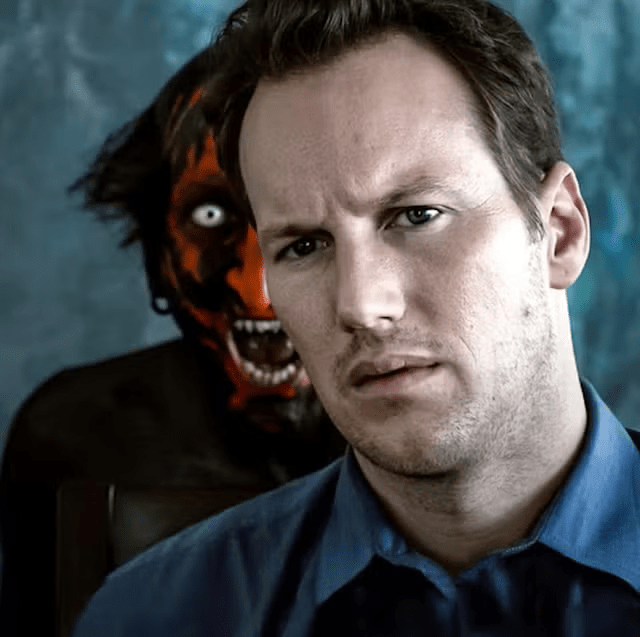
“Every sun casts a shadow, and genius’s shadow is Resistance. As powerful as is our soul’s call to realization, so potent are the forces of Resistance arrayed against it….Most of us have two lives. The life we live, and the unlived life within us. Between the two stands Resistance…Rule of thumb: The more important a call or action is to our soul’s evolution, the more Resistance we will feel toward pursuing it.” -Steven Pressfield, The War Of Art
When I wake up people take up mostly all of my time
I’m not singin’, phone keep ringin’ cos I make up a rhyme
I’m not braggin’, people naggin’ cos they think I’m a star
Always tearin’ what I’m wearin’, I think they’re goin’ too far
A girl named Carol follows Daryll every gig we play
Then D dissed her and dismissed her, now she’s jockin’ Jay
I ain’t lyin’, girls be cryin’ cos I’m on TV
They even bother my poor father cos he’s down with me
It’s Tricky to rock a rhyme, to rock a rhyme that’s right on time
It’s Tricky…(How is it?) Tricky (Tricky) Tricky (Tricky)
It’s Tricky to rock a rhyme, to rock a rhyme that’s right on time
It’s Tricky… Tr-tr-tr-tr-tr-tricky (Tr-Tr-Tr-Tricky) Tr-tr-tr…-song “It’s Tricky” by Run-D.M.C.
The Resistance, as author Steven Pressfield so aptly names it in his terrific book The War Of Art, is insidious and takes on many forms.
It might be actual, tangible obstacles thrown in your way. Or just imagined ones in your head.
It’s psychic vampires who suck up your energy and passion. Or supposed “friends” and colleagues who won’t tell you the truth.
It’s shiny new objects that suddenly emerge or “what about if I did this?” opportunities that derail your focus.
It’s chasing accolades over process and losing touch with your why,
Whatever the form, The Resistance is real and it’s coming for you.
When it does, just remember: The more you feel it, the more you know you’re on the exact right path. Otherwise, it wouldn’t be coming for you.
Fight back.
Keep going.
Make.
Your.
Art.
By any and all means necessary.
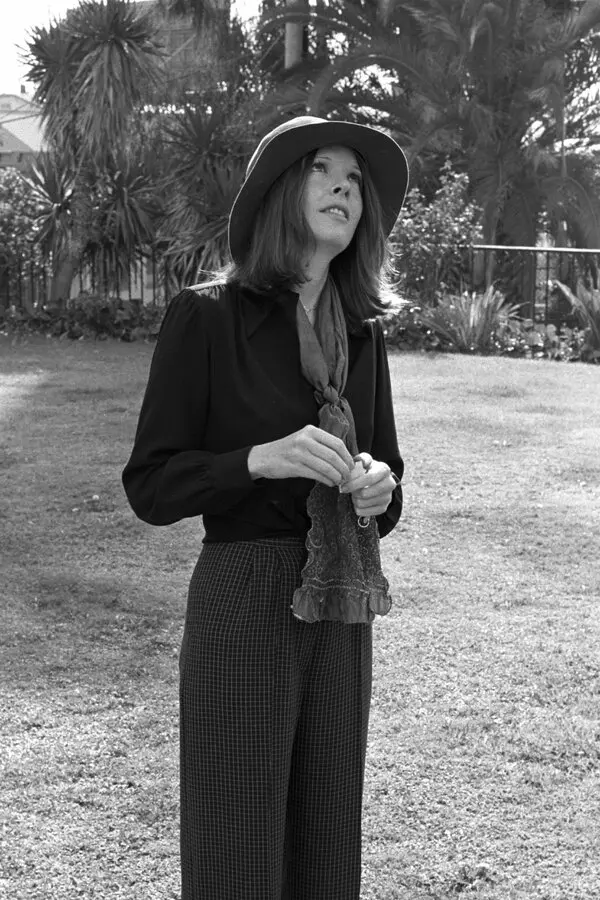
“I never understood the idea that you’re supposed to mellow as you get older. Slowing down isn’t something I relate to at all. The goal is to continue in good and bad, all of it. To continue to express myself, particularly. To feel the world. To explore. To be with people. To take things far. To risk. To love. I just want to know more and see more.” -Diane Keaton
We just had a fantastic “Bring Your Art” Night tonight as part of our Vs. Tuesday Night Readings. So many incredibly talented artists shared pieces that were meaningful to them. My good friend Gareth shared the below piece he discovered about Diane Keaton and I thought to share it with all of you…
During the filming of Hampstead (2017), Diane Keaton had a moment that perfectly blurred the line between acting and life. There was a quiet scene where her character, Emily, looks out over the heath — lost, aging, and unsure if she still matters. Between takes, Keaton stayed in character, staring into the distance long after the director called “cut.” When someone asked if she was all right, she smiled faintly and said, “I’m just thinking how strange it feels when the world stops needing you — and you have to start needing yourself.”
The crew went silent. It wasn’t in the script, but it summed up everything Hampstead was about —loneliness, courage, and the rediscovery of self-
worth. Later, when Brendan Gleeson joined her for a scene, Keaton whispered before they started, “Let’s make them believe that two lost people can still find
home.”
Off-camera, Keaton talked openly about how much she related to Emily’s vulnerability. “People think confidence is something you have forever,” she said
during an interview. “It isn’t. You rebuild it, piece by piece, every time life breaks a part of you.”
Her honesty moved even the hardened crew members. One lighting technician recalled, “That day, she wasn’t just acting. She was showing us how to survive being human.”
By the time Hampstead wrapped, the film had become more than a gentle love story — it was Diane Keaton’s quiet manifesto: that it’s never too late to start
over, never too late to be seen, and never too late to be brave.
R.I.P. Ms. Keaton. Your immense talent and beautiful spirit will be so greatly missed.
Whether you receive amazing feedback or awful feedback, they both share one giant trap in common.
Attachment.
You get attached to that amazing feedback and as a result, not take risks in your future work, so as to continue to please.
Or.
You get attached to that awful feedback and completely give up.
To avoid this trap, first be aware that it’s out there. And then, entirely detach from the feedback, good or bad.
Because it’s not about you. It’s about the work. It’s always been about the work.
Go make your next piece of art. And do so as if the prior one never even existed.
I got rhythm
I got music
I got my man
Who could ask for anything more? -song “I Got Rhythm” by Ethel Merman
“What I do has a lot to do with the words….Go over the words, over and over, do them different ways, different inflections and rhythms. For me, rhythm is very important. I think we express ourselves as much with rhythm as with the words. It’s not what you say, it’s how you say it. I think it’s very true. If you start to say your lines and it sounds right, usually I stick with that. If it sounds right, it probably is right.” -Christopher Walken
For the director (assuming it’s a great script)…
Before you give performance “notes”, does the actor actually know their lines? Not kinda knows them, but knows them exactly as written.
If not, start there. Get the lines right and you’ll get the rhythm right. That will probably fix at least 80 percent of everything you wrote down on your legal pad.
“If you realize that you have enough, you are truly rich.” –Tao Te Ching by Lao-Tzu (Stephen Mitchell translation)
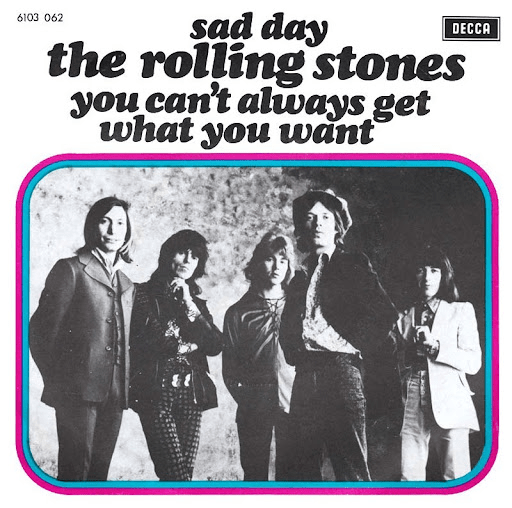
The Rolling Stones are right…You can’t always get what you want.
But.
You can always want what you have.
And.
When it comes to making your art, you’ve got what you need.
Try sometime.
Go make it.
P.S. – This video.

“The impediment to action advances action, what stands in the way becomes the way.” -Marcus Aurelius
“I take rejection as someone blowing a bugle in my ear to wake me up and get going, rather than retreat.” -Sylvester Stallone
“I’ve missed more than 9,000 shots in my career. I have lost almost 300 games. On 26 occasions I have been entrusted to take the game-winning shot, and I missed. I have failed over and over and over again in my life. And that is why I succeed”. -Michael Jordan
What if you started looking at rejections as proof that you’re on the right path? Especially when you’re trying for greatness.
Keep going.

“The great thing about the band was that whoever had the best idea (it didn’t matter who), that would be the one we’d use. No one was standing on their ego, saying, ‘Well it’s mine,’ and getting possessive. Always, the best was used. That’s why the standard of the songs remained high” -Ringo Starr
“My model for business is The Beatles: They were four guys that kept each other’s negative tendencies in check; they balanced each other. And the total was greater than the sum of the parts”. -Steve Jobs
“I say in speeches that a plausible mission of artists is to make people appreciate being alive at least a little bit. I am then asked if I know of any artists who pulled that off. I reply, ‘The Beatles did'” -Kurt Vonnegut
“Claiming a favorite Beatle is likened to having a favorite ventricle of one’s heart, which doesn’t make sense”. -Ethan Hawke
If you’re looking for a model of peak artistic collaboration, then look no further than The Beatles.
There’s no better feeling in the world than scaling that artistic mountain together with others you love, respect and admire.
Watch this short “Subway Take” video with Ethan Hawke discussing The Beatles. He nails it.
“The ultimate end of human acts is eudaimonia, happiness in the sense of living well, which all men desire; all acts are but different means chosen to arrive at it.” -Hannah Arendt
“Among life’s cruelest truths is this one: wonderful things are especially wonderful the first time they happen, but their wonderfulness wanes with repetition.” -Daniel Gilbert, Stumbling Upon Happiness
“The happy life is thought to be one of excellence; now an excellent life requires exertion, and does not consist in amusement. If Eudaimonia, or happiness, is activity in accordance with excellence, it is reasonable that it should be in accordance with the highest excellence; and this will be that of the best thing in us.” -Aristotle, The Nicomachean Ethics
How is it that you can struggle mightily, do something that is extremely hard and taxing, yet still be very happy in the doing of it?
Easy.
You have Eudaimonia.
Aim for it every chance you get.
I love this recent post from Mark Manson on the topic…
Most people think happiness means smiling all the time, feeling good, never struggling. But if that were the case, clowns and drug addicts would be the happiest people alive.
When Jefferson wrote “the pursuit of happiness,” he wasn’t talking about pleasure.
Back then, happiness meant something different. It meant flourishing. It meant purpose, meaning, living out your values. It meant living well, even though life punches you in the gut.
Jefferson didn’t invent this idea. It came from Aristotle, who said there are actually two kinds of happiness:
Hedonic happiness is cheap. It fades the second the buzz wears off.
But eudaimonic happiness endures. Yeah, it’s harder. It demands sacrifice. But it’s the only kind of happiness that leaves you whole.
Yet most people spend their entire lives chasing hedonic happiness—and wondering why they feel so hollow.
If your happiness disappears the moment the pleasure does, it was never happiness. It was just anesthesia.
Have a WordPress.com account? Log in now.

