May 2025 Favorites

In addition to recapping my end of year favorites (films, plays, books, albums, etc.) I thought for 2025, I’d share each month. Without further adieu and in no particular order, here are some May favorites (Better late than never!)…

FILMS:

It Happened One Night directed by Frank Capra – A masterpiece, pre-Code screwball comedy, and then some. Clark Gable and Claudette Colbert are at the peak of their powers. Their chemistry is electric. Considered one of the greatest films ever made and was the first of only three films (along with One Flew Over the Cuckoo’s Nest and The Silence of the Lambs) to win all five major Academy Awards: Best Picture, Best Director, Best Actor, Best Actress, and Best Adapted Screenplay.

Bernice Bobs Her Hair directed by Joan Micklin Silver – A 1976 short film made for the legendary PBS series “The American Short Story.” It was adapted from F. Scott Fitzgerald’s short story of the same title. Shelly Duvall is sublime.

Who Am I This Time? directed by Jonathan Demme – Another short film. Another one based on a short story, this time from Kurt Vonnegut. Another one courtesy of PBS. From 1982 and part of the legendary series “American Playhouse.”…(A quick PSA, please urge your representatives not to strip away public media. It’s a vital force and is needed now more than ever.)…Christopher Walken plays Harry Nash, a shy hardware store clerk, who comes out of his shell in community theatre performances, but then retreats back in after the show is done. Susan Sarandon plays Helene Shaw, a visiting telephone company billing expert, who’s only in town for a few weeks, but gets persuaded to audition for the role of Stella by the director. Sparks fly between Walken’s Stanley and Sarandon’s Stella. You can stream for free on the Hoopla app (just need a library card).

PLAYS (Live, In Person):

Corktown ’39 written by John Fazakerley – A phenomenal Rogue Machine Theatre production featuring several Vs. friends and artists – Ann Noble, JD Cullum and Thomas Vincent Kelley – all part of a top notch ensemble. The design elements were also first rate. Thrilled to have done a Vs. Theatre Club outing to see it.

Hambone written by Javon Johnson – A Cops and Friends Of Cops Reunion Night! (See pics below.) Our Cops brother and Vs. artist, Rolando Boyce, absolutely crushed it. He and the ensemble were fantastic. Also, be sure to check out future events at The Mark Theater which you can do so Here.  Markietha Ka’Von is the founder and opening The Mark is a dream come true for her. (She made a beautiful curtain speech about the decades-long undertaking.)  The space is amazing with state of the art equipment and flexible for all types of rentals.  You can check it out Here.  
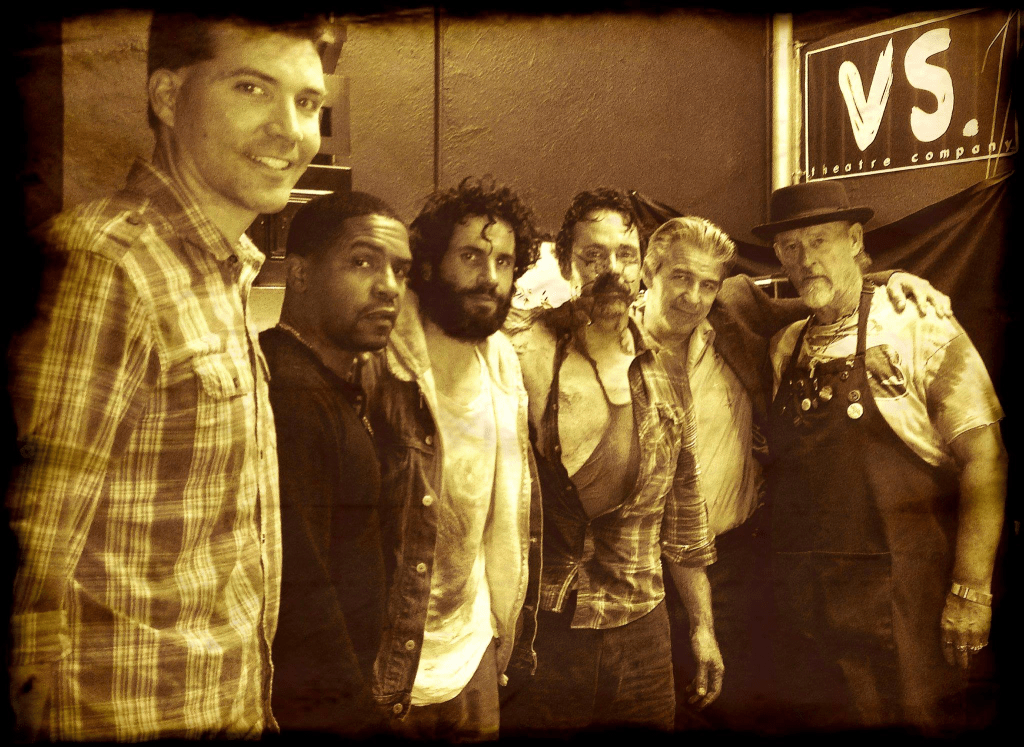
Post show, Cops And Friends Of Cops, Vs. Theatre, 2013

Post show, Hambone, The Mark Theater, 2025

Fostered written by Chaya Doswell – Another great and fun Vs. Theatre Club Night at Pacific Resident Theatre. The show has extended multiple times since our May outing. It closes this weekend, July 20th. Definitely check it out!

ALBUMS:

The Smiths – “Louder Than Bombs”

The Counting Crows – “Butter Miracle, The Complete Sweets!” – One of their best in years. (H/t to my friend JB for mentioning to me.)

PODCASTS:

Freakonomics – “How Is Live Theatre Still Alive” – An incredibly detailed and transparent analysis of what it takes to put on a Broadway production. Click Here to listen to all 3 parts. Riveting and you will learn a ton. (H/t to my friend Gary for mentioning to me.)
Prototyping

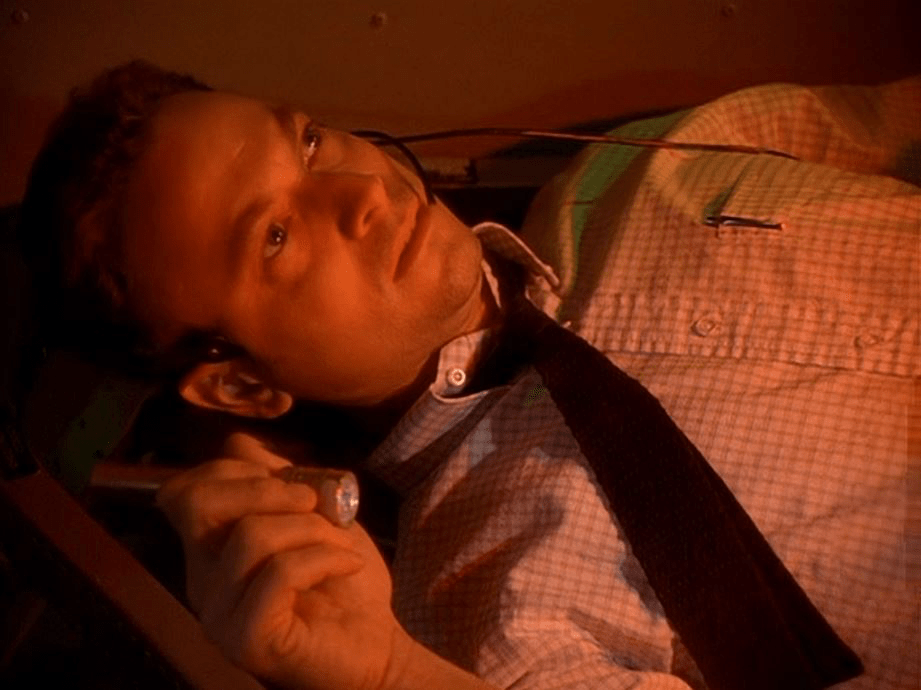
Remember the scene in Apollo 13 where Ken Mattingly (played by Gary Sinise) is trying to solve the “20 amps or less problem” that the three astronauts in space–Jack Swigert, Jim Lovell and Fred Haise–are faced with? Even though Mattingly is back at Houston control, he’s trying to put himself under the exact same conditions that the astronauts are. Otherwise, any solution he comes up will not be helpful to them.

In a way, you could say Mattingly was prototyping.

You can apply this to any kind of career or change you’re thinking about making. Do a dry run. Take it for a test drive. Put yourself under the exact same conditions as someone doing what it is you’re thinking of doing. For as much and as long as you possibly can. That way, you can make an informed choice if this is the path for you. Here’s an excerpt from the “Prototyping” chapter in Design Your Life (It’s a book I highly recommend, especially for younger people starting out on their career path. Makes for a great graduation present!)

When you are trying to solve a problem, any problem, you typically start with what you know about the problem: you start with the data. You need enough data so that you can understand what causes what, and what is likely to happen when something else happens.

Unfortunately, when you are designing your life, you don’t have a lot of data available, especially reliable data about your future. You have to accept that this is the kind of messy problem in which traditional cause-and-effect thinking won’t work. Luckily, designers have come up with a way of sneaking up on the future through prototyping.

When we use the term “prototyping” in design thinking, we do not mean making something to check whether your solution is right. We don’t mean creating a representation of a completed design, nor do we mean making just one thing (designers make lots of prototypes—never just a prototype). Prototyping the life design way is all about asking good questions, outing our hidden biases and assumptions, iterating rapidly, and creating momentum for a path we’d like to try out.

Prototypes should be designed to ask a question and get some data about something that you’re interested in. Good prototypes isolate one aspect of a problem and design an experience that allows you to “try out” some version of a potentially interesting future. Prototypes help you visualize alternatives in a very experiential way. That allows you to imagine your future as if you are already living it. Creating new experiences through prototyping will give you an opportunity to understand what a new career path might feel like, even if only for an hour or a day. And prototyping helps you involve others early and helps build a community of folks who are interested in your journey and your life design. Prototypes are a great way to start a conversation, and, more often than not, one thing typically leads to another. Prototypes frequently turn into unexpected opportunities—they help serendipity happen. Finally, prototypes allow you to try and fail rapidly without overinvesting in a path before you have any data.

Our philosophy is that it is always possible to prototype something you are interested in. The best way to get started is to keep your first few prototypes very low-resolution and very simple. You want to isolate one variable and design a prototype to answer that one question. Use what you have available or can ask for, and be prepared to iterate quickly. And remember that a prototype is not a thought experiment; it must involve a physical experience in the world. The data to make good decisions are found in the real world, and prototyping is the best way to engage that world and get the data you need to move forward.

Prototyping is also about building empathy and understanding. Our prototyping process inevitably requires collaboration, working with others. Everyone is on a journey, and your prototype encounters with others will reveal their life designs and give you ideas for your own life.

So—we prototype to ask good questions, create experiences, reveal our assumptions, fail fast, fail forward, sneak up on the future, and build empathy for ourselves and others. Once you accept that this is really the only way to get the data you need, prototyping becomes an integral part of your life design process. Not only is it true that doing prototyping is a good idea; it’s equally true that not prototyping is a bad and sometimes very costly idea.

Guilt

Feeling guilty has never helped a single person in all of human history. And never will.

Taking a positive corrective action in response to a guilty feeling has and will.

Preparing To Flow

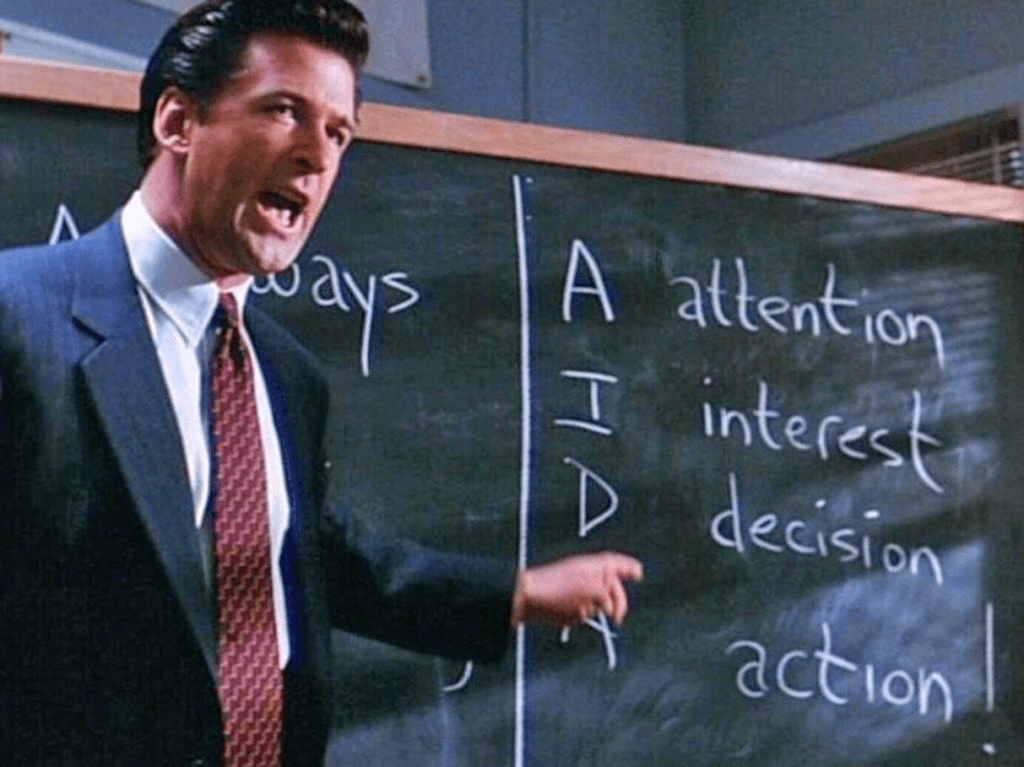
Preparation leads to Attention.

Attention leads to Interest.

Interest leads to Concentration.

Concentration leads to Focus.

Focus leads to Confidence.

Confidence leads to Trust.

Trust leads to Risk.

Risk leads to Letting Go

Letting Go leads to Flow.

All Together Now!

Preparation leads to Attention.

Attention leads to Interest.

Interest leads to Concentration.

Concentration leads to Focus.

Focus leads to Confidence.

Confidence leads to Trust.

Trust leads to Risk.

Risk leads to Letting Go

Letting Go leads to Flow.

Once more with feeling!!

Preparation leads to Focus…

The Day To Day Version

For the young person just starting out or the mid career person looking to make a switch…

One of the most valuable exercises you can do is to find someone who is doing what you might want to do with your life and then gather as much info as you can about their day to day. Not the movie version. Not the glory version. Not the puff- piece magazine version. The actual, granular, day to day version. (If you have the opportunity to speak to that person, ask a lot of questions, including what a typical day is like for them.

Billy Oppenheimer in his excellent weekly newsletter recently shared this insightful story…

The psychologist and writer Adam Mastroianni meets a lot of people who are unhappy with their jobs. When he asks them what they think they’d be happier doing, many of them say something like, I’d really love to run a little coffee shop. “If I’m feeling mischievous that day,” Mastroianni writes, “I ask them…Where would you get the coffee beans? Which kind of coffee mug is best? How much does a La Marzocco espresso machine cost? Would you bake your blueberry muffins in-house or would you buy them from a third party? What software do you want to use for your point-of-sale system? What about for scheduling shifts? What do you do when your assistant manager calls you at 6am and says they can’t come into work because they have diarrhea?” The point of the Coffee Beans Procedure is to unpack the vague, idyllic fantasy of running a little coffee shop into its actual day-to-day details and challenges. If you can’t answer those questions and/or find them interesting, “you should not open a coffee shop, because this is how you will spend your days as a cafe owner. You will not be sitting droopy-lidded in an easy chair, sipping a latte and greeting your regulars as you page through Anna Karenina.”

If, after learning everything you can about your potential career and work–the good and the bad, the exciting and the mundane, the joyous and the suck–and you’re still curious and excited, then you know you’re on the right track. Go forward and good luck!

How To Live And Die

My dad passed away about two years ago and not a day goes by that I don’t think about him. In addition to being my dad, he was my hero and my best friend.

For all the many lessons he taught me about how to live, perhaps the greatest lesson he ever taught me was how to die.

That no matter what, right up until the very end, you still have a choice. You can still do your duty. You can still maintain your dignity. You can still be good to others. You can still do the right thing.

My dad suffered tremendously for a very long time because of skin cancer. His last few years were especially rough as he was in constant pain. Nevertheless, he treated every doctor, nurse and caregiver with absolute grace and kindness. He took an interest in them, cracked jokes, gave out golf tips, exchanged recipes and always thanked them. (Even when they had to change his head dressing for a large open wound which caused him extreme agony.) I’ll never forget one caregiver who was also a Nun, stopped me outside as I was visiting him…She grabbed my hand, looked me in the eye and said, “You do know your father is a saint, right?”

Yes he was.

I miss you a ton dad. But I’m so grateful for all our time together.

Thank you for teaching me how to live.

And teaching me how to die.

You were the greatest of the greatest. Love you big guy.

Got Nothing?

For the actor…

Feel like you got nothing?

Start there. Be honest. Don’t deny it.

Bring that no-thing into the rehearsal room. Make it a part of your character.

If you can have the guts to do that rather than force what you think “it should be”, then before you know it, you’ll have something. Something surprising and magical and glorious and awesome.

P.S. – This advice applies to any art form. Writing, painting, making music, etc…Perhaps any pursuit, really.

Skinner’s Law

Once you learn the Region Beta Paradox, you then understand why we all tend to procrastinate.

The antidote to procrastination?

Try utilizing Skinner’s Law.

Which (per Sahil Bloom’s excellent post) states that:

To get yourself to do something, you need to either:

  • Make the pain of not doing it greater than the pain of doing it, or
  • Make the pleasure of doing it greater than the pleasure of not doing it

I encourage you to read Sahil’s full post. He details several ways you can hack your motivation. The key is trying out different tactics until you find the one that works best for you and your personality.

Remember, the Resistance is real. And it’s a motherf-cker. You need all the help you can to fight it.

Compounding

Compound interest is the eighth wonder of the world.” -Albert Einstein

Einstein wasn’t only talking about money when he (supposedly) said the above quote.

Everything compounds. Relationships, health, learning, etc…according to the amount (force) and consistency (time) of effort you give it.

It’s hardest at the beginning though. When it feels like you’re making no progress.

You are.

You just started with a smaller base.

Keep going.

Don’t quit.

Otherwise, you’ll regret it. Or like Einstein advises in the second part of the quote…

“He who understands it, earns it; he who doesn’t, pays it.”