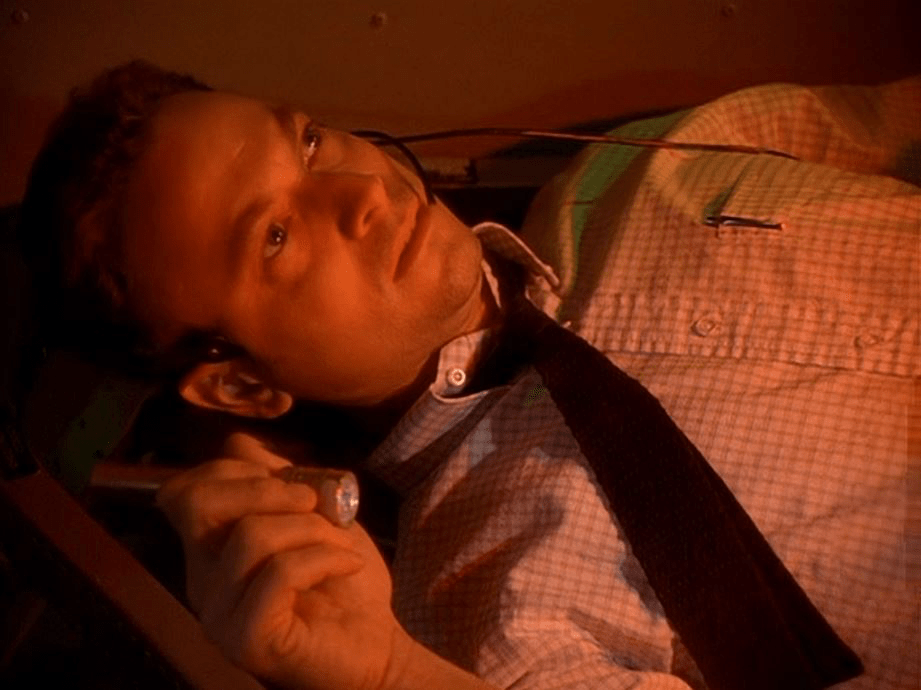
Ken Mattingly: You started on a procedure?
John Aaron, EECOM Arthur: Well, the engineers have tried, but, I mean, it’s your ship. We gotta get you in there.
Ken Mattingly: Okay. Frank, I need the sim cold and dark. Give me the exact same conditions they’ve got in there now. And I need, uh, present status of every instrument.
Frank Borman: You got it.
Ken Mattingly: I need a flashlight.
[one is offered]
Ken Mattingly: That’s not what they have up there. Don’t give me anything they don’t have on board. -scene from the film Apollo 13
“”Building is thinking…It is always possible to prototype something you are interested in…A prototype is not a thought experiment; it must involve a physical experience in the world.” -Bill Burnett & Dave Evans, book Designing Your Life
Remember the scene in Apollo 13 where Ken Mattingly (played by Gary Sinise) is trying to solve the “20 amps or less problem” that the three astronauts in space–Jack Swigert, Jim Lovell and Fred Haise–are faced with? Even though Mattingly is back at Houston control, he’s trying to put himself under the exact same conditions that the astronauts are. Otherwise, any solution he comes up will not be helpful to them.
In a way, you could say Mattingly was prototyping.
You can apply this to any kind of career or change you’re thinking about making. Do a dry run. Take it for a test drive. Put yourself under the exact same conditions as someone doing what it is you’re thinking of doing. For as much and as long as you possibly can. That way, you can make an informed choice if this is the path for you. Here’s an excerpt from the “Prototyping” chapter in Design Your Life (It’s a book I highly recommend, especially for younger people starting out on their career path. Makes for a great graduation present!)
When you are trying to solve a problem, any problem, you typically start with what you know about the problem: you start with the data. You need enough data so that you can understand what causes what, and what is likely to happen when something else happens.
Unfortunately, when you are designing your life, you don’t have a lot of data available, especially reliable data about your future. You have to accept that this is the kind of messy problem in which traditional cause-and-effect thinking won’t work. Luckily, designers have come up with a way of sneaking up on the future through prototyping.
When we use the term “prototyping” in design thinking, we do not mean making something to check whether your solution is right. We don’t mean creating a representation of a completed design, nor do we mean making just one thing (designers make lots of prototypes—never just a prototype). Prototyping the life design way is all about asking good questions, outing our hidden biases and assumptions, iterating rapidly, and creating momentum for a path we’d like to try out.
Prototypes should be designed to ask a question and get some data about something that you’re interested in. Good prototypes isolate one aspect of a problem and design an experience that allows you to “try out” some version of a potentially interesting future. Prototypes help you visualize alternatives in a very experiential way. That allows you to imagine your future as if you are already living it. Creating new experiences through prototyping will give you an opportunity to understand what a new career path might feel like, even if only for an hour or a day. And prototyping helps you involve others early and helps build a community of folks who are interested in your journey and your life design. Prototypes are a great way to start a conversation, and, more often than not, one thing typically leads to another. Prototypes frequently turn into unexpected opportunities—they help serendipity happen. Finally, prototypes allow you to try and fail rapidly without overinvesting in a path before you have any data.
Our philosophy is that it is always possible to prototype something you are interested in. The best way to get started is to keep your first few prototypes very low-resolution and very simple. You want to isolate one variable and design a prototype to answer that one question. Use what you have available or can ask for, and be prepared to iterate quickly. And remember that a prototype is not a thought experiment; it must involve a physical experience in the world. The data to make good decisions are found in the real world, and prototyping is the best way to engage that world and get the data you need to move forward.
Prototyping is also about building empathy and understanding. Our prototyping process inevitably requires collaboration, working with others. Everyone is on a journey, and your prototype encounters with others will reveal their life designs and give you ideas for your own life.
So—we prototype to ask good questions, create experiences, reveal our assumptions, fail fast, fail forward, sneak up on the future, and build empathy for ourselves and others. Once you accept that this is really the only way to get the data you need, prototyping becomes an integral part of your life design process. Not only is it true that doing prototyping is a good idea; it’s equally true that not prototyping is a bad and sometimes very costly idea.
 The Vs. Studio Blog